HomeMCPWorkbenchSkills
HomeWorkbenchNotificationsMe
llms.txt · MCP GuidePrivacy Policy · Terms of Service · Supportv1.8.0
  1. Home
  2. /Reaction

Ethanol → HCID 178496123, compound

HRID 1690631
Notes
Print preview

Reaction equation

HRID 1690631 reaction equation
[Na].Cl.[NH2:3][C:4]([NH2:6])=[NH:5].COC[CH2:10][CH2:11][O:12][C:13]1[CH:14]=[C:15]([CH2:25][CH2:26][C:27]([O:29]CC)=O)[CH:16]=[CH:17][C:18]=1[C:19]1[CH:20]=[N:21][CH:22]=[CH:23][CH:24]=1.[Cl:32]CCl.[Cl-].[Na+].O.[CH2:38]([OH:40])C>CN(C=O)C>[ClH:32].[NH2:5][C:4](=[NH:6])[NH:3][C:27](=[O:29])[CH2:26][CH2:25][C:15]1[CH:16]=[CH:17][C:18]([C:19]2[CH:20]=[N:21][CH:22]=[CH:23][CH:24]=2)=[C:13]([O:12][CH2:11][CH2:10][O:40][CH3:38])[CH:14]=1
ParticipantsProcedureWorkupSources & evidenceReaction notes

Participants

7

Reactant 5

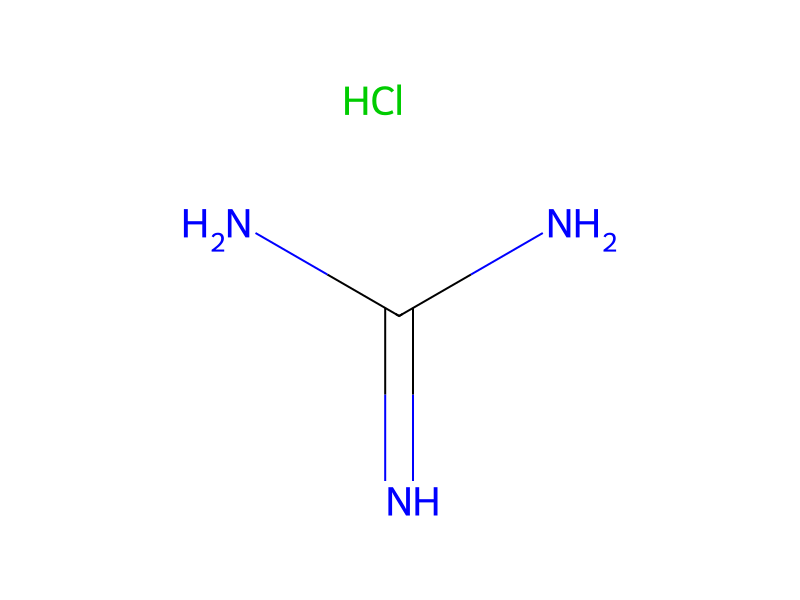
HCID 702EthanolHCID 5742Guanidine HydrochlorideHCID 5360545Sodium2×HCID 66906575Ethyl 3-[3-(3-methoxypropoxy)-4-pyridin-3-ylphenyl]propanoateHCID 131726697Dichloromethane brine

Product 1

HCID 178496123HCID 178496123, compound
Yield 34%

Reagents, catalysts & solvents 1

HCID 6228DimethylformamideSolvent

Procedure

Sodium (0.19 g, 8.3 mmol) was dissolved in ethanol (4.5 mL) at room temperature. Once all the sodium was dissolved, guanidine hydrochloride (0.79 g, 8.3 mmol) was added and the mixture was stirred for 1 hr. A white precipitate formed and was filtered off. The filtrate was evaporated under reduced pressure and a solution of ethyl 3-[3-(3-methoxypropoxy)-4-pyridin-3-ylphenyl]propanoate (0.45 g, 1.3 mmol) and DMF (4.5 mL) was added at room temperature. After completion of the reaction, the mixture was poured into dichloromethane/brine (50/50). The aqueous layer was extracted three times with dichloromethane. The combined organic layers were washed with brine, dried over anhydrous sodium sulfate, filtered and evaporated under reduced pressure. The residue was then dissolved in ethanol and HCl in diethyl ether (1N, 4 mL) was added. The mixture was evaporated and the residue was purified on reverse phase (C18) flash chromatography (H2O, HCl N/1000, acetonitrile, 100/0 to 80/20)to afford 0.19 g (34%) of the desired product as a white solid: mp=91° C.; 1H NMR (400 MHZ, d6-DMSO) δ 12.30 (s, 1H), 8.98 (s, 1H), 8.79 (d, 1H), 8.58 (d, 1H), 8.42 (bs, 3H), 7.92 (dd, 1H), 7.42 (d, 1H), 7.15 (s, 1H), 7.02 (d, 1H), 4.10 (t, 2H), 3.41 (t, 2H), 3.16 (s, 3H), 3.01 (t, 2H), 2.88 (t, 2H), 1.90 (t, 3H).


Workup

  1. customA white precipitate formed
  2. filtrationwas filtered off
  3. customThe filtrate was evaporated under reduced pressure
  4. customAfter completion of the reaction
  5. extractionThe aqueous layer was extracted three times with dichloromethane
  6. washThe combined organic layers were washed with brine
  7. dry with materialdried over anhydrous sodium sulfate
  8. filtrationfiltered
  9. customevaporated under reduced pressure
  10. dissolutionThe residue was then dissolved in ethanol
  11. additionHCl in diethyl ether (1N, 4 mL) was added
  12. customThe mixture was evaporated
  13. customthe residue was purified on reverse phase (C18) flash chromatography (H2O, HCl N/1000, acetonitrile, 100/0 to 80/20)to

Sources & evidence

ORD record
ord-639fa82905524b889a4226ea5445a0d7
Source dataset
uspto-grants-2012_04
DOI
10.6084/m9.figshare.5104873.v1
Patent number
US08153647B2

Reaction notes

Loading…

On this pageParticipantsProcedureWorkupSources & evidenceReaction notes