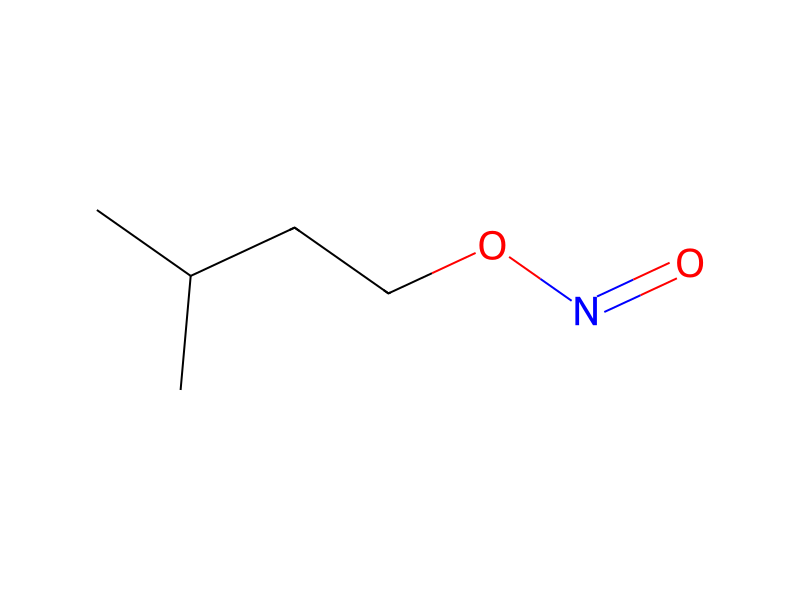
N[C@@H:2]1[C@@H:5]([CH2:6][CH:7]=[CH2:8])[N:4]([C:9](=[C:14]([CH3:16])[CH3:15])[C:10]([O:12][CH3:13])=[O:11])[C:3]1=[O:17].C(ON=O)CC(C)C.[ClH:26].C(=O)(O)[O-].[Na+]>C(Cl)Cl.C(OCC)C.C(OCC)(=O)C>[CH2:6]([C@H:5]1[N:4]([C:9](=[C:14]([CH3:16])[CH3:15])[C:10]([O:12][CH3:13])=[O:11])[C:3](=[O:17])[CH:2]1[Cl:26])[CH:7]=[CH2:8]A solution of methyl 2-[(3R,4R)-3-amino-4-allyl-2-oxoazetidin-1-yl]-3-methylbut-2-enoate (1.0 g) in methylene chloride (10 ml) was cooled to -65° C., and isopentylnitrite (1.01 ml) and a solution of hydrogen chloride (524 mg) in ethyl ether (8 ml) were added. The mixture was allowed to warm to 0° C. during a period of 45 minutes and stirred for one hour and half at 0° C. The reaction mixture was poured into a mixture of ethyl acetate (40 ml) and dilute aqueous sodium bicarbonate. The organic layer was separated and washed with brine, dried ove magnesium sulfate and evaporated to leave an oil, which was chromatographed on silica gel (15 g) eluting with a mixture of methylene chloride and acetone (100:2-100:5) to give methyl 2-[(4R)-4-allyl-3-chloro-2-oxoazetidin-1-yl]-3-methylbut-2-enoate (658 mg) as an oil.
Loading…