Reaction equation

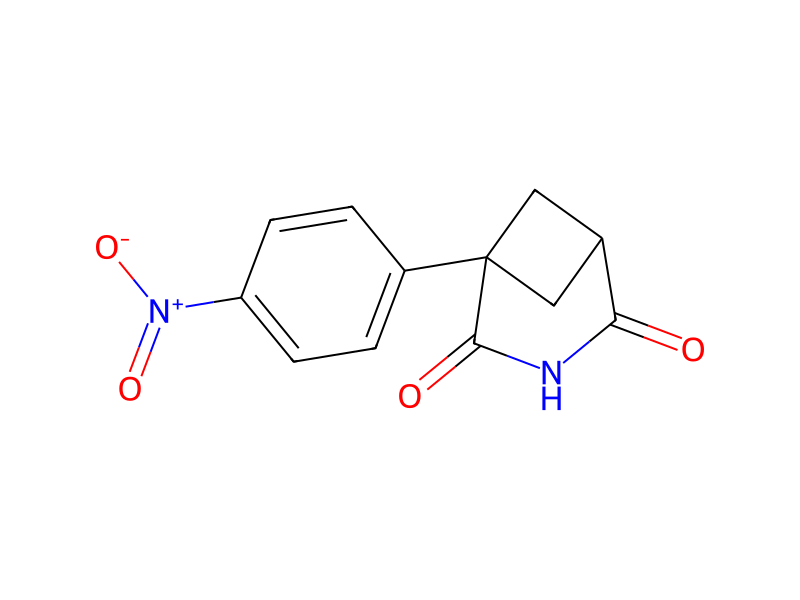
[H-].[Na+].[N+:3]([C:6]1[CH:11]=[CH:10][C:9]([C:12]23[CH2:18][CH:16]([CH2:17]2)[C:15](=[O:19])[NH:14][C:13]3=[O:20])=[CH:8][CH:7]=1)([O-:5])=[O:4].[CH2:21](Br)[CH2:22][CH2:23][CH3:24]>CN(C)C=O>[CH2:21]([N:14]1[C:15](=[O:19])[CH:16]2[CH2:17][C:12]([C:9]3[CH:8]=[CH:7][C:6]([N+:3]([O-:5])=[O:4])=[CH:11][CH:10]=3)([CH2:18]2)[C:13]1=[O:20])[CH2:22][CH2:23][CH3:24]Participants
5




Procedure
0.36 g of sodium hydride is added to a solution of 2.46 g of 1-(4-nitrophenyl)-3-azabicyclo[3.1.1]heptane-2,4-dione in 25 ml of N,N-dimethylformamide and the whole is stirred at room temperature for 30 minutes. 1.6 ml of n-butyl bromide dissolved in 10 ml of N,N-dimethylformamide are then added dropwise thereto. When the reaction is complete, the reaction mixture is freed of N,N-dimethylformamide. The residue is partitioned between ethyl acetate and water, and the organic phase is dried over magnesium sulphate and, after concentration by evaporation and subsequent recrystallisation from ethyl acetate/petroleum ether, the product is obtained having a melting point of 120°-123°.
Workup
- additionare then added dropwise
- customThe residue is partitioned between ethyl acetate and water
- dry with materialthe organic phase is dried over magnesium sulphate
- concentrationafter concentration
- customby evaporation and subsequent recrystallisation from ethyl acetate/petroleum ether
- customthe product is obtained
Sources & evidence
- ORD record
- ord-e5e544776f174dbab418792bef1cb992
- Source dataset
- uspto-grants-1989_08
- Patent number
- US04857660
Linked notes
Loading…