HomeMCPWorkbenchSkills
HomeWorkbenchNotificationsMe
llms.txt · MCP GuidePrivacy Policy · Terms of Service · Supportv1.8.3
  1. Home
  2. /Reaction

1,2,3,6-Tetrahydrophthalimide → 2-Octadecanoyl-3a,4,7,7a-tetrahydro-1H-isoindole-1,3(2H)-dione

HRID 1730626
Print

Reaction equation

HRID 1730626 reaction equation
[CH:1]12[C:9](=[O:10])[NH:8][C:7](=[O:11])[CH:2]1[CH2:3][CH:4]=[CH:5][CH2:6]2.C(N(CC)CC)C.[C:19](Cl)(=[O:37])[CH2:20][CH2:21][CH2:22][CH2:23][CH2:24][CH2:25][CH2:26][CH2:27][CH2:28][CH2:29][CH2:30][CH2:31][CH2:32][CH2:33][CH2:34][CH2:35][CH3:36].Cl.C(N(CC)CC)C>CCC(Cl)Cl>[C:19]([N:8]1[C:7](=[O:11])[CH:2]2[CH2:3][CH:4]=[CH:5][CH2:6][CH:1]2[C:9]1=[O:10])(=[O:37])[CH2:20][CH2:21][CH2:22][CH2:23][CH2:24][CH2:25][CH2:26][CH2:27][CH2:28][CH2:29][CH2:30][CH2:31][CH2:32][CH2:33][CH2:34][CH2:35][CH3:36]
ParticipantsProcedureWorkupSources & evidenceReaction notes

Participants

6

Reactant 4

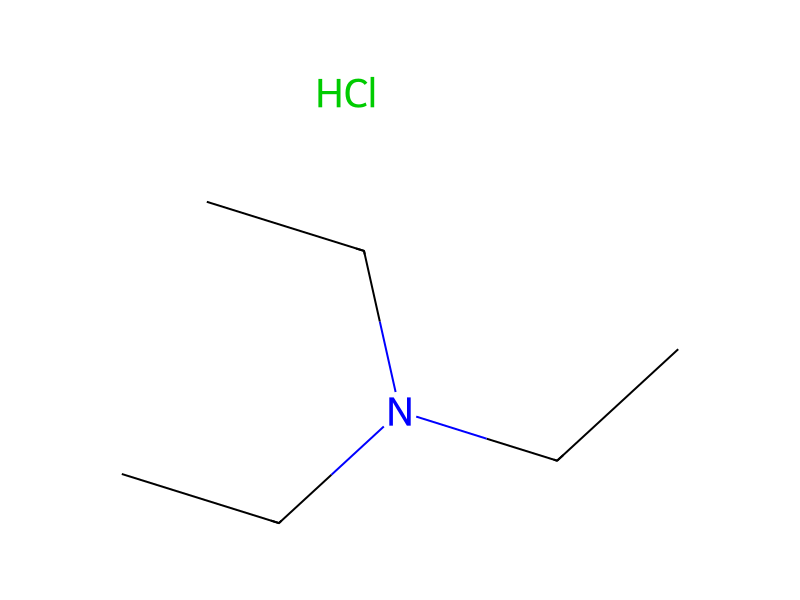
HCID 68081,2,3,6-TetrahydrophthalimideHCID 8212Stearoyl chlorideHCID 8471TriethylamineHCID 11130Triethylamine hydrochloride

Product 1

HCID 214959162-Octadecanoyl-3a,4,7,7a-tetrahydro-1H-isoindole-1,3(2H)-dione

Reagents, catalysts & solvents 1

HCID 6573
1,1-Dichloropropane
Solvent
2×

Procedure

A solution of 4-cyclohexene-1,2-dicarboximide (151g) and triethylamine (300 mls) in dichloropropane (900 mls) was maintained at a temperature of 50° C during the addition thereto over a period of 10 minutes, with constant stirring, of a solution of stearoyl chloride (302.5g) in a dichloropropane (300 mls). The mixture was stirred at 50° C for a further period of 10 minutes during which time triethylamine hydrochloride precipitated out, and was then filtered hot. The filtered precipitate was then washed with small portions of hot dichloropropane and the washings were combined with the filtrate. The solvent from the combined washings and filtrate was then evaporated off in a rotary evaporator to yield solid N-stearoyl-4-cyclohexene-1,2-dicarboximide, which was recrystallised from 60° - 80° petroleum ether.

Workup

  1. customprecipitated out
  2. filtrationwas then filtered hot
  3. washThe filtered precipitate was then washed with small portions of hot dichloropropane
  4. customThe solvent from the combined washings and filtrate was then evaporated off in a rotary evaporator

Sources & evidence

ORD record
ord-50c53ed3456541ea802fb9d37c9a3ce0
Source dataset
uspto-grants-1976_11
DOI
10.6084/m9.figshare.5104873.v1
Patent number
US03993640

Reaction notes

On this pageParticipantsProcedureWorkupSources & evidenceReaction notes