Reaction equation

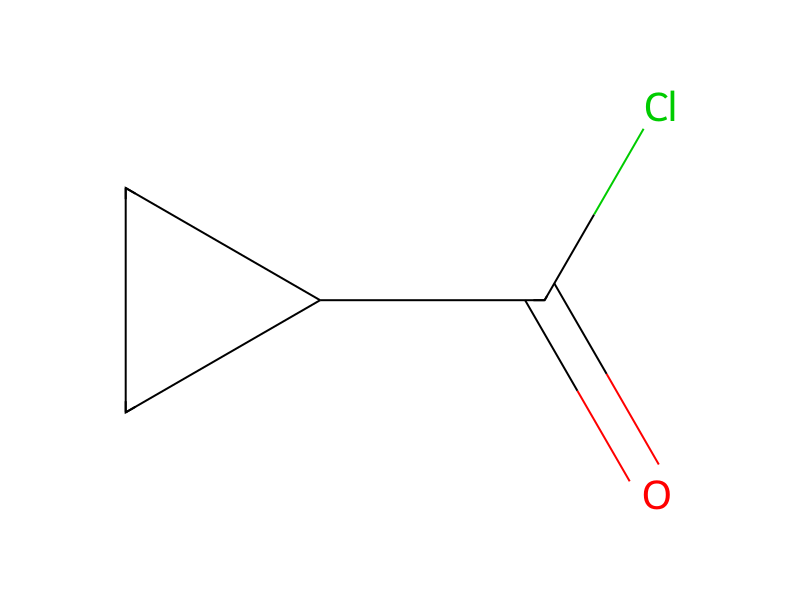
[NH2:1][C:2]1[C:9]([OH:10])=[C:8]([F:11])[C:7]([Br:12])=[C:6]([CH3:13])[C:3]=1[C:4]#[N:5].C(N(C(C)C)CC)(C)C.[CH:23]1([C:26](Cl)=[O:27])CC1>C(OCC)(=O)C>[C:26]([O:10][C:9]1[C:8]([F:11])=[C:7]([Br:12])[C:6]([CH3:13])=[C:3]([C:4]#[N:5])[C:2]=1[NH2:1])(=[O:27])[CH3:23]Participants
5




Procedure
2-Amino-5-bromo-4-fluoro-3-hydroxy-6-methylbenzonitrile (I-75) (7.86 g, 32.08 mmol) and diisopropylethylamine (19.5 ml, 112.2 mmol) were dissolved in ethyl acetate (300 ml), and at 0° C., cyclopropanecarbonyl chloride (4.4 ml, 48.12 mmol) was dropwise added, followed by stirring at room temperature for 16 hours under nitrogen atmosphere. After the reaction, ethyl acetate was added to the reaction liquid, followed by washing with water and saturated brine. The organic layer was concentrated under reduced pressure, the resulting residue was recrystallized with diisopropyl ether/ethyl acetate to obtain the entitled compound (8.96 g, 89%) as a white solid.
Workup
- additionwas added to the reaction liquid
- washby washing with water and saturated brine
- concentrationThe organic layer was concentrated under reduced pressure
- customthe resulting residue was recrystallized with diisopropyl ether/ethyl acetate
Sources & evidence
- ORD record
- ord-26668f8c13a84f17b4fc2b4a1d1a64da
- Source dataset
- uspto-grants-2010_06
- Patent number
- US07737166B2
Linked notes
Loading…