HomeMCPSkillsWorkbenchOpenChem
HomeWorkbenchNotificationsMe
llms.txt · skill.md · MCP GuidePrivacy Policy · Terms of Service · Supportv1.8.5
  1. Home
  2. /Reaction

Hydrogen Peroxide → N-(2-(3-Chlorophenyl)-5-hydroxypentyl)-N-methylbenzenesulfonamide

HRID 1737447
Print

Reaction equation

B1C2CCCC1CCC2.[Cl:10][C:11]1[CH:12]=[C:13]([CH:17]([CH2:30][CH:31]=[CH2:32])[CH2:18][N:19]([CH3:29])[S:20]([C:23]2[CH:28]=[CH:27][CH:26]=[CH:25][CH:24]=2)(=[O:22])=[O:21])[CH:14]=[CH:15][CH:16]=1.[OH-:33].[Na+].OO>C1COCC1>[Cl:10][C:11]1[CH:12]=[C:13]([CH:17]([CH2:30][CH2:31][CH2:32][OH:33])[CH2:18][N:19]([CH3:29])[S:20]([C:23]2[CH:24]=[CH:25][CH:26]=[CH:27][CH:28]=2)(=[O:22])=[O:21])[CH:14]=[CH:15][CH:16]=1
ParticipantsProcedureWorkupSources & evidenceReaction notes

Participants

6

Reactant 4

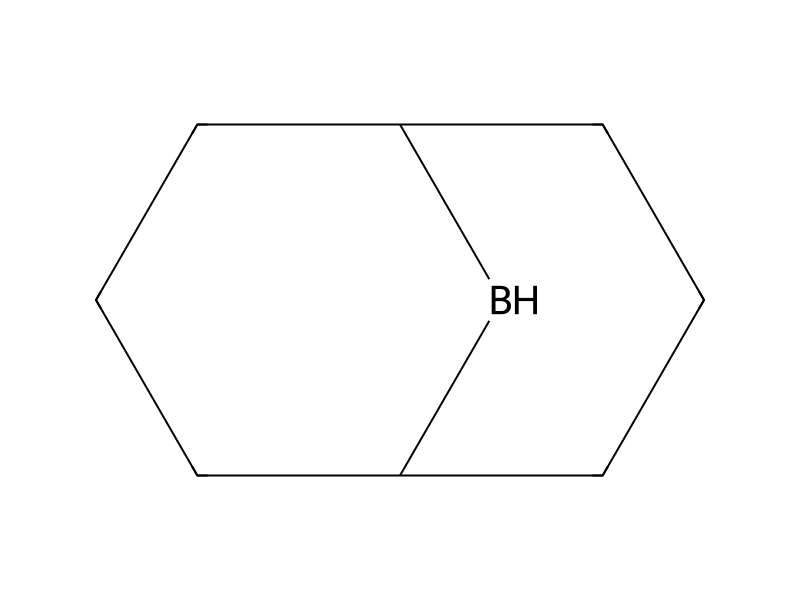
HCID 784Hydrogen PeroxideHCID 14798Sodium HydroxideHCID 789669-Borabicyclo(3.3.1)nonane2×HCID 23285190N-(2-(3-Chlorophenyl)pent-4-enyl)-N-methylbenzenesulfonamide

Product 1

HCID 21842614N-(2-(3-Chlorophenyl)-5-hydroxypentyl)-N-methylbenzenesulfonamideYield 37.1%

Reagents, catalysts & solvents

1
HCID 8028TetrahydrofuranSolvent

Procedure

9-BBN (119 mg, 0.488 mmol) was added in one portion to an ice cold solution of N-(2-(3-chlorophenyl)pent-4-enyl)-N-methylbenzenesulfonamide (100 mg, 0.286 mmol) in 1.0 mL of THF, and the mixture was allowed to warm to room temperature. After 15 h, an additional portion of 9-BBN (26 mg, 0.11 mmol) was added and stirring was continued for another 1 h. Aqueous 2.5 N sodium hydroxide solution (0.29 mL, 0.73 mmol) and aqueous 30% hydrogen peroxide solution (0.176 mL) were added and the mixture was stirred 45 min at room temperature, 5 h at 50 ° C., and overnight at room temperature. The reaction was concentrated and the residue was partitioned between 25 mL of ethyl acetate and a mixture of 20 mL of water and 5 mL of brine. The aqueous layer was extracted with 2×25 mL of ethyl acetate. The combined organic layers were washed with 25 mL of brine, dried over sodium sulfate, and concentrated. The residue was purified by flash column chromatography on silica gel, eluting with 5-50% ethyl acetate in dichloromethane to give 39 mg the title compound. 1NMR (400 MHz, CD3OD): δ 7.72 (d, 2H, J=8 Hz), 7.63 (tt, 11H, J=8, 1 Hz), 7.56 (t, 2H, J=8 Hz), 7.29 (dd, 1H, J=9, 8 Hz), 7.24-7.20 (m, 2H), 7.16 (dt, 1H, J=8, 1 Hz), 3.49 (t, 2H, J=7 Hz), 3.24 (dd, 1H, J=13, 8 Hz), 3.13 (dd, 1H, J=13, 7 Hz), 2.97-2.88 (m, 1H), 2.59 (s, 3H), 1.87-1.77 (m, 1H), 1.65-1.54 (m, 1H), 1.45-1.27 (m, 2H). Mass spectrum (NH3 /CI): m/z=368 (M+1).

Workup

  1. waitwas continued for another 1 h
  2. stirringthe mixture was stirred 45 min at room temperature, 5 h at 50 ° C.
  3. customovernight
  4. customat room temperature
  5. concentrationThe reaction was concentrated
  6. customthe residue was partitioned between 25 mL of ethyl acetate
  7. additiona mixture of 20 mL of water and 5 mL of brine
  8. extractionThe aqueous layer was extracted with 2×25 mL of ethyl acetate
  9. washThe combined organic layers were washed with 25 mL of brine
  10. dry with materialdried over sodium sulfate
  11. concentrationconcentrated
  12. customThe residue was purified by flash column chromatography on silica gel
  13. washeluting with 5-50% ethyl acetate in dichloromethane

Sources & evidence

ORD record
ord-ba81f20218b946159bafbdb1aae67ac6
Source dataset
uspto-grants-1999_10
DOI
10.6084/m9.figshare.5104873.v1
Patent number
US05962462

Reaction notes

On this pageParticipantsProcedureWorkupSources & evidenceReaction notes