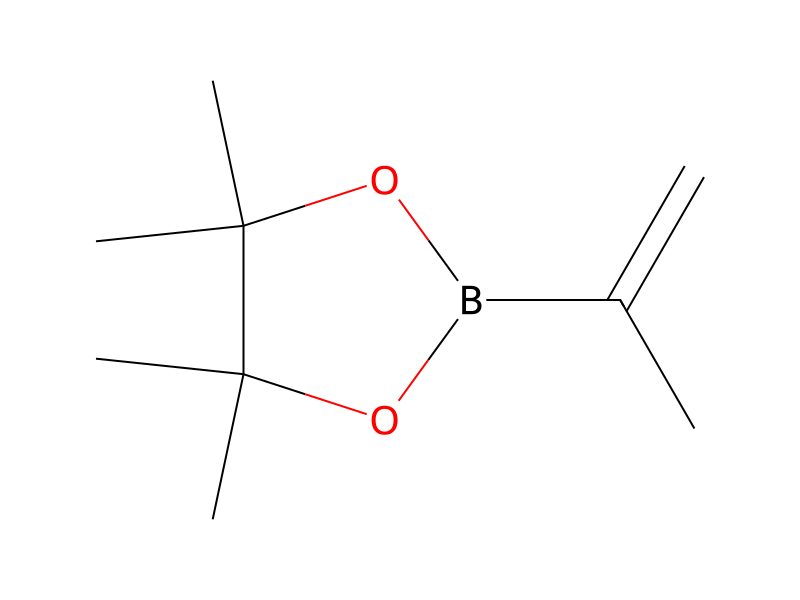
Br[C:2]1[CH:3]=[C:4]([Cl:10])[C:5]([Cl:9])=[C:6]([Cl:8])[CH:7]=1.[CH3:11][C:12]1(C)[C:16](C)(C)OB(C(C)=C)O1.C([O-])([O-])=O.[K+].[K+].CC(=O)OCC>C1COCC1.O.Cl[Pd](Cl)([P](C1C=CC=CC=1)(C1C=CC=CC=1)C1C=CC=CC=1)[P](C1C=CC=CC=1)(C1C=CC=CC=1)C1C=CC=CC=1>[Cl:10][C:4]1[CH:3]=[C:2]([C:12]([CH3:16])=[CH2:11])[CH:7]=[C:6]([Cl:8])[C:5]=1[Cl:9]To a mixture of 5-bromo-1,2,3-trichlorobenzene (3.64 g, 14 mmol), 4,4,5,5-tetramethyl-2-(prop-1-en-2-yl)-1,3,2-dioxaborolane (2.5 g, 15 mmol) and Pd(PPh3)2Cl2 (983 mg, 1.4 mmol) in THF (50 ml) and H2O (5 ml) at rt was added K2CO3 (5.8 g, 42 mmol). The mixture was refluxed overnight and then concentrated under reduced pressure. The residue was purified by column chromatography over silica gel eluted with PE:EA (5:1 to 2:1) to give the desired intermediate (2.5 g, yield 81%) as a yellow oil: 1H NMR (300 MHz, CDCl3): δ 7.44 (s, 2H), 5.39 (s, 1H), 5.19-5.18 (t, 1H), 2.10 (s, 3H) ppm.