Reaction equation

[C:1]([O:6][CH3:7])(=[O:5])[C:2]([CH3:4])=[CH2:3].[CH:8]1(O)[CH2:13][CH2:12]C[CH2:10][CH2:9]1.C1(NC2C=CC(C3C=CC(NC4C=CC=CC=4)=CC=3)=CC=2)C=CC=CC=1.[C-]#N.[K+].C(OC)(=O)C(C)=C.CO>>[C:1]([O:6][CH:7]1[CH2:12][CH2:13][CH2:8][CH2:9][CH2:10]1)(=[O:5])[C:2]([CH3:4])=[CH2:3]Participants

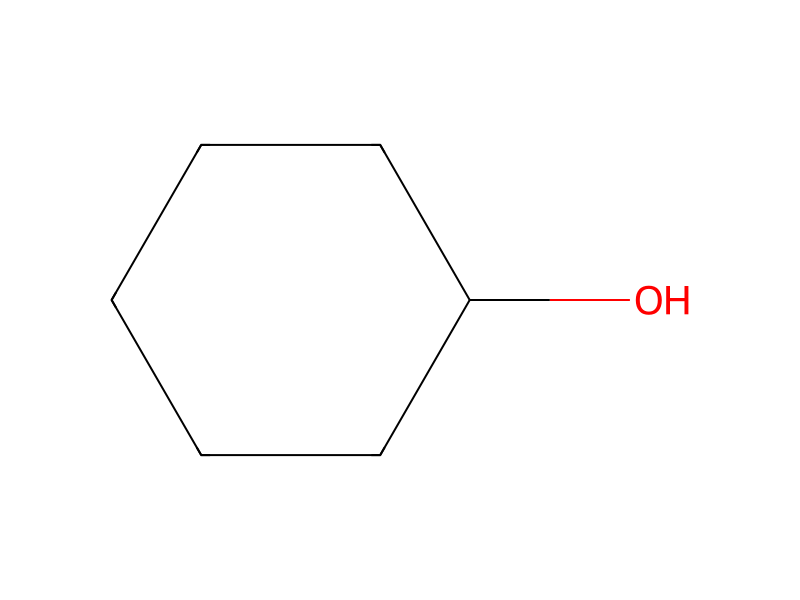


Conditions
- Temperature
- 75 °C
Procedure
400 g of methyl methacrylate (4 mole), 200 g of cyclohexanol (2 mole) and 0.30 g of N,N'-diphenylbenzidine (500 ppm) are added to a 1 liter round-bottomed flask. Azeotropic dehydration is accomplished by conducting air through the resulting mixture, by way of a 1 m vigreux column. After cooling of the contents of the flask to about 75° C., 3 g of potassium cyanide (0.5%) are added, and the methyl methacrylate/methanol-azeotrope is distilled-off at a temperature of 65° C. at the head of the column. The trans-esterification is completed after 3.5 hours. After cooling of the flask, the sump is filtered to remove the potassium cyanide, and the filter residue is washed with a little methyl methacrylate. The filtrate is concentrated at 40° C. under a water jet vacuum. A residue of cyclohexyl methacrylate of 310 g = 85% will result.
Workup
- customis distilled-off at a temperature of 65° C. at the head of the column
- temperatureAfter cooling of the flask
- filtrationthe sump is filtered
- customto remove the potassium cyanide
- washthe filter residue is washed with a little methyl methacrylate
- concentrationThe filtrate is concentrated at 40° C. under a water jet vacuum
Sources & evidence
- ORD record
- ord-19270db3b1b14bd99ccff77ff090aace
- Source dataset
- uspto-grants-1978_09
- Patent number
- US04117238
Linked notes
Loading…