Reaction equation

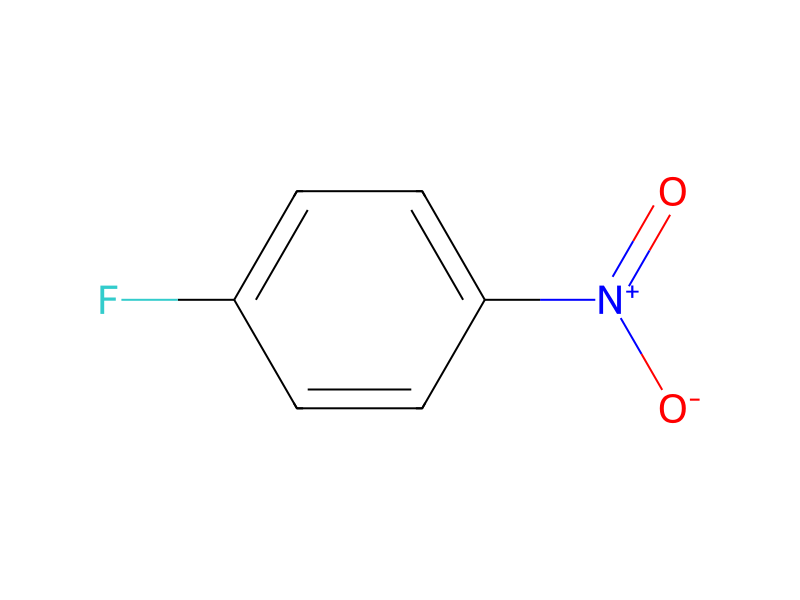
F[C:2]1[CH:7]=[CH:6][C:5]([N+:8]([O-:10])=[O:9])=[CH:4][CH:3]=1.C(=O)([O-])[O-].[K+].[K+].[Cl:17][C:18]1[CH:23]=[CH:22][C:21]([OH:24])=[C:20]([CH:25]2[CH2:30][CH2:29][CH2:28][CH2:27][CH2:26]2)[CH:19]=1.CCOC(C)=O>CN(C=O)C>[Cl:17][C:18]1[CH:23]=[CH:22][C:21]([O:24][C:2]2[CH:7]=[CH:6][C:5]([N+:8]([O-:10])=[O:9])=[CH:4][CH:3]=2)=[C:20]([CH:25]2[CH2:30][CH2:29][CH2:28][CH2:27][CH2:26]2)[CH:19]=1Participants
6





Conditions
- Temperature
- 80 °C
Procedure
To a stirred solution of 1-fluoro-4-nitrobenzene (10 mmol) in DMF (10 mL) at rt, solid potassium carbonate (30 mmol) was added followed by addition of 4-chloro-2-cyclohexylphenol (10 mmol) to the reaction mixture and heating to 80° C. until the reaction was complete as indicated by TLC or HPLC. After cooling to rt, the reaction mixture was poured into EtOAc (80 ml), washed with H2O (2×40 ml) and brine (60 mL), and dried over sodium sulfate. The solvent was removed in vacuuo to afford the desired 4-(4-chloro-2-cyclohexylphenoxy)-1-nitrobenzene. The crude product was used for further transformation.
Workup
- temperatureAfter cooling to rt
- washwashed with H2O (2×40 ml) and brine (60 mL)
- dry with materialdried over sodium sulfate
- customThe solvent was removed in vacuuo
Sources & evidence
- ORD record
- ord-31e3056647044bc28e7ac833a0dea674
- Source dataset
- uspto-grants-2010_06
- Patent number
- US07737285B2
Linked notes
Loading…