HomeMCPSkillsWorkbenchOpenChem
HomeWorkbenchNotificationsMe
llms.txt · skill.md · MCP GuidePrivacy Policy · Terms of Service · Supportv1.8.5
  1. Home
  2. /Reaction

Ammonium Chloride → 2',4'-Difluoro-2-methyl-3-(4-cyanophenyl)-propiophenone

HRID 1779985
Print

Reaction equation

[CH3:1][CH2:2][C:3]([C:5]1[CH:10]=[CH:9][C:8]([F:11])=[CH:7][C:6]=1[F:12])=[O:4].C[Si](C)(C)[N-][Si](C)(C)C.[Li+].[C:23]([C:25]1[CH:32]=[CH:31][C:28]([CH2:29]Br)=[CH:27][CH:26]=1)#[N:24].[Cl-].[NH4+]>O1CCCC1.O>[F:12][C:6]1[CH:7]=[C:8]([F:11])[CH:9]=[CH:10][C:5]=1[C:3](=[O:4])[CH:2]([CH3:1])[CH2:29][C:28]1[CH:31]=[CH:32][C:25]([C:23]#[N:24])=[CH:26][CH:27]=1
ParticipantsProcedureWorkupSources & evidenceReaction notes

Participants

7

Reactant 4

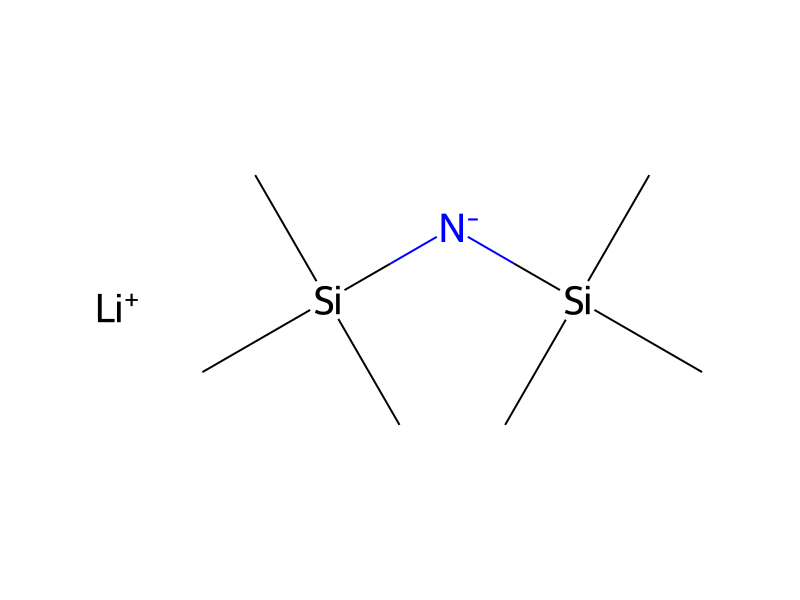
HCID 25517Ammonium ChlorideHCID 869964-(Bromomethyl)benzonitrileHCID 1235862',4'-DifluoropropiophenoneHCID 2733832Lithium hexamethyldisilazane

Product 1

HCID 190492012',4'-Difluoro-2-methyl-3-(4-cyanophenyl)-propiophenoneYield 41%

Reagents, catalysts & solvents 2

HCID 962
Water
Solvent
HCID 8028TetrahydrofuranSolvent3×

Procedure

A 19 g portion of 2,4-difluoropropiophenone was dissolved in 150 ml of tetrahydrofuran. With cooling in a dry ice-acetone bath and spending 20 minutes or more, to this was added dropwise 112 ml of 1N tetrahydrofuran solution of lithium hexamethyl disilazide. After 1 hour of stirring at the same temperature, to this was further added dropwise 50 ml of tetrahydrofuran solution containing 14 g of 4-cyanobenzyl bromide spending 20 minutes or more, followed by overnight stirring at room temperature. The reaction solution was mixed with saturated ammonium chloride aqueous solution, poured into water and then extracted with ethyl acetate. The thus obtained organic layer was washed with water and dried on anhydrous magnesium sulfate. After removing the solvent by evaporation under a reduced pressure, the resulting residue was purified by a silica gel column chromatography (ethyl acetate:n-hexane=1:9) to obtain 13 g of 2',4'-difluoro-2-methyl-3-(4-cyanophenyl)-propiophenone with a yield of 41%.


Workup

  1. temperatureWith cooling in a dry ice-acetone bath
  2. waitspending 20 minutes or more
  3. waitfollowed by overnight
  4. stirringstirring at room temperature
  5. extractionextracted with ethyl acetate
  6. washThe thus obtained organic layer was washed with water
  7. dry with materialdried on anhydrous magnesium sulfate
  8. customAfter removing the solvent
  9. customby evaporation under a reduced pressure
  10. customthe resulting residue was purified by a silica gel column chromatography (ethyl acetate:n-hexane=1:9)

Sources & evidence

ORD record
ord-73408bf7f96f437b8f24efa9a97c032e
Source dataset
uspto-grants-1997_05
DOI
10.6084/m9.figshare.5104873.v1
Patent number
US05629332

Reaction notes

On this pageParticipantsProcedureWorkupSources & evidenceReaction notes