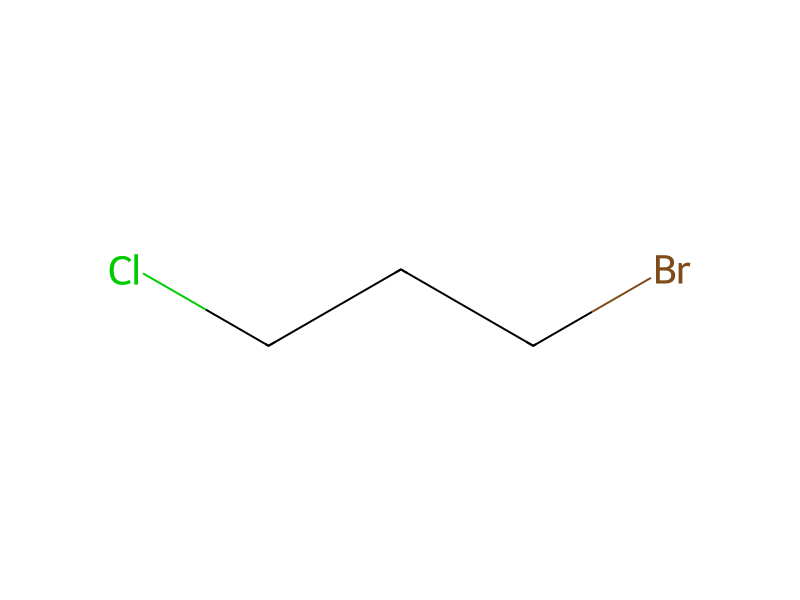
[Cl:1][C:2]1[CH:7]=[CH:6][C:5]([CH:8]([C:10]2[N:11]([CH3:16])[C:12]([SH:15])=[N:13][CH:14]=2)[OH:9])=[CH:4][CH:3]=1.C([O-])([O-])=O.[K+].[K+].Br[CH2:24][CH2:25][CH2:26][Cl:27]>CC(C)=O.CN(C=O)C>[Cl:1][C:2]1[CH:3]=[CH:4][C:5]([CH:8]([C:10]2[N:11]([CH3:16])[C:12]([S:15][CH2:24][CH2:25][CH2:26][Cl:27])=[N:13][CH:14]=2)[OH:9])=[CH:6][CH:7]=1The product of Example I, Step A (0.09 g) in acetone (2 mL) and DMF (2 mL) was treated with K2CO3 (0.2 g) followed by 1-bromo-3-chloropropane (0.11 g). The mixture was allowed to stir at rt for 16 h and was then partitioned between EtOAc (50 mL) and brine (50 mL). The organic layer was separated and washed with brine (2×200 mL), dried over Na2SO4, filtered, and evaporated to give the crude product. The crude product was purified by silica gel chromatography using 2-5% MeOH/CH2Cl2 as the eluent to provide (4-Chloro-phenyl)-[2-(3-chloro-propylsulfanyl)-3-methyl-3H-imidazol-4-yl]-methanol (0.08 g, 69%); M calc=330; M+H found=331.