Reaction equation

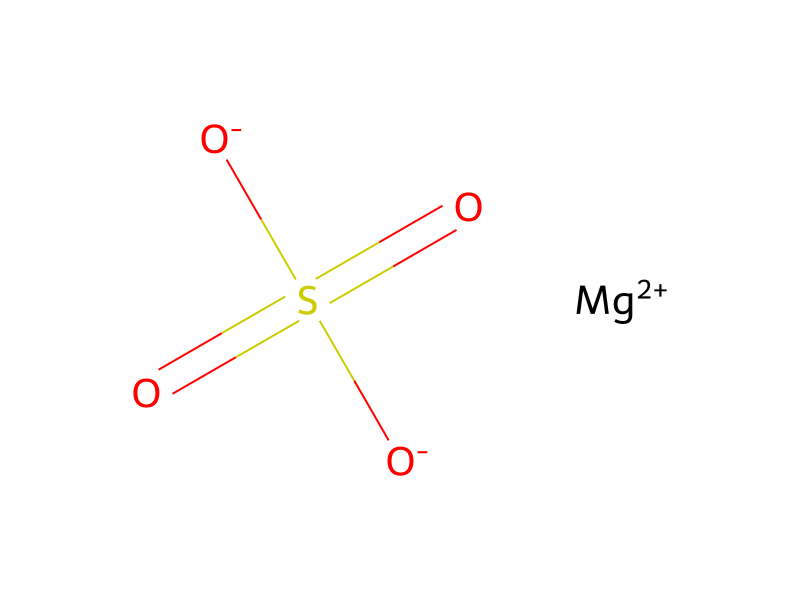
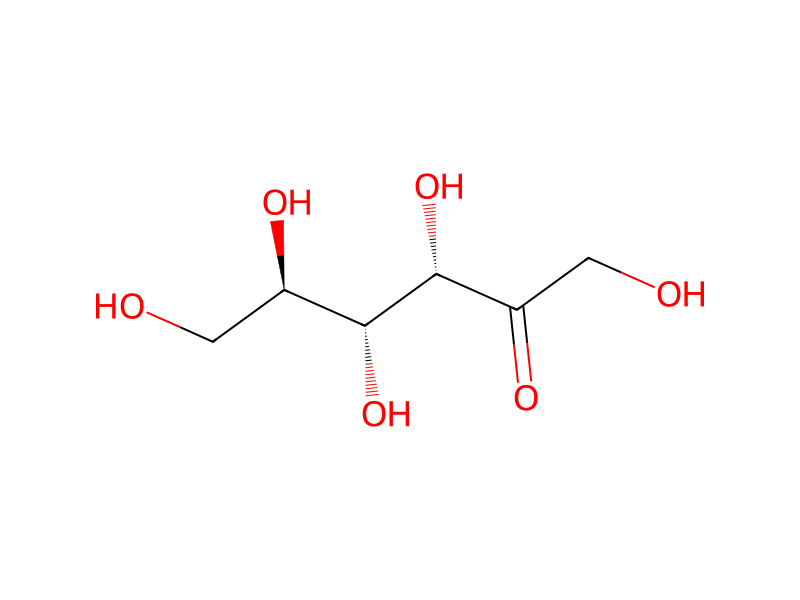
[O:1]=[CH:2][C@@H:3]([C@H:5]([C@@H:7]([C@@H:9]([CH2:11][OH:12])[OH:10])[OH:8])[OH:6])[OH:4].C(O)[C@H]1OC(O)[C@H](O)[C@@H](O)[C@@H]1O.O.[O-]S([O-])(=O)=O.[Mg+2].C([O-])(O)=O.[Na+]>O>[OH:1][CH2:2][C:3]([C@H:5]([C@@H:7]([C@@H:9]([CH2:11][OH:12])[OH:10])[OH:8])[OH:6])=[O:4]Participants




Conditions
- Temperature
- 60 °C
Procedure
This example describes the application of the immobilized glucose isomerase produced from DSM 3253. 11.7 g of the dried granulate produced in Example 6 was soaked in 200 ml 45% w/w glucose syrup, pH 7.5 for two hours. The enzyme particles were then transferred to a water jacketed column and a 45% w/w glucose syrup with 0.4 g MgSO4, 7H2O/l and 2 mM NaHCO3 at pH 7.5 was continuously pumped through the column at room temperature. After 1 hour the column temperature was raised to 60° C. and the flow adjusted to obtain a 41-44.5% conversion to fructose. The activity increased during the first 137 hours of isomerization. The syrup flow after 137 hours was 0.88 g syrup dry substance per g enzyme per hour and the degree of conversion in the outlet syrup was 44.3%. The experiment was terminated after 328 hours, the final syrup flow being 1.03 g syrup dry substance per g enzyme per hour with a degree of conversion in the outlet syrup of 42.0%.
Workup
- customisomerase produced from DSM 3253
- custom11.7 g of the dried granulate produced in Example 6
- customwas continuously pumped through the column at room temperature
Sources & evidence
- ORD record
- ord-cff468f4f07445f5a8898cf0f4e36580
- Source dataset
- uspto-grants-1987_08
- Patent number
- US04687742
Linked notes
Loading…