Triethylamine → HCID 178503435, compound
HRID 1809694
Reaction equation

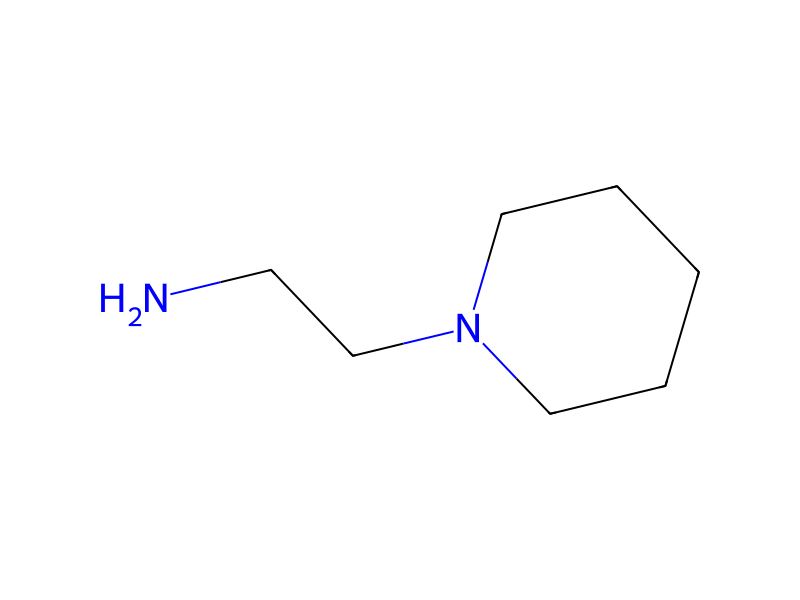
Cl[C:2]1[N:7]=[C:6]2[NH:8][N:9]=[C:10]([C:11]3[CH:16]=[CH:15][N:14]=[C:13]([S:17][CH3:18])[N:12]=3)[C:5]2=[CH:4][N:3]=1.[N:19]1([CH2:25][CH2:26][NH2:27])[CH2:24][CH2:23][CH2:22][CH2:21][CH2:20]1.C(N(CC)CC)C>CC(O)C>[CH3:18][S:17][C:13]1[N:12]=[C:11]([C:10]2[C:5]3[C:6](=[N:7][C:2]([NH:27][CH2:26][CH2:25][N:19]4[CH2:24][CH2:23][CH2:22][CH2:21][CH2:20]4)=[N:3][CH:4]=3)[NH:8][N:9]=2)[CH:16]=[CH:15][N:14]=1Participants
5
Reactant 3


Product 1

Reagents, catalysts & solvents 1

Procedure
To a solution of 6-chloro-3-(2-methylsulfanyl-pyrimidin-4-yl)-1H-pyrazolo[3,4-d]pyrimidine (from Example 7 supra) (450 mg, 1.61 mmol) in 2-propanol (40 mL) was added 2-(piperidin-1-yl)ethanamine (227 mg, 1.77 mmol) followed by triethylamine (160 mg, 1.58 mmol). The reaction mixture was stirred at reflux for 15 hours and the solvent was then removed under reduced pressure. The residue was extracted with dichloromethane (3×30 mL), washed with water (5 mL), dried over anhydrous sodium sulfate, filtered and concentrated to afford [3-(2-methylsulfanyl-pyrimidin-4-yl)-1H-pyrazolo[3,4-d]pyrimidin-6-yl]-(2-piperidin-1-yl-ethyl)-amine. (Yield 411 mg, crude).