HomeMCPSkillsWorkbenchOpenChem
HomeWorkbenchNotificationsMe
llms.txt · skill.md · MCP GuidePrivacy Policy · Terms of Service · Supportv1.8.4
  1. Home
  2. /Reaction

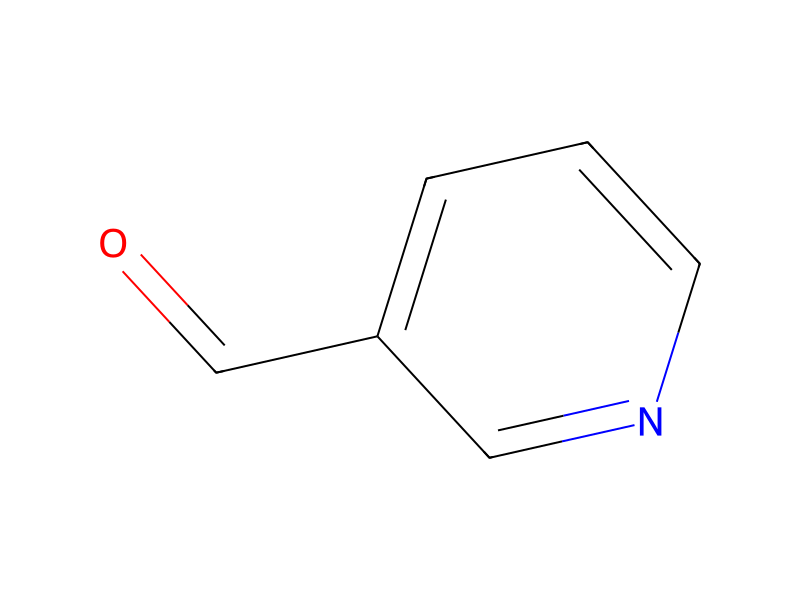
3-Pyridinecarboxaldehyde → 1-(4-Ethylpiperazin-1-yl)-3-[(3-pyridyl)hydroxymethyl]isoquinoline

HRID 1814582
Print

Reaction equation

[CH2:1]([N:3]1[CH2:8][CH2:7][N:6]([C:9]2[C:18]3[C:13](=[CH:14][CH:15]=[CH:16][CH:17]=3)[CH:12]=[C:11](Br)[N:10]=2)[CH2:5][CH2:4]1)[CH3:2].[Li]CCCC.[CH:25]([C:27]1[CH:28]=[N:29][CH:30]=[CH:31][CH:32]=1)=[O:26]>O1CCCC1.C(OCC)(=O)C>[CH2:1]([N:3]1[CH2:8][CH2:7][N:6]([C:9]2[C:18]3[C:13](=[CH:14][CH:15]=[CH:16][CH:17]=3)[CH:12]=[C:11]([CH:25]([C:27]3[CH:28]=[N:29][CH:30]=[CH:31][CH:32]=3)[OH:26])[N:10]=2)[CH2:5][CH2:4]1)[CH3:2]
ParticipantsProcedureWorkupSources & evidenceReaction notes

Participants

6

Reactant 3

HCID 103713-PyridinecarboxaldehydeHCID 225024471-(1-Ethylpiperazin-4-yl)-3-bromoisoquinolineHCID 178418339Butyllithium

Product 1

HCID 225024871-(4-Ethylpiperazin-1-yl)-3-[(3-pyridyl)hydroxymethyl]isoquinolineYield 35.3%

Reagents, catalysts & solvents 2

HCID 8028TetrahydrofuranSolvent
2×
HCID 8857Ethyl AcetateSolvent

Procedure

A solution of 1-(4-ethylpiperazin-1-yl)-3-bromoisoquinoline (0.39 g) obtained in Example 28-2, in tetrahydrofuran (10 ml) was cooled to −78° C., followed by the dropwise addition of 2.5M n-BuLi (0.6 ml). Fifteen minutes later, a solution of 3-formylpyridine (0.2 g) in tetrahydrofuran (3 ml) was added dropwise thereto. The temperature of the reaction solution was gradually raised to room temperature. The reaction solution was diluted with ethyl acetate, washed with brine, water and an aqueous solution of saturated sodium chloride, and dried over magnesium sulfate. The solvent was evaporated, and the resulting residue was purified by silica gel column chromatography (methylene chloride/methanol system), to give the title compound (0.15 g) as a pale yellow oil.

Workup

  1. washwashed with brine, water
  2. dry with materialan aqueous solution of saturated sodium chloride, and dried over magnesium sulfate
  3. customThe solvent was evaporated
  4. customthe resulting residue was purified by silica gel column chromatography (methylene chloride/methanol system)

Sources & evidence

ORD record
ord-d2a029b13d4d467fb0d3bbf72327b883
Source dataset
uspto-grants-2005_04
DOI
10.6084/m9.figshare.5104873.v1
Patent number
US06875761B2

Reaction notes

On this pageParticipantsProcedureWorkupSources & evidenceReaction notes