HomeMCPWorkbenchSkills
HomeWorkbenchNotificationsMe
llms.txt · MCP GuidePrivacy Policy · Terms of Service · Supportv1.8.3
  1. Home
  2. /Reaction

Hydrochloric Acid → 3-(2-Benzyl-2-aza-bicyclo[3.3.1]non-5-yl)-phenylamine

HRID 1827939
Print

Reaction equation

HRID 1827939 reaction equation
[CH2:1]([N:8]1[CH2:15][CH2:14][C:13]2([C:17]3[CH:18]=[C:19](OS(C(F)(F)F)(=O)=O)[CH:20]=[CH:21][CH:22]=3)[CH2:16][CH:9]1[CH2:10][CH2:11][CH2:12]2)[C:2]1[CH:7]=[CH:6][CH:5]=[CH:4][CH:3]=1.C(=[NH:44])(C1C=CC=CC=1)C1C=CC=CC=1.C(=O)([O-])[O-].[Cs+].[Cs+].C1C=CC(P(C2C(C3C(P(C4C=CC=CC=4)C4C=CC=CC=4)=CC=C4C=3C=CC=C4)=C3C(C=CC=C3)=CC=2)C2C=CC=CC=2)=CC=1.Cl>C1COCC1.C([O-])(=O)C.[Pd+2].C([O-])(=O)C>[CH2:1]([N:8]1[CH2:15][CH2:14][C:13]2([C:17]3[CH:18]=[C:19]([NH2:44])[CH:20]=[CH:21][CH:22]=3)[CH2:16][CH:9]1[CH2:10][CH2:11][CH2:12]2)[C:2]1[CH:7]=[CH:6][CH:5]=[CH:4][CH:3]=1
ParticipantsConditionsProcedureWorkupSources & evidenceReaction notes

Participants

8

Reactant 5

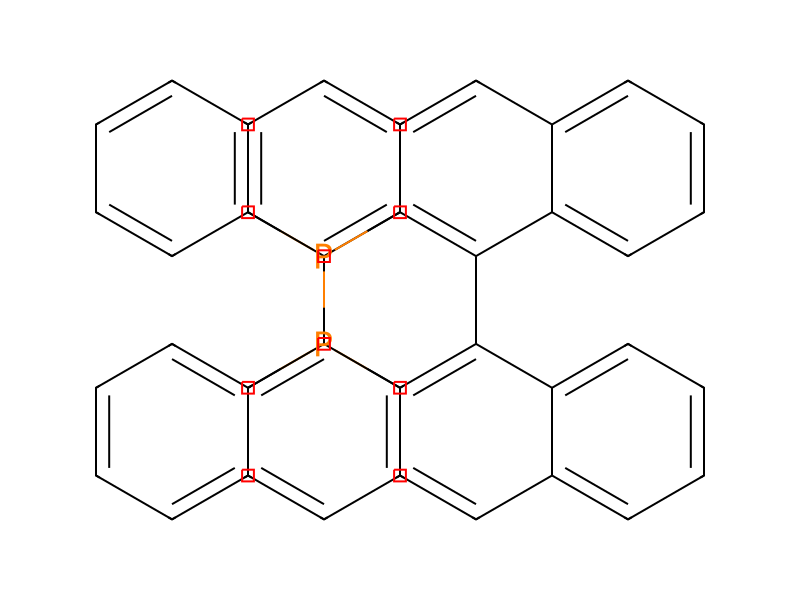
HCID 313Hydrochloric AcidHCID 10796Cesium carbonateHCID 136809Benzophenone imineHCID 634876Binap, (A+-)-2×HCID 86594615Trifluoro-methanesulfonic acid 3-(2-benzyl-2-aza-bicyclo[3.3.1]non-5-yl)-phenyl ester

Product 1

HCID 22064584
3-(2-Benzyl-2-aza-bicyclo[3.3.1]non-5-yl)-phenylamine
Yield 62.3%

Reagents, catalysts & solvents 2

HCID 167845palladium(II) acetateCatalyst2×HCID 8028TetrahydrofuranSolvent3×

Conditions

Temperature
80 °C

Procedure

Trifluoro-methanesulfonic acid 3-(2-benzyl-2-aza-bicyclo[3.3.1]non-5-yl)-phenyl ester (13.33 g, 30.33 mmol) was azeotroped with THF (2×50 mL) then dissolved in anhydrous THF (150 mL) with benzophenone imine (6.3 mL, 17.61 mmol), cesium carbonate (14.23 g, 43.67 mmol) and BINAP (racemic, 1.89 g, 3.03 mmol). The reaction vessel was degassed (evac./N2 purge 3×) before charging with palladium (II) acetate (410 mg, 1.82 mmol). The reaction was warmed to 80° C. for 18 h, at which point it was judged incomplete by APCI MS. After cooling additional BINAP (racemic, 1.89 g, 3.03 mmol) and palladium (II) acetate (410 mg, 1.82 mmol) were introduced and the reaction was warmed to 80° C. for 60 h, at which point it was judged complete by APCI MS. The reaction was cooled and filtered through Celite, rinsed with THF and concentrated. The resulting oil was dissolved in CH2Cl2 (200 mL), washed with water (100 mL) and saturated aqueous NaCl solution (100 mL), dried through a cotton plug and concentrated to give the crude product. To this was added fresh THF (150 mL) followed by 2N HCl (150 mL) and this stirred solution was warmed to 65° C. for 60 min then at room temperature for 18 h. The reaction mixture was treated with hexanes (150 mL). The resulting orange solid is filtered. (On occasion an orange gum separates and is separated by decantation or filtration.) The biphasic filtrate was separated and the hexane layer discarded. The aqueous layer was extracted with Et2O (150 mL) and the Et2O layer discarded. The aqueous layer was then neutralized with 25% aqueous NaOH solution to achieve pH 9 and the product was extracted with CH2Cl2 (5×40 mL), washed with saturated aqueous NaCl solution (1×30 mL), dried over Na2SO4 and concentrated to give the crude product. Flash chromatography provided the title compound as a thick yellow oil (3.36 g, 36%). (TLC 50% EtOAc/hexanes Rf 0.30); 1H NMR (400 MHz, CDCl3) δ 7.24 (m, 2H), 7.36 (m, 2H), 7.26 (m, 2H), 7.07 (t, J=7.9 Hz, 1H), 6.71 (dd, J=7.9, 1.6 Hz, 1H), 6.64 (m, 1H), 6.50 (dd, J=7.9, 2.0 Hz, 1H), 3.80 (m, 2H), 3.61 (m, 1H), 3.15 (m, 2H), 2.80 (m, 1H), 2.17 (br d, J=14.2 Hz, 2H), 2.00 (m, 3H), 1.79 (br d, J=12.5 Hz, 1H), 1.72 (m, 1H), 1.64 (m, 1H), 1.38 (m, 1H); APCI MS m/z 307.1 (M+1)+.


Workup

  1. customThe reaction vessel was degassed
  2. custom(evac./N2 purge 3×)
  3. additionwere introduced
  4. temperaturethe reaction was warmed to 80° C. for 60 h, at which point it
  5. temperatureThe reaction was cooled
  6. filtrationfiltered through Celite
  7. washrinsed with THF
  8. concentrationconcentrated
  9. dissolutionThe resulting oil was dissolved in CH2Cl2 (200 mL)
  10. washwashed with water (100 mL) and saturated aqueous NaCl solution (100 mL)
  11. customdried through a cotton plug
  12. concentrationconcentrated
  13. customto give the crude product
  14. temperaturethis stirred solution was warmed to 65° C. for 60 min
  15. filtrationThe resulting orange solid is filtered
  16. custom(On occasion an orange gum separates and is separated by decantation or filtration
  17. custom) The biphasic filtrate was separated
  18. extractionThe aqueous layer was extracted with Et2O (150 mL)
  19. extractionthe product was extracted with CH2Cl2 (5×40 mL)
  20. washwashed with saturated aqueous NaCl solution (1×30 mL)
  21. dry with materialdried over Na2SO4
  22. concentrationconcentrated
  23. customto give the crude product

Sources & evidence

ORD record
ord-d7b3b2a15e6744f38139b03191a69180
Source dataset
uspto-grants-2006_06
DOI
10.6084/m9.figshare.5104873.v1
Patent number
US07056930B2

Reaction notes

On this pageParticipantsConditionsProcedureWorkupSources & evidenceReaction notes