Chloroform → 2-(Chloromethyl)(1,3)oxazolo(4,5-b)pyridine
Reaction equation

[NH2:1][C:2]1[C:7]([OH:8])=[CH:6][CH:5]=[CH:4][N:3]=1.O.[C:10]1([CH3:20])C=CC(S(O)(=O)=O)=CC=1.C(Cl)(Cl)[Cl:22]>COCCOCCOC.C(O)C>[Cl:22][CH2:10][C:20]1[O:8][C:7]2[C:2]([N:1]=1)=[N:3][CH:4]=[CH:5][CH:6]=2Participants
Reactant 3



Product 1

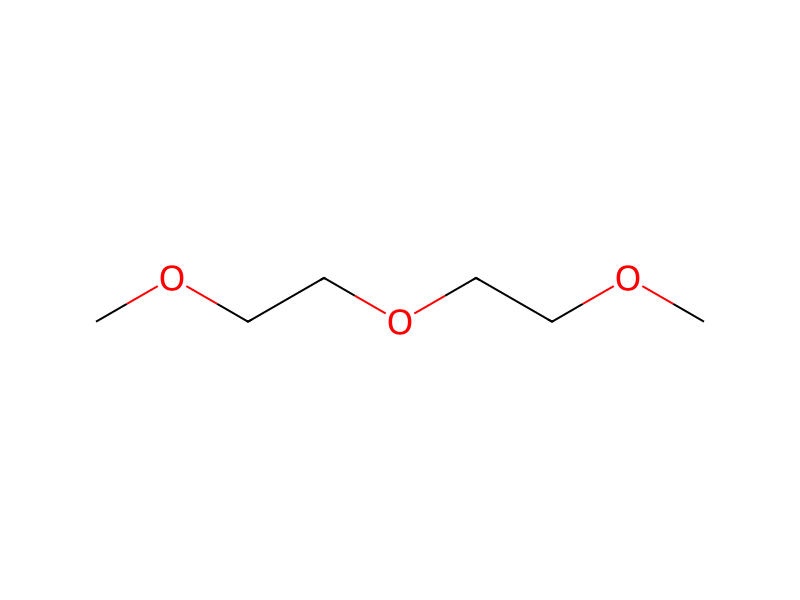
Reagents, catalysts & solvents 2

Conditions
- Temperature
- 80 °C
Procedure
2-Amino-3-pyridinol (1.1 g, Chemical Abstracts #16867-03-1) and chloromethyltrimethylorthoformate (2.27 g) were combined in diglyme (in 21 mL) and heated at 80° C. for 6 hours. The mixture was treated with p-toluenesulfonic acid hydrate (4 mg) and heated at 80° C. for an additional 48 hours. The mixture was allowed to cool to room temperature and diluted with chloroform (40 mL) and ethanol (10 mL). The mixture was filtered and the filtrate concentrated under reduced pressure. The residue was dissolved in methanol and filtered again. The resulting filtrate was concentrated under reduced pressure to provide the title compound and then dissolved in acetonitrile (35 mL) and used as a solution in the next step. 1H NMR (CDCl3, 300 MHz) δ 4.82 (2H, s), 7.38 (dd, 1H, J=8.7, 5.4 Hz), 7.89 (dd, 1H, J=8.7, 1.5 Hz), 8.62 (dd, 1H, J=5.4, 1.5 Hz). MS (DCI/NH3) m/z 169 (M+H)+.
Workup
- temperatureheated at 80° C. for an additional 48 hours
- temperatureto cool to room temperature
- filtrationThe mixture was filtered
- concentrationthe filtrate concentrated under reduced pressure
- dissolutionThe residue was dissolved in methanol
- filtrationfiltered again
- concentrationThe resulting filtrate was concentrated under reduced pressure
Sources & evidence
- ORD record
- ord-8bd8cbf86d2a4cff85f86197521bcdca
- Source dataset
- uspto-grants-2006_06
- Patent number
- US07057042B2
Reaction notes
Loading…