HomeMCPWorkbenchSkills
HomeWorkbenchNotificationsMe
llms.txt · MCP GuidePrivacy Policy · Terms of Service · Supportv1.8.3
  1. Home
  2. /Reaction

4-Fluorophenol → 7-(4-Fluoro-phenoxymethyl)-2-methyl-4-pyrrolidin-1-yl-quinoline

HRID 1829743
Print

Reaction equation

HRID 1829743 reaction equation
CC(OC(/N=N/C(OC(C)C)=O)=O)C.Cl[C:16]1[C:25]2[C:20](=[CH:21][C:22]([CH2:26][OH:27])=[CH:23][CH:24]=2)[N:19]=[C:18]([CH3:28])[CH:17]=1.C1(P(C2C=CC=CC=2)C2C=CC=CC=2)C=CC=CC=1.[F:48][C:49]1[CH:54]=[CH:53][C:52](O)=[CH:51][CH:50]=1.[NH:56]1[CH2:60][CH2:59][CH2:58][CH2:57]1>ClCCl>[F:48][C:49]1[CH:54]=[CH:53][C:52]([O:27][CH2:26][C:22]2[CH:21]=[C:20]3[C:25]([C:16]([N:56]4[CH2:60][CH2:59][CH2:58][CH2:57]4)=[CH:17][C:18]([CH3:28])=[N:19]3)=[CH:24][CH:23]=2)=[CH:51][CH:50]=1

ParticipantsProcedureWorkupSources & evidenceReaction notes

Participants

7

Reactant 5

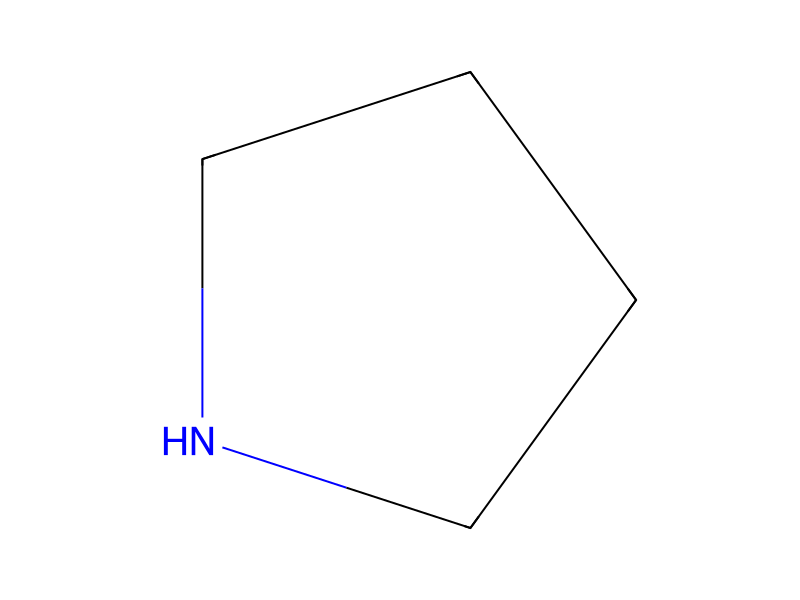
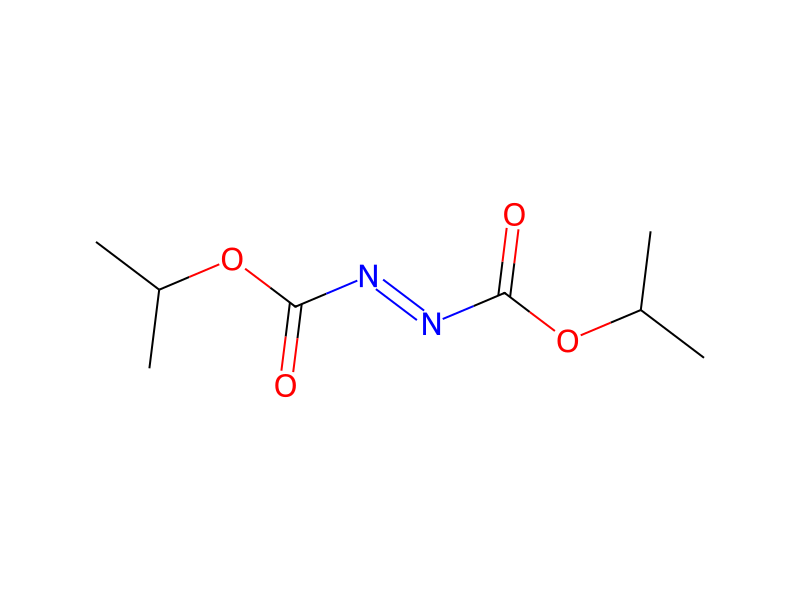
HCID 97324-FluorophenolHCID 11776TriphenylphosphineHCID 31268PyrrolidineHCID 5363146Diisopropyl azodicarboxylateHCID 11264243(4-Chloro-2-methyl-quinolin-7-yl)-methanol

Product 1

HCID 220544747-(4-Fluoro-phenoxymethyl)-2-methyl-4-pyrrolidin-1-yl-quinoline
Yield 41%

Reagents, catalysts & solvents 1

HCID 6344DichloromethaneSolvent

Procedure

Diisopropylazodicarboxylate (97 mg, 0.48 mmol) was added dropwise at r.t. to a solution of (4-chloro-2-methyl-quinolin-7-yl)-methanol (example 2c, 100 mg, 0.48 mmol), triphenylphosphine (126 mg, 0.48 mmol), and 4-fluorophenol (54 mg, 0.54 mmol) in dichloromethane (2.5 mL). After shaking 24 h at r.t., the solvent was evaporated, and the residue was taken up in pyrrolidine (1.37 g, 19.2 mmol) and shaken for 23 h at 80° C. After cooling the reaction mixture was partitioned between sat. aq. ammonium chloride solution and dichloromethane, the organic layer was washed with brine, dried (MgSO4), and evaporated. Chromatography (SiO2, dichloromethane/methanol 19:1) yielded the title compound (66 mg, 41%). Off-white solid, ISP-MS: m/e=337. ([M+H]+).

Workup

  1. customthe solvent was evaporated
  2. stirringshaken for 23 h at 80° C
  3. temperatureAfter cooling the reaction mixture
  4. customwas partitioned between sat. aq. ammonium chloride solution and dichloromethane
  5. washthe organic layer was washed with brine
  6. dry with materialdried (MgSO4)
  7. customevaporated

Sources & evidence

ORD record
ord-fd01804fe4f442a78e739db0f02ee29b
Source dataset
uspto-grants-2006_06
DOI
10.6084/m9.figshare.5104873.v1
Patent number
US07064134B2

Reaction notes

On this pageParticipantsProcedureWorkupSources & evidenceReaction notes