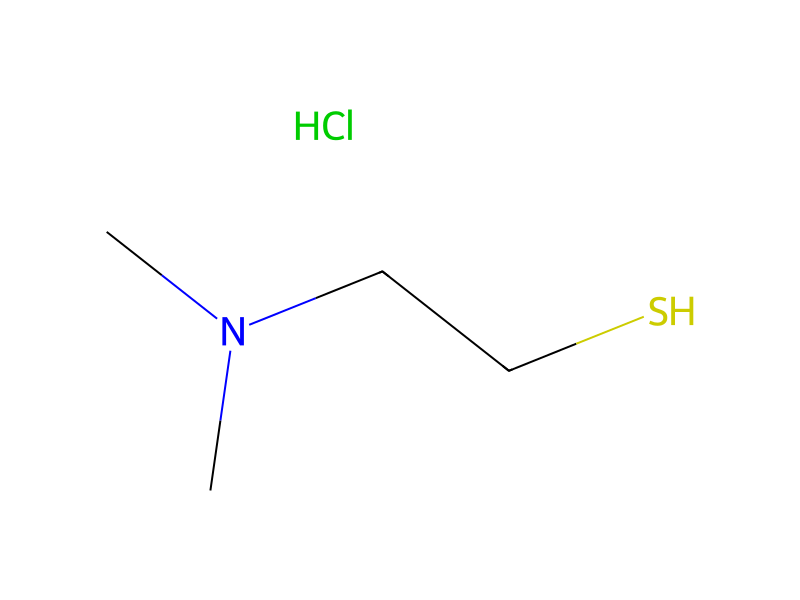
CN(C)CCN[C:6]1[C:18]2[C:17](=[O:19])[C:16]3C=CN=[CH:12][C:11]=3[C:10]=2[C:9]2[CH:20]=[CH:21][C:22]([O:24][CH3:25])=[CH:23][C:8]=2[N:7]=1.Cl.[CH3:28][N:29]([CH3:33])[CH2:30][CH2:31][SH:32].[CH2:34]([N:36](CC)[CH2:37]C)C.[H-].[Na+]>CN(C=O)C.ClCCl>[CH3:28][N:29]([CH3:33])[CH2:30][CH2:31][S:32][C:6]1[C:18]2[C:17](=[O:19])[C:16]3[CH:37]=[N:36][CH:34]=[CH:12][C:11]=3[C:10]=2[C:9]2[CH:20]=[CH:21][C:22]([O:24][CH3:25])=[CH:23][C:8]=2[N:7]=16-chloro-3-methoxy-5,9-diaza-benzo[c]fluoren-7-one (Example 1c-2) (20 mg) was dissolved in DMF (2 ml). To the solution were added 2-dimethylaminoethanethiol hydrochloride (21 mg), triethylamine (0.04 ml) and 60% NaH in paraffin liquid (Kanto Chemical Co. Inc.: 15 mg). The mixture was stirred at room temperature for 5 hours. The reaction mixture was dissolved in dichloromethane and the mixture was washed with water. The organic layer was dried over anhydrous sodium sulfate and evaporated to dryness. The residue was purified by silica gel TLC developed by dichloromethane-MeOH-ammonia water (25%)=100:10:1. The desired product (19 mg) was obtained as a yellow solid. ESI−MS: m/z 366 (MH+); 1H-NMR (CDCl3): δ2.41 (6H, s), 2.75 (2H, m), 3.51 (2H, m), 3.99 (3H, s), 7.20 (1H, dd, J=9 Hz, 2.5 Hz), 7.25 (1H, d, J=2.5 Hz), 7.86 (1H, dd, J=5 Hz, 1 Hz), 8.13 (1H, d, J=9 Hz), 8.85 (1H, d, 5 Hz), 8.90 (1H, d, J=1 Hz).