HomeMCPSkillsWorkbenchOpenChem
HomeWorkbenchNotificationsMe
llms.txt · skill.md · MCP GuidePrivacy Policy · Terms of Service · Supportv1.8.5
  1. Home
  2. /Reaction

Triethylamine → 2-Amino-5-benzyloxy-4-methyl-6-(10-benzyloxydecyl)-pyridine

HRID 1846151
Print

Reaction equation

CC1[N:3]([C:8]2[CH:13]=[C:12]([CH3:14])[C:11]([O:15][CH2:16][C:17]3[CH:22]=[CH:21][CH:20]=[CH:19][CH:18]=3)=[C:10]([CH2:23][CH2:24][CH2:25][CH2:26][CH2:27][CH2:28][CH2:29][CH2:30][CH2:31][CH2:32][O:33][CH2:34][C:35]3[CH:40]=[CH:39][CH:38]=[CH:37][CH:36]=3)[N:9]=2)C(C)=CC=1.Cl.NO.C(N(CC)CC)C.C([O-])(O)=O.[Na+]>C(O)C.O>[NH2:3][C:8]1[CH:13]=[C:12]([CH3:14])[C:11]([O:15][CH2:16][C:17]2[CH:22]=[CH:21][CH:20]=[CH:19][CH:18]=2)=[C:10]([CH2:23][CH2:24][CH2:25][CH2:26][CH2:27][CH2:28][CH2:29][CH2:30][CH2:31][CH2:32][O:33][CH2:34][C:35]2[CH:36]=[CH:37][CH:38]=[CH:39][CH:40]=2)[N:9]=1
ParticipantsProcedureWorkupSources & evidenceReaction notes

Participants

6

Reactant 4

HCID 8471TriethylamineHCID 443297Hydroxyamine hydrochlorideHCID 516892Sodium BicarbonateHCID 673541732-(2,5-Dimethyl-1H-pyrrol-1-yl)-5-benzyloxy-4-methyl-6-(10-benzyloxydecyl)-pyridine

Product 1

HCID 673282612-Amino-5-benzyloxy-4-methyl-6-(10-benzyloxydecyl)-pyridine

Reagents, catalysts & solvents 1

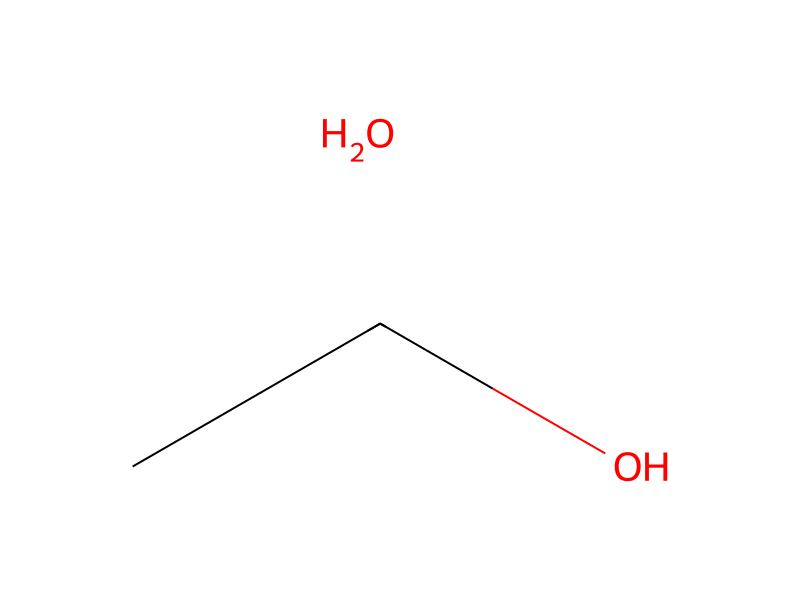
HCID 19096565Water ethanolSolvent

Procedure

To stirred solution containing 1.22 g (2.26 mmol) of 2-(2,5-dimethyl-1H-pyrrol-1-yl)-5-benzyloxy-4-methyl-6-(10-benzyloxydecyl)-pyridine (17) in 40 mL of ethanol-water 4:1 were added 5.44 g (90.40 mmol) of hydroxylamine hydrochloride followed by 6.00 mL (45.20 mmol) of triethylamine. The reaction mixture was then stirred at reflux under argon atmosphere overnight. The reaction mixture was then poured into 100 mL of saturated aqueous NaHCO3 and extracted with two portions of 100 mL of dichloromethane. The combined organic solution was washed with a portion of 100 mL of brine, dried (MgSO4) and then concentrated under diminished pressure. The residue was purified by chromatography on a silica gel column. Elution with dichloromethane-methanol 9:1 gave the expected product as a yellowish oil: yield 722 mg (69%). 1H-NMR (CDCl3) δ 7.38-7.24 (m, 10H), 6.24 (s, 1H), 4.72 (s, 2H), 4.48 (s, 2H), 3.44 (t, 2H, J=8.0), 2.63 (t, 2H, J=8.0), 2.19 (s, 3H), 2.04 (s, 3H), 1.63-1.53 (m, 4H), 1.27 (m, 12H); 13C-NMR (CDCl3) δ 176.95, 153.85, 149.42, 146.90, 143.66, 138.66, 136.73, 128.62, 128.30, 127.77, 127.61, 127.44, 109.71, 75.86, 72.81, 70.50, 29.73, 29.58, 29.55, 29.52, 29.44, 29.42, 29.26, 26.16, 22.14, 16.73.

Workup

  1. stirringThe reaction mixture was then stirred
  2. temperatureat reflux under argon atmosphere overnight
  3. extractionextracted with two portions of 100 mL of dichloromethane
  4. washThe combined organic solution was washed with a portion of 100 mL of brine
  5. dry with materialdried (MgSO4)
  6. concentrationconcentrated under diminished pressure
  7. customThe residue was purified by chromatography on a silica gel column
  8. washElution with dichloromethane-methanol 9:1

Sources & evidence

ORD record
ord-406539b328f247fcac7833dee5dd1374
Source dataset
uspto-grants-2015_02
DOI
10.6084/m9.figshare.5104873.v1
Patent number
US08952025B2

Reaction notes

On this pageParticipantsProcedureWorkupSources & evidenceReaction notes