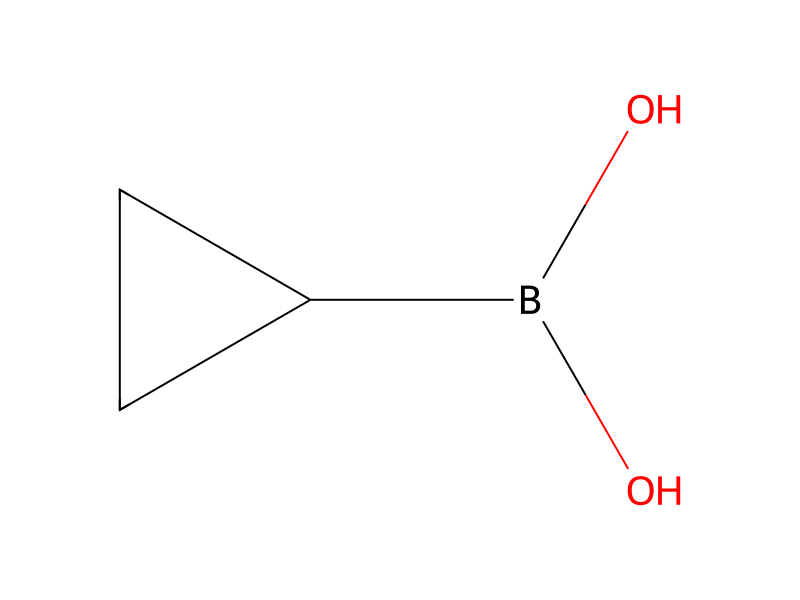
In a flask were combined 4-iodo-1H-pyrazole (1.00 g, 5.16 mmol), cyclopropylboronic acid (886 mg, 10.3 mmol) and sodium carbonate (1.09 g, 10.3 mmol) and the mixture suspended in 1,2-dichloroethane (20 mL). A suspension of copper (II) acetate (936 mg, 5.16 mmol) and 2,2-bipyridine (805 mg, 5.16 mmol) in 1,2-dichloroethane (40 mL) was warmed to 50° C. and added and the resulting mixture heated at 70° C. overnight. The mixture was then cooled and filtered and the solids rinsed with EtOAc. The combined filtrates were concentrated and the residue taken up in EtOAc and 50% saturated aqueous NH4Cl. The organic layer was washed with sat NH4Cl, sat NaHCO3 and sat NaCl and dried over MgSO4. The solution was concentrated and the residue purified by SiO2 chromatography (5-35% EtOAc/heptane) to afford 517 mg (43%) 1-cyclopropyl-4-iodo-1H-pyrazole as a colorless oil.