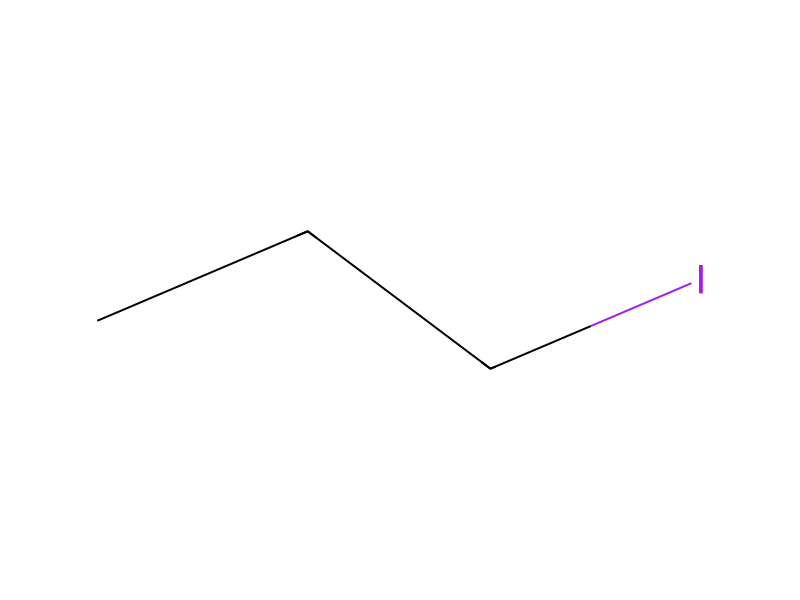
[Cl:1][C:2]1[N:7]=[C:6]([NH:8][CH:9]2[CH2:14][CH2:13][N:12]([C:15]([O:17][C:18]([CH3:21])([CH3:20])[CH3:19])=[O:16])[CH2:11][CH2:10]2)[CH:5]=[N:4][CH:3]=1.I[CH2:23][CH2:24][CH3:25].[Na]>O1CCCC1>[Cl:1][C:2]1[N:7]=[C:6]([N:8]([CH2:23][CH2:24][CH3:25])[CH:9]2[CH2:14][CH2:13][N:12]([C:15]([O:17][C:18]([CH3:21])([CH3:20])[CH3:19])=[O:16])[CH2:11][CH2:10]2)[CH:5]=[N:4][CH:3]=1To a stirred solution of tert-butyl 4-[(6-chloropyrazin-2-yl)amino]piperidine-1-carboxylate (0.20 g, 0.64 mmol) in tetrahydrofuran (3 mL) at 0° C. was added 1-iodopropane (1 mL, 10 mmol) and sodium hyrdride (0.051 g, 1.3 mmol). The reaction mixture was warmed to room temperature then stirred at 60° C. After 1.5 h, the reaction mixture was cooled to room temperature and quenched with water (10 mL). The reaction mixture was extracted with EtOAc (3×25 mL). The combined organic layers were washed with brine (10 mL), dried over magnesium sulfate, filtered and concentrated. The crude residue was purified by silica gel chromatography (EtOAc/Hexanes gradient) to afford tert-butyl 4-[(6-chloropyrazin-2-yl)(propyl)amino]piperidine-1-carboxylate as a yellow oil. LRMS (ESI) calculated for C17H27ClN4O2 [M+Na]+, 377.2; found 377.1.
Loading…