Reaction equation

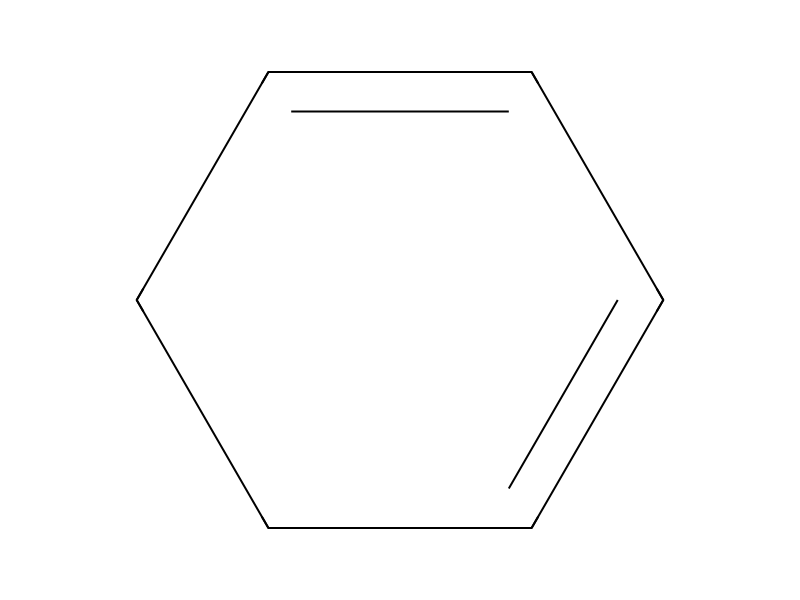
[CH:1]1[CH2:6][CH2:5][CH:4]=[CH:3][CH:2]=1.[NH:7]1[CH2:12][CH2:11][O:10][CH2:9][CH2:8]1>C1(C)C=CC=CC=1.C1CC=CCCC=C1.C1CC=CCCC=C1.[Ni].C1C=CC(P(C2C=CC=CC=2)[C-]2C=CC=C2)=CC=1.C1C=CC(P(C2C=CC=CC=2)[C-]2C=CC=C2)=CC=1.[Fe+2].FC(F)(F)C(O)=O>[CH:2]1([N:7]2[CH2:12][CH2:11][O:10][CH2:9][CH2:8]2)[CH2:1][CH2:6][CH2:5][CH:4]=[CH:3]1Participants
Reactant 2

Product 1

Reagents, catalysts & solvents 4



Procedure
Ni(cod)2 (11.0 mg, 0.040 mmol) and DPPF (44.0 mg, 0.080 mmol) were suspended in 0.3 mL of toluene in a screw-capped vial. The vial was sealed with a cap containing a PTFE septum and removed from the dry box. 1,3-Cyclohexadiene (160 mg, 2.00 mmol), morpholine (183 mg, 2.10 mmol) and trifluoroacetic acid (9.0 mg, 0.080 mmol) were added to the reaction mixture by syringe. The reaction mixture was stirred at room temperature for 14 h. The volatile compounds were evaporated under reduced pressure, and the residue was adsorbed onto silica gel. The product was eluted with 90% ethyl acetate/hexenes to give 274 mg (82%) of 4-(2-cyclohexenyl)morpholine: 1H NMR (500 MHz, [D]chloroform, 25° C.): δ=5.84-5.83 (m, 1H; H-C3), 5.68-5.66 (m, 1H; H-C2), 3.74-3.72 (m, 4H; CH2), 3.17 (brs, 1H; H-C1), 2.64-2.56 (m, 4H; CH2), 2.00-1.98 (m, 2H; CH2), 1.82-1.80 (m, 2H; CH2), 1.57-1.54 (m, 2H; CH2); 13C{1H} NMR (125 MHz, [D]chloroform, 25° C.): δ=130.08, 128.77, 67.34, 60.22, 49.12, 25.15, 23.07, 21.29.
Workup
- customThe vial was sealed with a cap
- customremoved from the dry box
- customThe volatile compounds were evaporated under reduced pressure
- washThe product was eluted with 90% ethyl acetate/hexenes
Sources & evidence
- ORD record
- ord-a9a0f616734643878c5906c6c192735b
- Source dataset
- uspto-grants-2002_05
- Patent number
- US06384282B2
Linked notes
Loading…