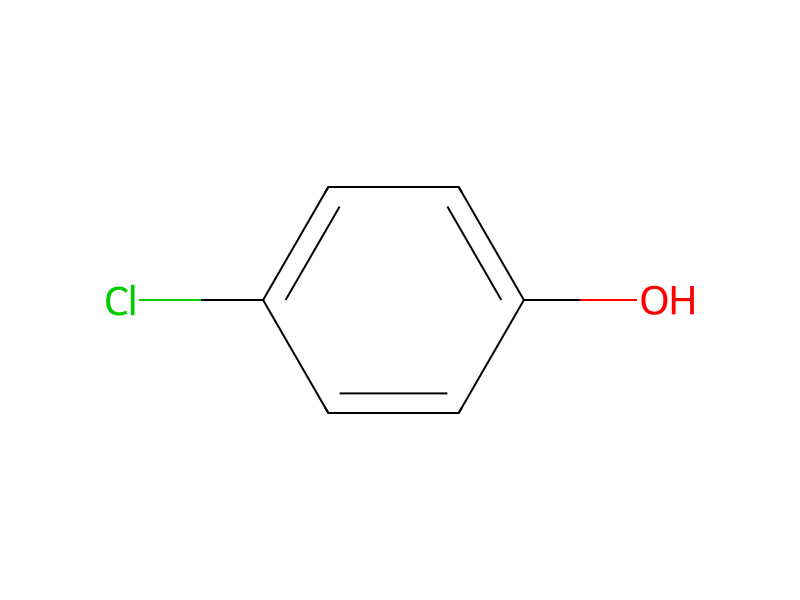
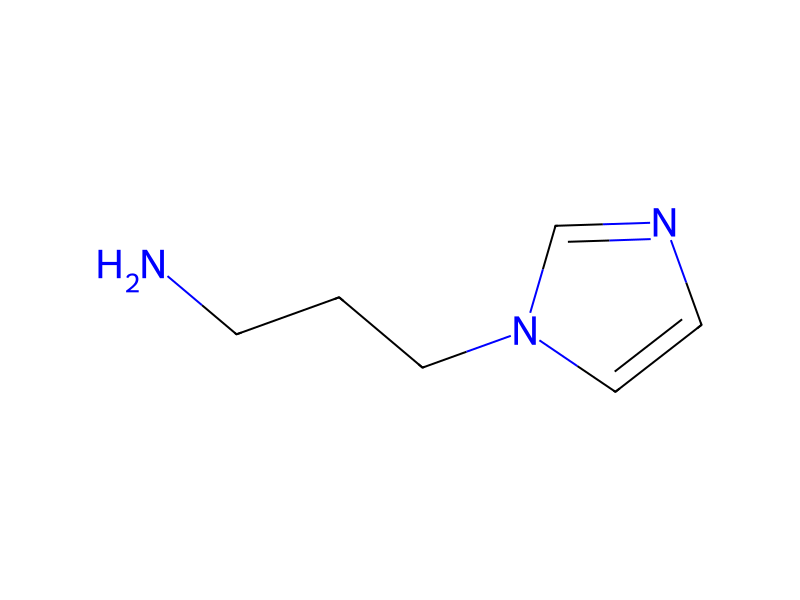
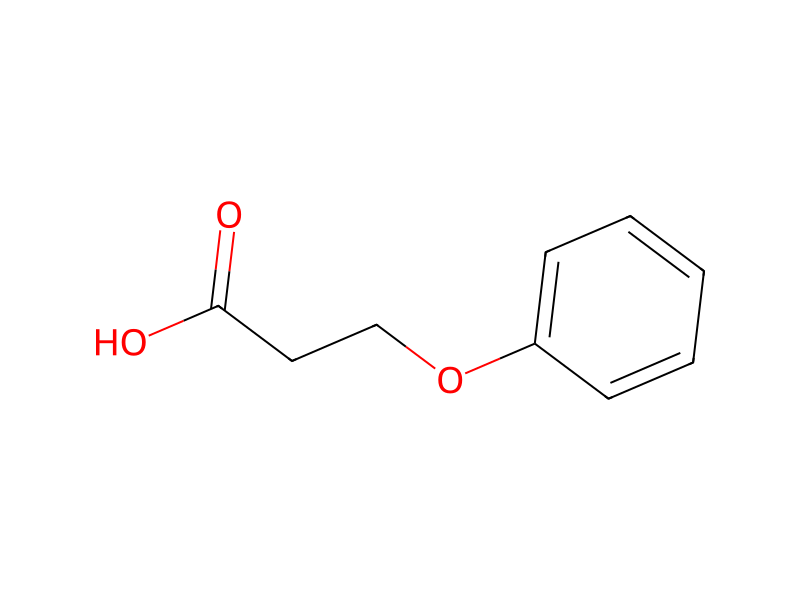
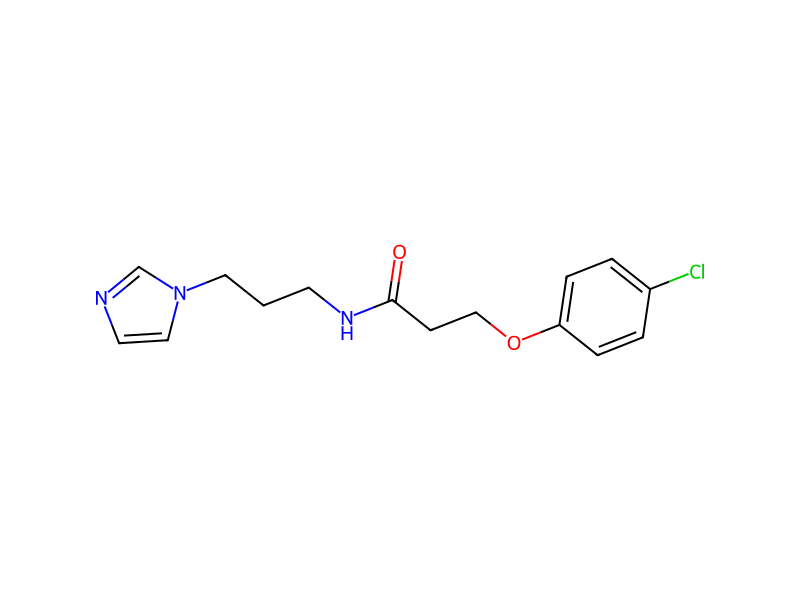
[Cl:1][C:2]1[CH:13]=[CH:12][C:5]([O:6][CH2:7][CH2:8][C:9]([OH:11])=O)=[CH:4][CH:3]=1.ClC1C=CC(O)=CC=1.C1(O)C=CC=CC=1.O(CCC(O)=O)C1C=CC=CC=1.C(N1C=CN=C1)(N1C=CN=C1)=O.[NH2:53][CH2:54][CH2:55][CH2:56][N:57]1[CH:61]=[CH:60][N:59]=[CH:58]1>C1COCC1>[Cl:1][C:2]1[CH:3]=[CH:4][C:5]([O:6][CH2:7][CH2:8][C:9]([NH:53][CH2:54][CH2:55][CH2:56][N:57]2[CH:61]=[CH:60][N:59]=[CH:58]2)=[O:11])=[CH:12][CH:13]=1A solution of 3-(4-chlorophenoxy)propionic acid (5.0 g, prepared from 4-chlorophenol by the process described in J.A.C.S. 1923, 2708 for the conversion of phenol into 3-phenoxypropionic acid) in THF (90 ml) was treated with 1,1'-carbonyldiimidazole (4.05 g) at room temperature with stirring. The mixture was stirred at ambient temperature for two hours. 1-(3-Aminopropyl)imidazole (3.12 g) was added and the mixture was stirred at ambient temperature for 18 hours. The solvent was distilled off and the residue was dissolved in dichloromethane, washed with water, dried and then evaporated to give a solid which was recrystallised from ethyl acetate to give 3-(4-chlorophenoxy)-N-[3-(imidazol-1-yl)propyl]propionamide, m.p. 114°-115.5° C.