HomeMCPWorkbenchSkills
HomeWorkbenchNotificationsMe
llms.txt · MCP GuidePrivacy Policy · Terms of Service · Supportv1.8.0
  1. Home
  2. /Reaction

Potassium Carbonate → 5-(2-benzyl-2H-indazol-6-yl)-7-[4-(4-propylpiperazin-1-yl)phenyl]pyrrolo[2,1-f][1,2,4]triazin-4-amine

HRID 1972770
Notes
Print preview

Reaction equation

HRID 1972770 reaction equation
[CH2:1]([N:8]1[CH:16]=[C:15]2[C:10]([CH:11]=[C:12]([C:17]3[CH:18]=[C:19]([C:27]4[CH:32]=[CH:31][C:30]([N:33]5[CH2:38][CH2:37][NH:36][CH2:35][CH2:34]5)=[CH:29][CH:28]=4)[N:20]4[C:25]=3[C:24]([NH2:26])=[N:23][CH:22]=[N:21]4)[CH:13]=[CH:14]2)=[N:9]1)[C:2]1[CH:7]=[CH:6][CH:5]=[CH:4][CH:3]=1.I[CH2:40][CH2:41][CH3:42].C(=O)([O-])[O-].[K+].[K+]>CN(C=O)C>[CH2:1]([N:8]1[CH:16]=[C:15]2[C:10]([CH:11]=[C:12]([C:17]3[CH:18]=[C:19]([C:27]4[CH:32]=[CH:31][C:30]([N:33]5[CH2:38][CH2:37][N:36]([CH2:40][CH2:41][CH3:42])[CH2:35][CH2:34]5)=[CH:29][CH:28]=4)[N:20]4[C:25]=3[C:24]([NH2:26])=[N:23][CH:22]=[N:21]4)[CH:13]=[CH:14]2)=[N:9]1)[C:2]1[CH:7]=[CH:6][CH:5]=[CH:4][CH:3]=1
ParticipantsConditionsProcedureWorkupSources & evidenceReaction notes

Participants

5

Reactant 3

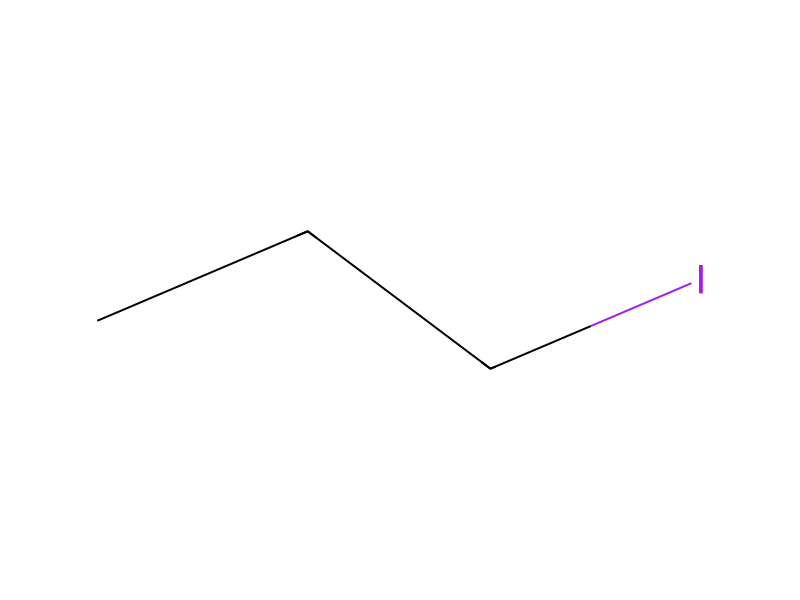
HCID 11430Potassium CarbonateHCID 336431-IodopropaneHCID 585294985-(2-benzyl-2H-indazol-6-yl)-7-(4-piperazin-1-ylphenyl)pyrrolo[2,1-f][1,2,4]triazin-4-amine

Product 1

HCID 585294225-(2-benzyl-2H-indazol-6-yl)-7-[4-(4-propylpiperazin-1-yl)phenyl]pyrrolo[2,1-f][1,2,4]triazin-4-amineYield 25.8%

Reagents, catalysts & solvents 1

HCID 6228
Dimethylformamide
Solvent

Conditions

Temperature
50 °C

Procedure

To a solution of 5-(2-benzyl-2H-indazol-6-yl)-7-(4-piperazin-1-ylphenyl)pyrrolo[2,1-f][1,2,4]triazin-4-amine (75 mg, 0.15 mmol) and 1-iodopropane (31 mg, 0.18 mmol) in DMF (2 mL) was added potassium carbonate (37 mg, 0.27 mmol). The reaction was heated (50° C.) for 17 h. The reaction was cooled to rt and was partitioned between ethyl acetate (25 mL) and H2O (25 mL). The layers were separated and the organic was washed with brine, dried (Na2SO4) and concentrated. The residue was purified by preparative HPLC using a gradient elution from 15% to 50% acetonitrile in water followed by trituration with Et2O to obtain 21 mg (25%) of the desired product. 1H NMR (300 MHz, DMSO-d6) δ 8.55 (s, 1 H), 7.97-7.91 (m, 3 H), 7.81 (d, 1 H), 7.65 (s, 1 H), 7.37-7.26 (m, 5H), 7.19 (d, 1 H), 7.04-6.96 (m, 3 H), 5.66 (s, 2 H), 325-3.15 (m, 4 H), 2.51-2.48 (m, 4 H), 2.32-2.24 (m, 2 H), 1.53-1.42 (m, 2 H), 0.88 (t, 3 H), 2.89 (s, 4 H); ES-MS m/z 543.4 [M+H]+, HPLC RT (min) 2.40.

Workup

  1. temperatureThe reaction was cooled to rt
  2. customwas partitioned between ethyl acetate (25 mL) and H2O (25 mL)
  3. customThe layers were separated
  4. washthe organic was washed with brine
  5. dry with materialdried (Na2SO4)
  6. concentrationconcentrated
  7. customThe residue was purified by preparative HPLC
  8. washa gradient elution from 15% to 50% acetonitrile in water

Sources & evidence

ORD record
ord-bdad6782e96f4c138abe9d13c0fd613b
Source dataset
uspto-grants-2013_04
DOI
10.6084/m9.figshare.5104873.v1
Patent number
US08431695B2

Reaction notes

Loading…

On this pageParticipantsConditionsProcedureWorkupSources & evidenceReaction notes