HomeMCPWorkbenchSkills
HomeWorkbenchNotificationsMe
llms.txt · MCP GuidePrivacy Policy · Terms of Service · Supportv1.8.0
  1. Home
  2. /Reaction

1-Bromo-3-chloropropane → 1-(3-Chloropropyl)-4-(2-methylphenyl)piperazine

HRID 1973239
Notes
Print preview

Reaction equation

HRID 1973239 reaction equation
[CH3:1][C:2]1[CH:7]=[CH:6][CH:5]=[CH:4][C:3]=1[N:8]1[CH2:13][CH2:12][NH:11][CH2:10][CH2:9]1.Br[CH2:15][CH2:16][CH2:17][Cl:18].C(N(CC)CC)C>O1CCCC1>[CH3:1][C:2]1[CH:7]=[CH:6][CH:5]=[CH:4][C:3]=1[N:8]1[CH2:13][CH2:12][N:11]([CH2:15][CH2:16][CH2:17][Cl:18])[CH2:10][CH2:9]1
ParticipantsProcedureWorkupSources & evidenceReaction notes

Participants

5

Reactant 3

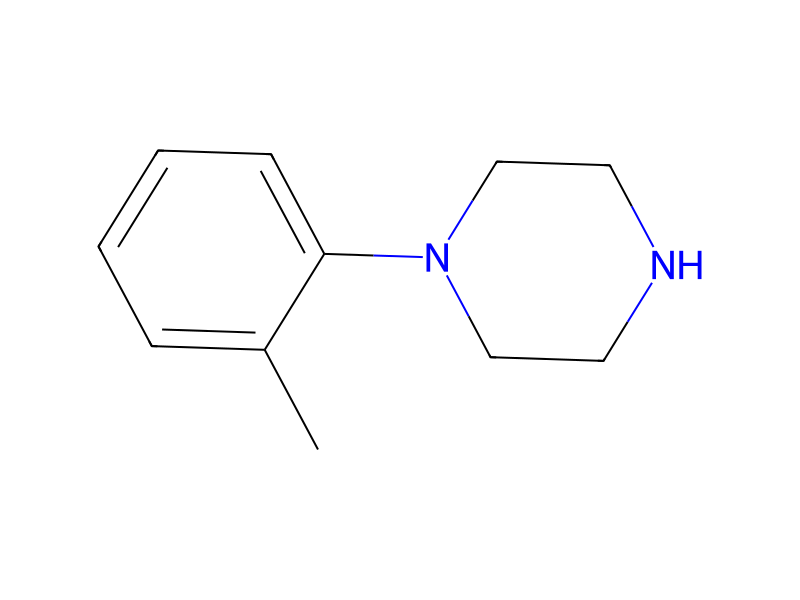
HCID 80061-Bromo-3-chloropropaneHCID 8471TriethylamineHCID 919652-Mepp

Product 1

HCID 2336711-(3-Chloropropyl)-4-(2-methylphenyl)piperazineYield 65%

Reagents, catalysts & solvents 1

HCID 8028TetrahydrofuranSolvent

Procedure

A mixture of 35.2 g (0.2 mole) of 1-(2-methyl-phenyl)-piperazine, 31.4 g (0.2 mole) of 1-bromo-3-chloropropane, 40.4 g (0.4 mole) of triethylamine and 100 ml of tetrahydrofurane is refluxed for five hours. After cooling it is filtered, the filtrate is concentrated and the residue is fractionally distilled under vacuum. There are obtained 32.7 g of 3-[4-(2-methyl-phenyl)-piperazino]-propyl chloride (65% of theory) of boiling point 138°-140° C/0.1 mm Hg.

Workup

  1. temperatureis refluxed for five hours
  2. temperatureAfter cooling it
  3. filtrationis filtered
  4. concentrationthe filtrate is concentrated
  5. distillationthe residue is fractionally distilled under vacuum

Sources & evidence

ORD record
ord-db9027ef334b4ec5a97acce5ff3d6992
Source dataset
uspto-grants-1976_12
DOI
10.6084/m9.figshare.5104873.v1
Patent number
US03996361

Reaction notes

Loading…

On this pageParticipantsProcedureWorkupSources & evidenceReaction notes