HomeMCPWorkbenchSkills
HomeWorkbenchNotificationsMe
llms.txt · MCP GuidePrivacy Policy · Terms of Service · Supportv1.8.3
  1. Home
  2. /Reaction

3'-Bromoacetophenone → 1-Bromo-3-(prop-1-en-2-yl)benzene

HRID 1992291
Print

Reaction equation

HRID 1992291 reaction equation
[Li+].[CH3:2]CC[CH2-].[CH3:6][C:7]([C:9]1[CH:14]=[CH:13][CH:12]=[C:11]([Br:15])[CH:10]=1)=O>[Br-].C[P+](C1C=CC=CC=1)(C1C=CC=CC=1)C1C=CC=CC=1.O1CCCC1>[Br:15][C:11]1[CH:12]=[CH:13][CH:14]=[C:9]([C:7]([CH3:2])=[CH2:6])[CH:10]=1
ParticipantsConditionsProcedureWorkupSources & evidenceReaction notes

Participants

5

Reactant 2

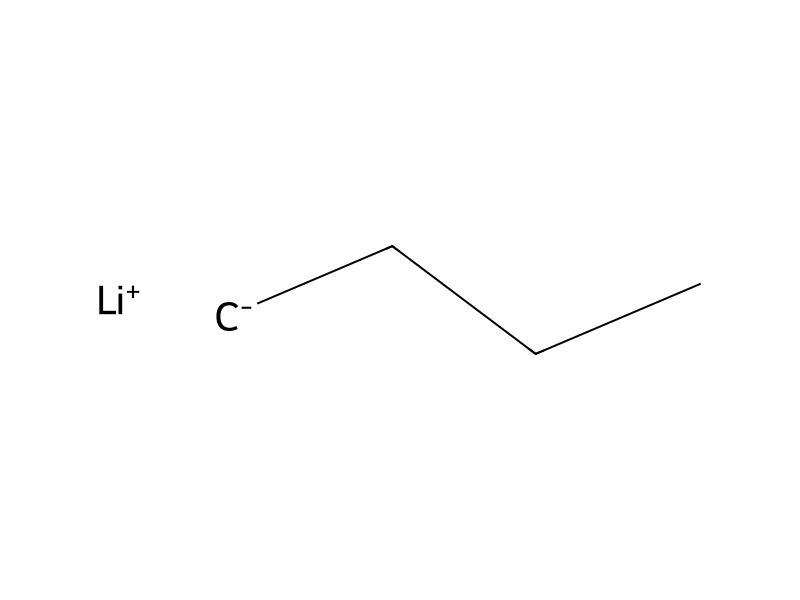
HCID 165023'-BromoacetophenoneHCID 61028n-Butyl lithium

Product 1

HCID 123213941-Bromo-3-(prop-1-en-2-yl)benzeneYield 83%

Reagents, catalysts & solvents 2

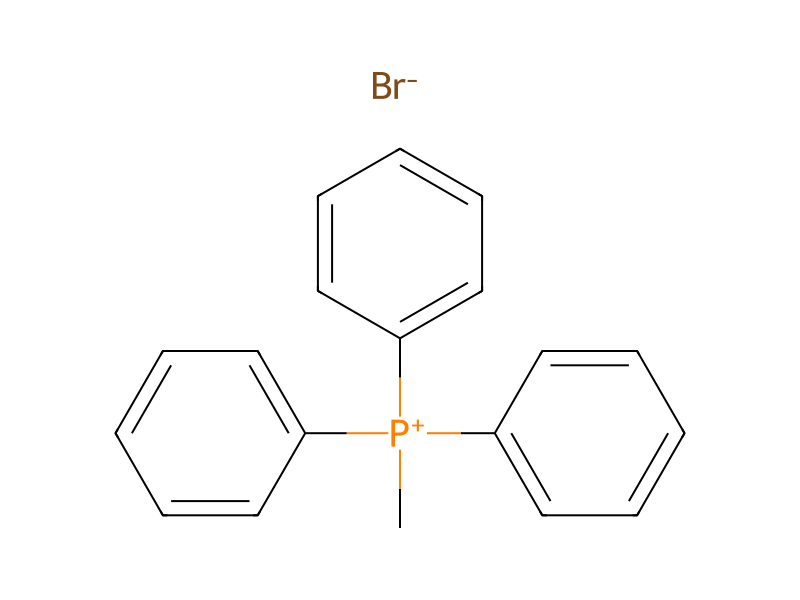
HCID 74505Methyltriphenyliphosphonium bromideCatalystHCID 8028TetrahydrofuranSolvent2×

Conditions

Temperature
0 °C

Procedure

Methyltriphenylphosphonium bromide (35.7 g, 97.9 mmoles, 1.3 equiv) is suspended in tetrahydrofuran (100 mL) and cooled to 0° C. N-Butyllithium (2.5M in hexanes, 27.0 g, 97.7 mmoles, 39.2 mL, 1.3 equiv) is added slowly to the mixture via an addition funnel. The resulting solution is stirred for 1 h at 0° C. A solution of 3-bromoacetophenone (15.0 g, 75.3 mmoles, 10.0 mL, 1.0 equiv) in tetrahydrofuran (50 mL) is added slowly via an addition funnel. The resulting mixture is warmed to room temperature and stirred for 3 h. The reaction is cooled to 0° C. and quenched with saturated aqueous ammonium chloride solution. The layers are partitioned in a separatory funnel and the aqueous phase is extracted with hexanes. The combined organic phase is dried over anhydrous sodium sulfate, filtered, and allowed to stand overnight at room temperature. The organic phase is decanted from a precipitate and concentrated under reduced pressure. The resulting solid is diluted with hexanes and filtered. The precipitate is washed with hexanes. The filtrate is concentrated and the resulting mixture is purified by silica gel flash column chromatography (hexanes) to give the title compound (83% yield): 1H NMR (CDCl3, 400 MHz) δ 7.59 (t, 1H, J=1.72 Hz), 7.40-7.36 (m, 2H), 7.18 (t, 1H, J=8 Hz), 5.36 (s, 1H), 5.12-5.10 (m, 1H), 2.13-3.11 (m, 3H).

Workup

  1. temperatureThe resulting mixture is warmed to room temperature
  2. stirringstirred for 3 h
  3. temperatureThe reaction is cooled to 0° C.
  4. customquenched with saturated aqueous ammonium chloride solution
  5. customThe layers are partitioned in a separatory funnel
  6. extractionthe aqueous phase is extracted with hexanes
  7. dry with materialThe combined organic phase is dried over anhydrous sodium sulfate
  8. filtrationfiltered
  9. waitto stand overnight at room temperature
  10. customThe organic phase is decanted from a precipitate
  11. concentrationconcentrated under reduced pressure
  12. additionThe resulting solid is diluted with hexanes
  13. filtrationfiltered
  14. washThe precipitate is washed with hexanes
  15. concentrationThe filtrate is concentrated
  16. customthe resulting mixture is purified by silica gel flash column chromatography (hexanes)

Sources & evidence

ORD record
ord-859354b1c1154a15a1bcd78377e31424
Source dataset
uspto-grants-2010_01
DOI
10.6084/m9.figshare.5104873.v1
Patent number
US07648983B2

Reaction notes

On this pageParticipantsConditionsProcedureWorkupSources & evidenceReaction notes