HomeMCPSkillsWorkbenchOpenChem
HomeWorkbenchNotificationsMe
llms.txt · skill.md · MCP GuidePrivacy Policy · Terms of Service · Supportv1.8.6
  1. Home
  2. /Reaction

Hydrochloric Acid → 2-(7-(4-Isobutyl-3-(trifluoromethyl)benzyloxy)-1,2,3,4-tetrahydrocyclopenta[b]indol-3-yl)acetic Acid

HRID 2040542
Print

Reaction equation

Cl[C:2]1[CH:27]=[CH:26][C:5]([CH2:6][O:7][C:8]2[CH:16]=[CH:15][C:14]3[NH:13][C:12]4[CH:17]([CH2:20][C:21]([O:23]CC)=[O:22])[CH2:18][CH2:19][C:11]=4[C:10]=3[CH:9]=2)=[CH:4][C:3]=1[C:28]([F:31])([F:30])[F:29].[Br-].[CH2:33]([Zn+])[CH:34]([CH3:36])[CH3:35].[Li+].[OH-].Cl>C1COCC1.CC(C)([P](C(C)(C)C)([Pd][P](C(C)(C)C)(C(C)(C)C)C(C)(C)C)C(C)(C)C)C.O1CCOCC1>[CH2:33]([C:2]1[CH:27]=[CH:26][C:5]([CH2:6][O:7][C:8]2[CH:16]=[CH:15][C:14]3[NH:13][C:12]4[CH:17]([CH2:20][C:21]([OH:23])=[O:22])[CH2:18][CH2:19][C:11]=4[C:10]=3[CH:9]=2)=[CH:4][C:3]=1[C:28]([F:31])([F:29])[F:30])[CH:34]([CH3:36])[CH3:35]
ParticipantsProcedureWorkupSources & evidenceReaction notes

Participants

8

Reactant 4

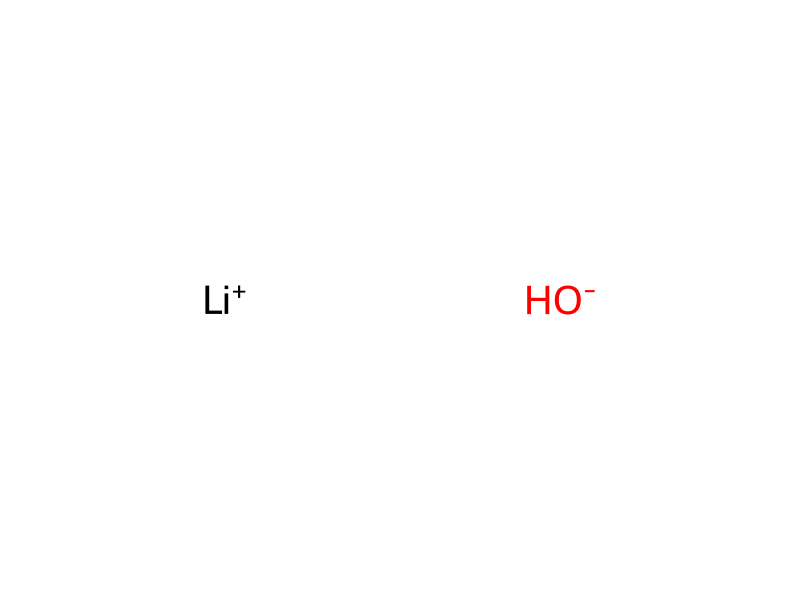
HCID 313Hydrochloric AcidHCID 3939Lithium HydroxideHCID 67211075Ethyl 2-(7-(4-Chloro-3-(trifluoromethyl)benzyloxy)-1,2,3,4-tetrahydrocyclopenta[b]indol-3-yl)acetateHCID 178448254HCID 178448254, compound2×

Product 1

HCID 446240712-(7-(4-Isobutyl-3-(trifluoromethyl)benzyloxy)-1,2,3,4-tetrahydrocyclopenta[b]indol-3-yl)acetic Acid
Yield 16.7%

Reagents, catalysts & solvents 3

HCID 178418851HCID 178418851, compoundCatalystHCID 8028TetrahydrofuranSolventHCID 312751,4-DioxaneSolvent

Procedure

Ethyl 2-(7-(4-chloro-3-(trifluoromethyl)benzyloxy)-1,2,3,4-tetrahydrocyclopenta[b]indol-3-yl)acetate (200 mg, 0.443 mmol) was dissolved in THF (7 mL) and isobutylzinc(II) bromide (2.66 mL, 1.328 mmol) and bis(tri-t-butylphosphine)palladium(0) (0.011 g, 0.022 mmol) were added. The reaction was stirred at room temperature for 16 h and warmed to 50° C. After stirring for 24 h, isobutylzinc(II) bromide (4 mL) was added and the mixture was heated to 90° C. The reaction was cooled to room temperature, and 1.0 M LiOH (5 mL) and dioxane (5 mL) were added. The reaction was stirred at room temperature for 24 h and then acidified to pH 3 with 1 M HCl. The aqueous mixture was extracted three times with EtOAc. The combined extracts were dried over sodium sulfate, filtered and concentrated under reduced pressure. The residue was purified by silica gel column chromatography to provide the title compound (33 mg). LCMS m/z=446.7 [M+H]+; 1H NMR (400 MHz, DMSO-d6) δ ppm 0.89 (d, J=6.6 Hz, 6H), 1.87-1.98 (m, 1H), 2.03-2.13 (m, 1H), 2.35 (dd, J=15.9, 9.0 Hz, 1H), 2.60-2.76 (m, 6H), 3.42-3.50 (m, 1H), 5.12 (s, 2H), 6.71 (dd, J=8.6, 2.4 Hz, 1H), 6.93 (d, J=2.4 Hz, 1H), 7.20 (d, J=8.7 Hz, 1H), 7.47 (d, J=8.0 Hz, 1H), 7.67 (d, J=8.2 Hz, 1H), 7.75 (d, J=1.4 Hz, 1H), 10.47 (bs, 1H).

Workup

  1. temperaturewarmed to 50° C
  2. stirringAfter stirring for 24 h
  3. temperaturethe mixture was heated to 90° C
  4. temperatureThe reaction was cooled to room temperature
  5. stirringThe reaction was stirred at room temperature for 24 h
  6. extractionThe aqueous mixture was extracted three times with EtOAc
  7. dry with materialThe combined extracts were dried over sodium sulfate
  8. filtrationfiltered
  9. concentrationconcentrated under reduced pressure
  10. customThe residue was purified by silica gel column chromatography

Sources & evidence

ORD record
ord-c5aa84c9c5b84b43a160839f406210ec
Source dataset
uspto-grants-2013_11
DOI
10.6084/m9.figshare.5104873.v1
Patent number
US08580841B2

Reaction notes

On this pageParticipantsProcedureWorkupSources & evidenceReaction notes