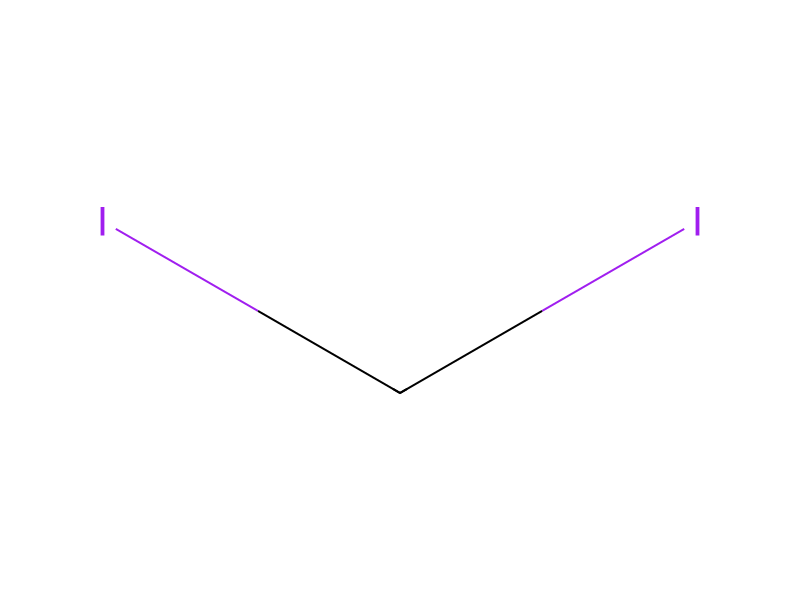
[CH2:1]([O:3][C:4]([CH:6]1[CH2:10][CH2:9][N:8]([C:11](=[O:19])[C:12]2[CH:17]=[CH:16][C:15]([F:18])=[CH:14][CH:13]=2)[CH2:7]1)=[O:5])[CH3:2].C[Si]([N-][Si](C)(C)C)(C)C.[Li+].[I:30][CH2:31]I>O1CCCC1>[CH2:1]([O:3][C:4]([C:6]1([CH2:31][I:30])[CH2:10][CH2:9][N:8]([C:11](=[O:19])[C:12]2[CH:13]=[CH:14][C:15]([F:18])=[CH:16][CH:17]=2)[CH2:7]1)=[O:5])[CH3:2]To a stirred solution of 1-(4-fluoro-benzoyl)-pyrrolidine-3-carboxylic acid ethyl ester (4.20 g, 15.8 mmol) (see Preparation 3) in tetrahydrofuran (50 mL) at −78° C. under a nitrogen atmosphere, was added lithium bis(trimethylsilyl)amide (19.0 mL of a 1.0M solution in tetrahydrofuran, 19.0 mmol). The resulting mixture was stirred at −78° C. for 30 minutes and then diiodomethane was added (1.40 mL, 17.4 mmol). The mixture was allowed to warm to room temperature and stir for a further 16 hours. The mixture was quenched with 10% aqueous citric acid (50 mL) and extracted with ethyl acetate (2×100 mL). The combined organics were washed with brine (100 mL), dried over magnesium sulphate, filtered and concentrated under reduced pressure. The crude material was purified using silica gel column chromatography, using a gradient eluent of 30% ethyl acetate in heptane to 50% ethyl acetate in heptane to afford the title compound as a colourless oil (4.2 g, 65%).