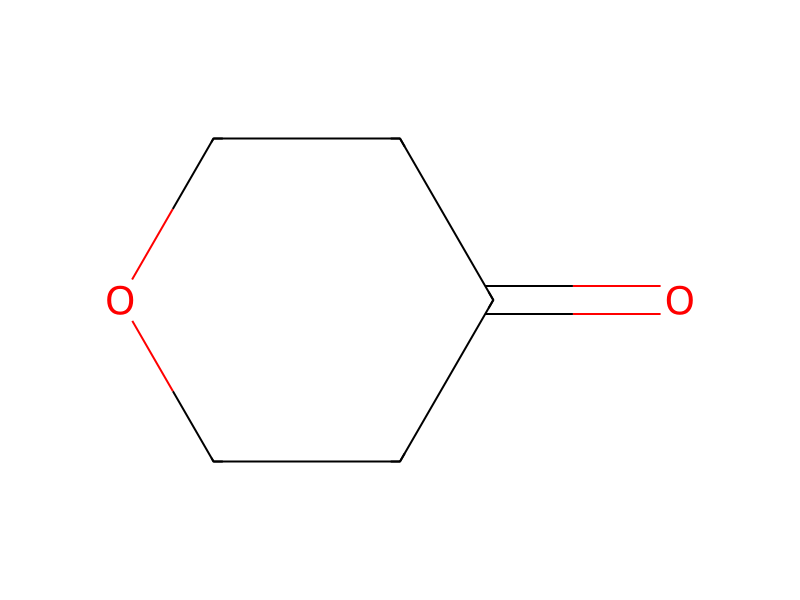
6-Chloro-4-fluoro-1-(4-piperidinyl)-1,3-dihydro-2H-benzimidazol-2-one hydrochloride D9 (0.36 mmol, 0.1 g) was dissolved in dichloromethane (10 ml) and triethylamine (3 eq., 1.08 mmol, 80 microliters), tetrahydro-4H-pyran-4-one (4.5 eq., 1.62 mmol, 162 mg), sodium triacetoxyborohydride (4.5 eq., 1.62 mmol, 345 mg) were added at room temperature and the mixture was stirred at room temperature for 2 hours. Additional tetrahydro-4H-pyran-4-one (2 eq., 0.72 mmol, 72 microliters) and sodium triacetoxyborohydride (2 eq., 0.72 mmol, 0.015 g) were added at room temperature and the mixture was stirred at room temperature for two further hours. The mixture was quenched with water and brought to pH≈10 by sodium hydroxide (aqueous solution). The organic phase was separated from the aqueous phase (by hydrophobic filters) and the organic solvent was evaporated to afford the crude product that was purified by chromatography (methanol-NH3-dichloromethane) to afford 6-chloro-4-fluoro-1-[1-(tetrahydro-2H-pyran-4-yl)-4-piperidinyl]-1,3-dihydro-2H-benzimidazol-2-one, 15 mg, 11%, M++H=354 and 356, which was converted to the hydrochloride salt using 1M HCl in diethyl ether.