Potassium Carbonate → 1-(3-Chloro-4-nitro-phenyl)-4-ethyl-piperazine
Reaction equation

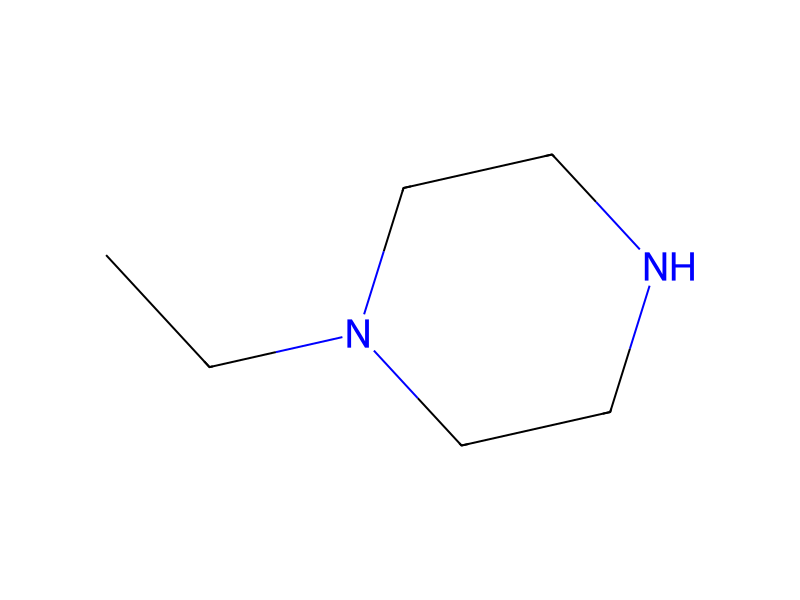
[CH2:1]([N:3]1[CH2:8][CH2:7][NH:6][CH2:5][CH2:4]1)[CH3:2].[Cl:9][C:10]1[CH:15]=[C:14](F)[CH:13]=[CH:12][C:11]=1[N+:17]([O-:19])=[O:18].C(=O)([O-])[O-].[K+].[K+]>CN(C=O)C.O>[Cl:9][C:10]1[CH:15]=[C:14]([N:6]2[CH2:7][CH2:8][N:3]([CH2:1][CH3:2])[CH2:4][CH2:5]2)[CH:13]=[CH:12][C:11]=1[N+:17]([O-:19])=[O:18]Participants
6





Conditions
- Temperature
- 100 °C
Procedure
N-Ethylpiperazine (4.3 mL, 34.3 mmol, 1.2 equiv) is added to a mixture of 2-chloro-4-fluoronitrobenzene (5 g, 28.6 mmol) and potassium carbonate (7.9 g, 57.1 mmol, 2 equiv) in DMF (50 mL). The reaction mixture is stirred at 100° C. for 6 h, allowed to cool to RT, diluted with H2O and extracted with EtOAc. The organic phase is washed with brine, dried (Na2SO4), filtered and concentrated. The residue is purified by trituration in diethyl ether to provide 5.6 g of the title compound as a yellow solid: ES-MS: 270.0 [MH]+; tR=2.90 min (system 1).
Workup
- temperatureto cool to RT
- extractionextracted with EtOAc
- washThe organic phase is washed with brine
- dry with materialdried (Na2SO4)
- filtrationfiltered
- concentrationconcentrated
- customThe residue is purified by trituration in diethyl ether
Sources & evidence
- ORD record
- ord-7f3ed84487a84cc8b8108bf20cbcd052
- Source dataset
- uspto-grants-2012_10
- Patent number
- US08293746B2
Reaction notes
Loading…