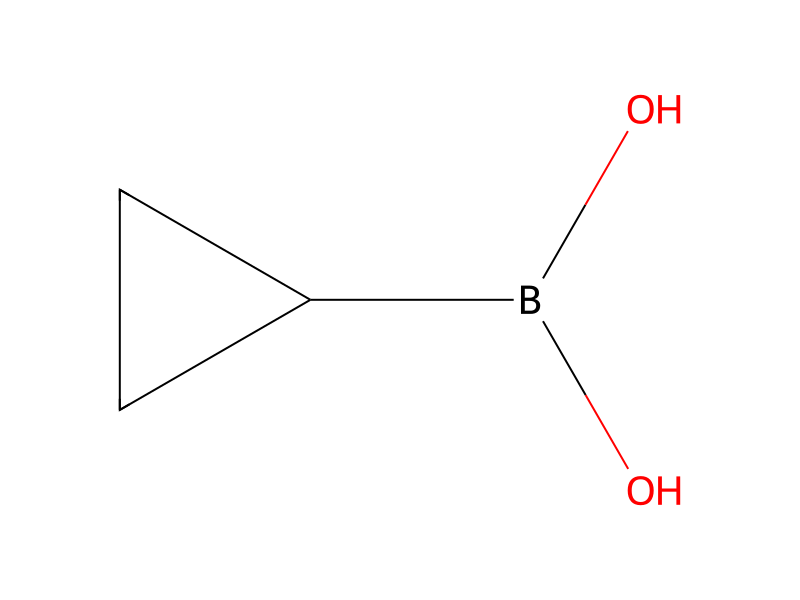
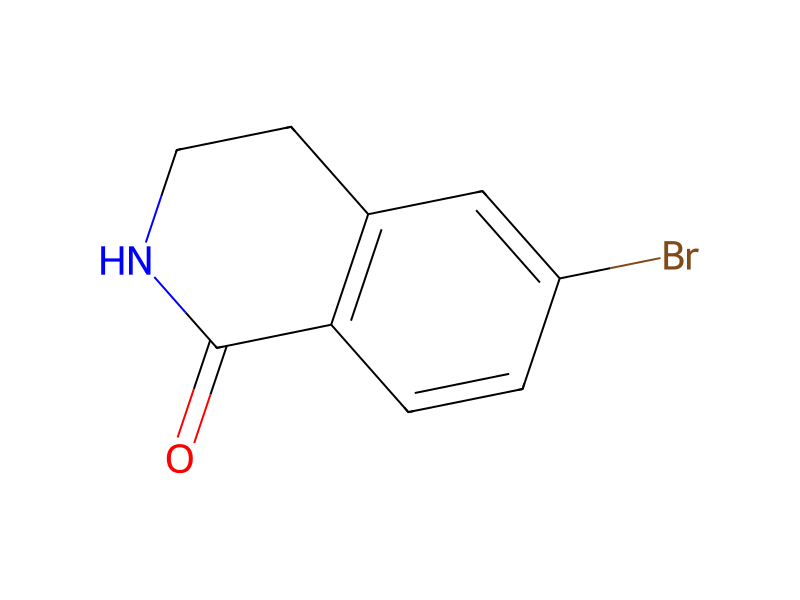
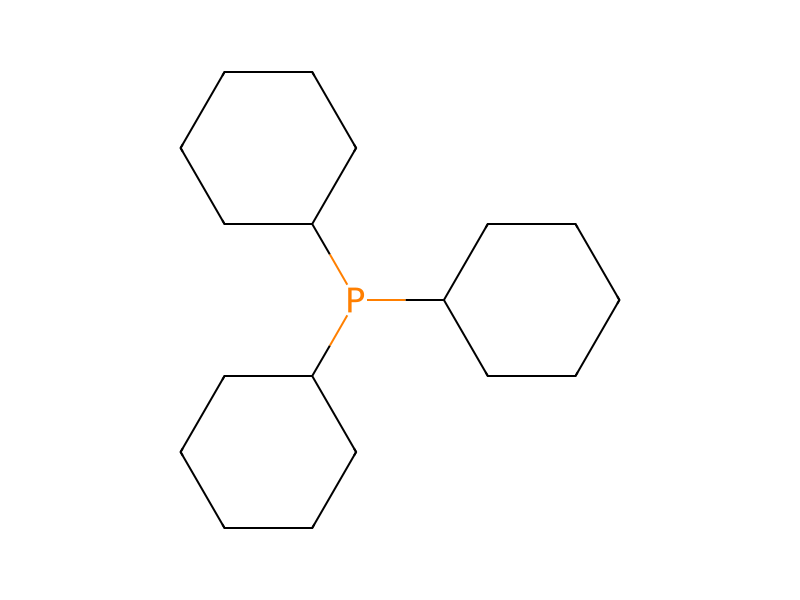
Br[C:2]1[CH:3]=[C:4]2[C:9](=[CH:10][CH:11]=1)[C:8](=[O:12])[NH:7][CH2:6][CH2:5]2.[CH:13]1(B(O)O)[CH2:15][CH2:14]1>C1(C)C=CC=CC=1.O.CC([O-])=O.CC([O-])=O.[Pd+2].C1(P(C2CCCCC2)C2CCCCC2)CCCCC1>[CH:13]1([C:2]2[CH:3]=[C:4]3[C:9](=[CH:10][CH:11]=2)[C:8](=[O:12])[NH:7][CH2:6][CH2:5]3)[CH2:15][CH2:14]1To a round bottomed flask charged with 6-Bromo-3,4-dihydro-2H-isoquinolin-1-one (16.9 g, 74.7 mmol), cyclopropylboronic acid (9.45 g, 1.5 equiv), tricyclohexylphosphine (1.04 mg, 0.025 equiv), and K3PO4 hexahydrate (50 g, 2 equiv) in toluene (210 mL) and H2O (15 mL) was added Pd(OAc)2 (100 mg, 0.05 equiv). The combined mixture was heated for 4 h at 100° C. The reaction mixture was cooled, filtered and washed with toluene. The organic phase was partitioned and washed with water and brine, dried over Na2SO4, filtered and concentrated to an oil. Addition of hexanes produced 6-Cyclopropyl-3,4-dihydro-2H-isoquinolin-1-one as a tan solid (13.6 g). MS (ESI) 187.1 (M+H)+.