HomeMCPWorkbenchSkills
HomeWorkbenchNotificationsMe
llms.txt · MCP GuidePrivacy Policy · Terms of Service · Supportv1.8.3
  1. Home
  2. /Reaction

Sodium Bicarbonate → 2,5,6-Trichloro-3-(N-hydroxyiminomethylidene)-1-(beta-D-ribofuranosyl)indole

HRID 2076773
Print

Reaction equation

HRID 2076773 reaction equation
[Cl:1][C:2]1[N:3]([C@@H:15]2[O:21][C@H:20]([CH2:22][OH:23])[C@@H:18]([OH:19])[C@H:16]2[OH:17])[C:4]2[C:9]([C:10]=1[CH:11]=O)=[CH:8][C:7]([Cl:13])=[C:6]([Cl:14])[CH:5]=2.Cl.[O:25]([NH2:27])C.C(=O)(O)[O-].[Na+].CO.O>CO.O.S([O-])([O-])(=O)=S.[Na+].[Na+]>[Cl:1][CH:2]1[C:10](=[C:11]=[N:27][OH:25])[C:9]2[C:4](=[CH:5][C:6]([Cl:14])=[C:7]([Cl:13])[CH:8]=2)[N:3]1[C@@H:15]1[O:21][C@H:20]([CH2:22][OH:23])[C@@H:18]([OH:19])[C@H:16]1[OH:17]
ParticipantsProcedureWorkupSources & evidenceReaction notes

Participants

8

Reactant 4

HCID 516892Sodium BicarbonateHCID 521874O-Methylhydroxylamine hydrochlorideHCID 3011610FtcriHCID 22242641Methanol--water (1/1)

Product 1

HCID 865989682,5,6-Trichloro-3-(N-hydroxyiminomethylidene)-1-(beta-D-ribofuranosyl)indoleYield 70%

Reagents, catalysts & solvents 3

HCID 887MethanolSolvent
HCID 962WaterSolvent
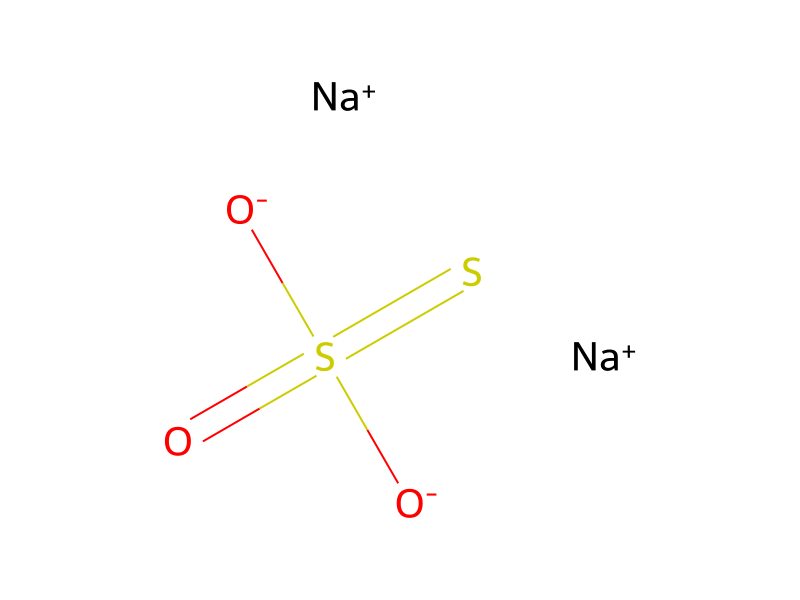
HCID 24477Sodium ThiosulfateSolvent

Procedure

To a solution of 2,5,6-trichloro-3-formyl-1-(β-D-ribofuranosyl)indole (4.3, 170 mg, 0.45 mmol) in MeOH (10 mL) was added a solution of methoxylamine hydrochloride (39 mg, 0.56 mmol) and sodium bicarbonate (49 mg, 0.48 mmol) in water (2.0 mL). The resulting mixture was stirred at room temperature for 16 h, then the solvent was evaporated to provide a pale yellow residue. The residue was suspended in 20 mL of 5% aqueous sodium thiosulfate and extracted with EtOAc (2×50 mL). The combined organic extracts were washed with brine (25 mL), dried over MgSO4, filtered and evaporated to yield a pink residue. The residue was subjected to column chromatography (40×350 mm) on C18 reverse-phase silica gel with 75% MeOH/H2O. The appropriate UV-active fractions were pooled and evaporated to yield 124 mg (70%) of 4.29 as a white powder. A portion was recrystallized from Et2O/hexane to yield a white crystalline solid: mp 208-209 C; Rf 0.2 (10% MeOH/CHCl3); 1H NMR (500 MHz, DMSO-d6) δ06 11.31 (s, 1H), 8.54 (s, 1H), 8.22 (s, 1H), 8.19 (s, 1H), 5.93 (d, 1H), 5.37 (m, 2H, D2O exch.), 5.25 (m, 1H, D2O exch.), 4.43 (m, 1H), 4.16 (m, 1H), 3.99 (m, 1H), 3.73 (m, 2H). 13C NMR (125 MHz, DMSO-d6) δ 141.30, 133.03, 128.48, 125.85, 124.73, 124.05, 121.76, 115.31, 106.70, 88.81, 86.02, 71.39, 69.65, 61.11. HRMS (EI) m/z calcd. for C14H13Cl3N2O5 393.9890, found 393.9892. Anal calcd for C14H13Cl3N2O5.½ Et2O: C, 44.41; H, 4.19; N, 6.47. Found: C, 44.16; H, 4.18; N, 6.48.


Workup

  1. customthe solvent was evaporated
  2. customto provide a pale yellow residue
  3. extractionextracted with EtOAc (2×50 mL)
  4. washThe combined organic extracts were washed with brine (25 mL)
  5. dry with materialdried over MgSO4
  6. filtrationfiltered
  7. customevaporated
  8. customto yield a pink residue
  9. customevaporated

Sources & evidence

ORD record
ord-97cb7fb8c888477f989998156b3a0701
Source dataset
uspto-grants-2011_04
DOI
10.6084/m9.figshare.5104873.v1
Patent number
US07928080B2

Reaction notes

On this pageParticipantsProcedureWorkupSources & evidenceReaction notes