Reaction equation

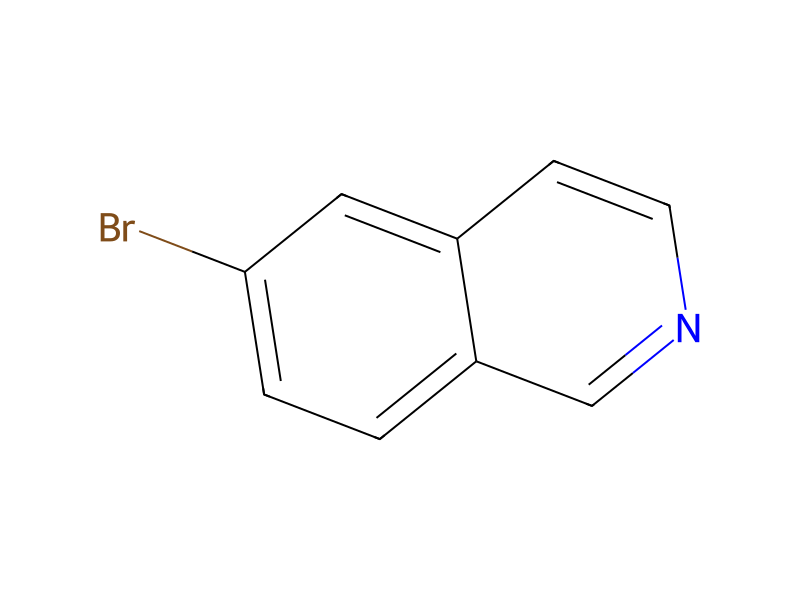
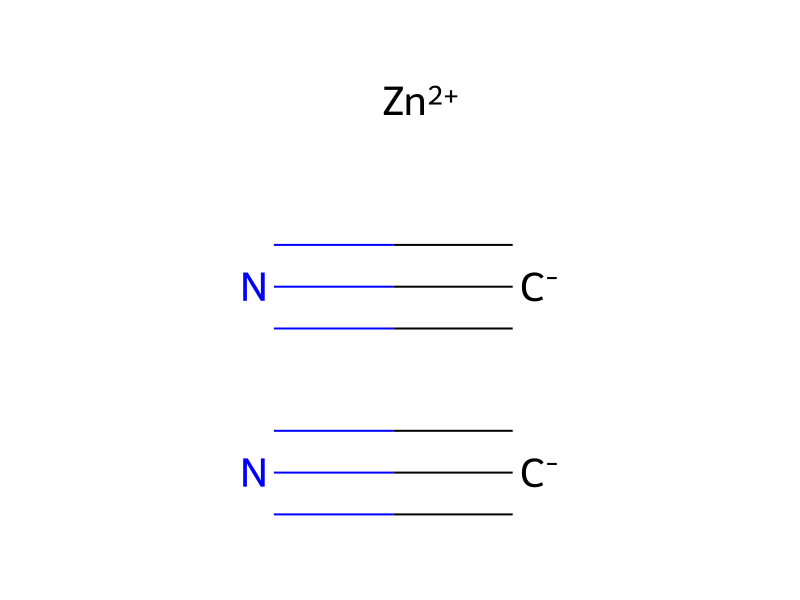
Br[C:2]1[CH:3]=[C:4]2[C:9](=[CH:10][CH:11]=1)[CH:8]=[N:7][CH:6]=[CH:5]2.C(OCC)(=O)C.O.[CH3:19][N:20](C)C=O>[C-]#N.[Zn+2].[C-]#N.C1C=CC([P]([Pd]([P](C2C=CC=CC=2)(C2C=CC=CC=2)C2C=CC=CC=2)([P](C2C=CC=CC=2)(C2C=CC=CC=2)C2C=CC=CC=2)[P](C2C=CC=CC=2)(C2C=CC=CC=2)C2C=CC=CC=2)(C2C=CC=CC=2)C2C=CC=CC=2)=CC=1>[CH:8]1[C:9]2[C:4](=[CH:3][C:2]([C:19]#[N:20])=[CH:11][CH:10]=2)[CH:5]=[CH:6][N:7]=1Participants





Conditions
- Temperature
- 100 °C
Procedure
Next, to a solution of 6-bromoisoquinoline (382 mg, 1.84 mmol) in N,N-dimethylformamide (3.8 mL) were added zinc cyanide (431 mg, 3.67 mmol) and tetrakis(triphenylphosphine)palladium(0) (42 mg, 0.0367 mmol) under nitrogen atmosphere, and the mixture was stirred at 100° C. for 1 hour. Tetrakis(triphenylphosphine)palladium(0) (42 mg, 0.0367 mmol) was further added, and the mixture was stirred for 2.5 hours at 100° C. The reaction mixture was allowed to room temperature, ethyl acetate and water were added for extraction, the organic layer was washed with water and dried over anhydrous magnesium sulfate. The residue was purified by silica gel column chromatography (hexane:ethyl acetate), and isoquinoline-6-carbonitrile (234 mg, 83%) was obtained as a yellow solid.
Workup
- stirringthe mixture was stirred for 2.5 hours at 100° C
- customwas allowed to room temperature
- washthe organic layer was washed with water
- dry with materialdried over anhydrous magnesium sulfate
- customThe residue was purified by silica gel column chromatography (hexane:ethyl acetate)
Sources & evidence
- ORD record
- ord-fa825fb8627a471fbee2aa51e35456ec
- Source dataset
- uspto-grants-2011_04
- Patent number
- US07932272B2
Linked notes
Loading…