HomeMCPWorkbenchSkills
HomeWorkbenchNotificationsMe
llms.txt · MCP GuidePrivacy Policy · Terms of Service · Supportv1.8.0
  1. Home
  2. /Reaction

Hydrochloric Acid → 3-[4-(1-Naphthalenyl-oxy)butyl]-1,3-oxazolidine-2,4-dione

HRID 2116596
Notes
Print preview

Reaction equation

HRID 2116596 reaction equation
Br[CH2:2][CH2:3][CH2:4][CH2:5][O:6][C:7]1[C:16]2[C:11](=[CH:12][CH:13]=[CH:14][CH:15]=2)[CH:10]=[CH:9][CH:8]=1.[O:17]1[CH2:21][C:20](=[O:22])[NH:19][C:18]1=[O:23].CN(C)C(N(C)C)=N.Cl>O1CCCC1.C(OCC)(=O)C>[C:7]1([O:6][CH2:5][CH2:4][CH2:3][CH2:2][N:19]2[C:20](=[O:22])[CH2:21][O:17][C:18]2=[O:23])[C:16]2[C:11](=[CH:12][CH:13]=[CH:14][CH:15]=2)[CH:10]=[CH:9][CH:8]=1
ParticipantsProcedureWorkupSources & evidenceReaction notes

Participants

7

Reactant 4

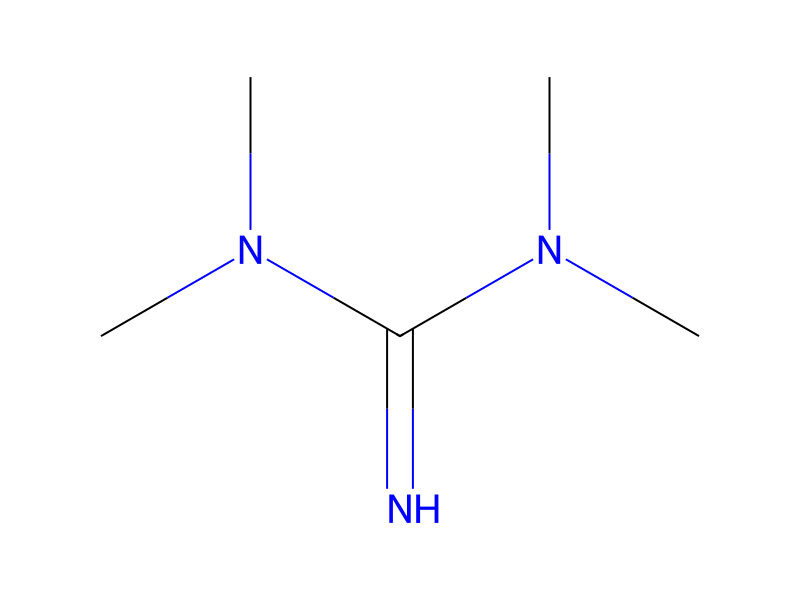
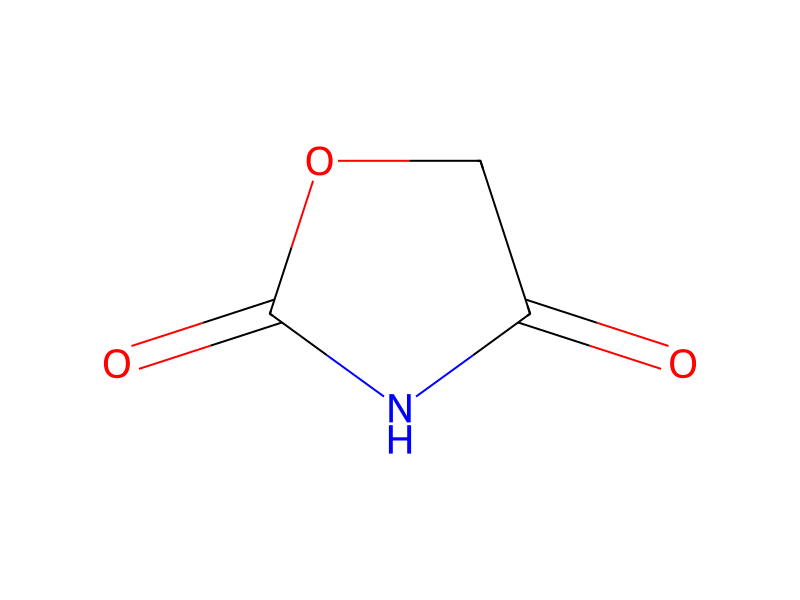
HCID 313Hydrochloric AcidHCID 664601,1,3,3-Tetramethylguanidine2×HCID 973892,4-Oxazolidinedione2×HCID 129582701-(4-Bromobutoxy)naphthalene

Product 1

HCID 674163383-[4-(1-Naphthalenyl-oxy)butyl]-1,3-oxazolidine-2,4-dioneYield 60.2%

Reagents, catalysts & solvents 2

HCID 8028
Tetrahydrofuran
Solvent
2×
HCID 8857Ethyl AcetateSolvent

Procedure

A solution of 3.1 g (11.1 mmol) of 1-[(4-bromobutyl)oxy]naphthalene (Eur. J. Med. Chem. 1997, 32, 175-179) and 1.35 g (13.3 mmol) of 1,3-oxazolidine-2,4-dione (J. Med. Chem. 1991, 34, 1542-1543) in 30 ml of tetrahydrofuran is admixed dropwise with a solution of 2.55 g (22.2 mmol) of 1,1,3,3-tetramethylguanidine in 15 ml of tetrahydrofuran. The mixture is heated at reflux for 8 hours. 0.28 g (2.7 mmol) of 1,3-oxazolidine-2,4-dione and 0.32 g (2.7 mmol) of 1,1,3,3-tetramethylguanidine are added and the mixture is heated at reflux for 4 more hours. The reaction mixture is cooled using an ice bath, and 100 ml of ethyl acetate and then 50 ml of 1M aqueous hydrochloric acid are added. The system is decanted and the aqueous phase is extracted with 2×80 ml of ethyl acetate. The organic phases are subsequently washed with 80 ml of water and then with 80 ml of saturated aqueous sodium chloride solution. They are dried over sodium sulfate and then evaporated to dryness. The product is purified by chromatography on silica gel, eluting with an 80/20 mixture of cyclohexane and ethyl acetate, to give 2.0 g of product, which is used as it is in the following step.


Workup

  1. temperatureThe mixture is heated
  2. temperatureat reflux for 8 hours
  3. temperaturethe mixture is heated
  4. temperatureat reflux for 4 more hours
  5. temperatureThe reaction mixture is cooled
  6. customThe system is decanted
  7. extractionthe aqueous phase is extracted with 2×80 ml of ethyl acetate
  8. washThe organic phases are subsequently washed with 80 ml of water
  9. dry with materialThey are dried over sodium sulfate
  10. customevaporated to dryness
  11. customThe product is purified by chromatography on silica gel
  12. washeluting with an 80/20 mixture of cyclohexane and ethyl acetate

Sources & evidence

ORD record
ord-2f0dcea592b64159a9d83e2f5e7cd288
Source dataset
uspto-grants-2008_10
DOI
10.6084/m9.figshare.5104873.v1
Patent number
US07439257B2

Reaction notes

Loading…

On this pageParticipantsProcedureWorkupSources & evidenceReaction notes