HomeMCPSkillsWorkbenchOpenChem
HomeWorkbenchNotificationsMe
llms.txt · skill.md · MCP GuidePrivacy Policy · Terms of Service · Supportv1.8.5
  1. Home
  2. /Reaction

Water → 1-Bromo-4-(4-chlorostyryl)benzene

HRID 2117978
Print

Reaction equation

[Br-].[Br:2][C:3]1[CH:28]=[CH:27][C:6]([CH2:7][P+](C2C=CC=CC=2)(C2C=CC=CC=2)C2C=CC=CC=2)=[CH:5][CH:4]=1.[H-].[Na+].[Cl:31][C:32]1[CH:39]=[CH:38][C:35]([CH:36]=O)=[CH:34][CH:33]=1.O>CN(C=O)C.CCOCC>[Br:2][C:3]1[CH:4]=[CH:5][C:6]([CH:7]=[CH:36][C:35]2[CH:38]=[CH:39][C:32]([Cl:31])=[CH:33][CH:34]=2)=[CH:27][CH:28]=1
ParticipantsConditionsProcedureWorkupSources & evidenceReaction notes

Participants

7

Reactant 4

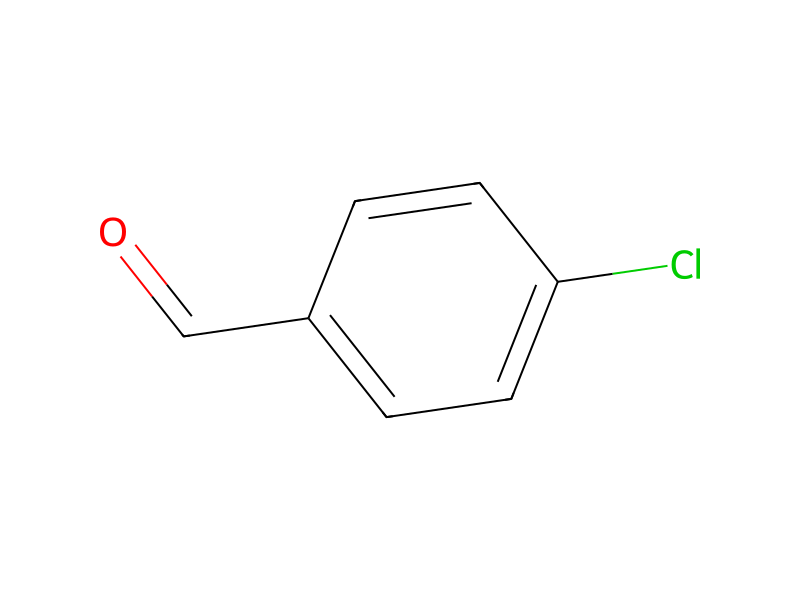
HCID 962WaterHCID 77264-ChlorobenzaldehydeHCID 24758Sodium hydrideHCID 2724858[(4-Bromophenyl)methyl]triphenylphosphanium bromide

Product 1

HCID 539115281-Bromo-4-(4-chlorostyryl)benzeneYield 73.4%

Reagents, catalysts & solvents 2

HCID 3283
Diethyl Ether
Solvent
HCID 6228DimethylformamideSolvent

Conditions

Temperature
0 °C

Procedure

To a solution of (4-bromobenzyl)triphenylphosphonium bromide (396 g; 0.77 mol) in 2.5 L of DMF at 0° C., was added 37 g (0.92 mol) of NaH (60% in oil) in four portions. The solution was stirred 1 hr at 0° C. followed by the addition of 109 g (0.77 mol) of 4-chlorobenzaldehyde in two portions. This mixture was warmed up to room temperature, stirred 1 hr and quench by pouring the reaction into a 5° C. mixture of 10 L of water and 2.5 L of Et2O. Aqueous layer was extracted with Et2O, combined organic layers were washed with brine and dried over Na2SO4. Volatiles were removed under reduced pressure and the residue was dissolved in 1.5 L of cyclohexane and filtered through a pad of silica gel (wash with cyclohexane). 16 g of one isomer cristallized out of the solution as a white solid and after evaporation of the volatiles, 166 g of the other isomer 1-bromo-4-[2-(4-chlorophenyl)vinyl]benzene was isolated.


Workup

  1. temperatureThis mixture was warmed up to room temperature
  2. stirringstirred 1 hr
  3. customquench
  4. additionby pouring
  5. customthe reaction into a 5° C.
  6. extractionAqueous layer was extracted with Et2O
  7. washwere washed with brine
  8. dry with materialdried over Na2SO4
  9. customVolatiles were removed under reduced pressure
  10. dissolutionthe residue was dissolved in 1.5 L of cyclohexane
  11. filtrationfiltered through a pad of silica gel (wash with cyclohexane)
  12. customafter evaporation of the volatiles

Sources & evidence

ORD record
ord-93aacc693c214b7db7dbe6d145211f75
Source dataset
uspto-grants-2008_10
DOI
10.6084/m9.figshare.5104873.v1
Patent number
US07442716B2

Reaction notes

On this pageParticipantsConditionsProcedureWorkupSources & evidenceReaction notes