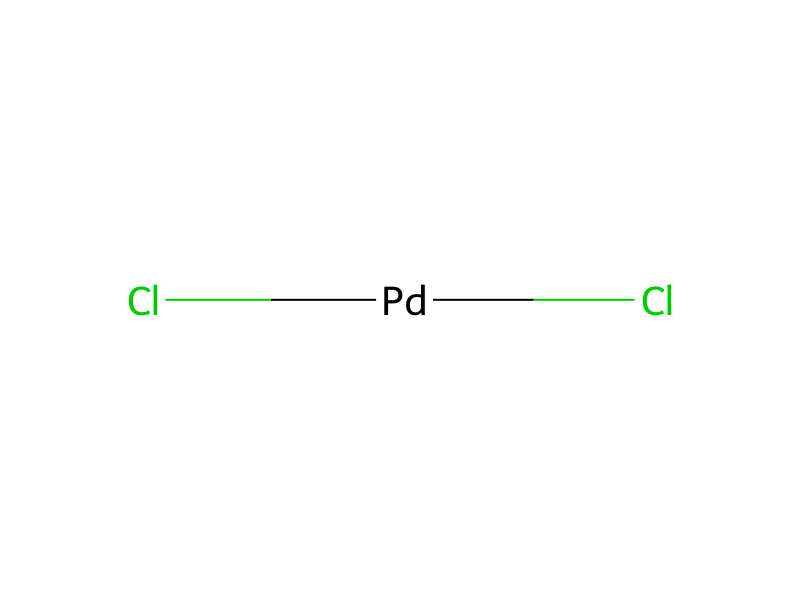
Br[C:2]1[CH:7]=[CH:6][C:5]([OH:8])=[CH:4][C:3]=1[C:9]([F:12])([F:11])[F:10].[C:13]([O:17][CH2:18][CH3:19])(=[O:16])[CH:14]=[CH2:15].CCN(C(C)C)C(C)C>Cl[Pd]Cl.CN(C)C=O>[OH:8][C:5]1[CH:6]=[CH:7][C:2](/[CH:15]=[CH:14]/[C:13]([O:17][CH2:18][CH3:19])=[O:16])=[C:3]([C:9]([F:12])([F:11])[F:10])[CH:4]=1Into a 500-mL round-bottom flask purged and maintained with an inert atmosphere of nitrogen, was placed 4-bromo-3-(trifluoromethyl)phenol (5 g, 20.75 mmol, 1.00 equiv), N,N-dimethylformamide (60 mL), ethyl prop-2-enoate (10.5 g, 104.88 mmol, 5.06 equiv), PdCl2 (370 mg, 2.09 mmol, 0.10 equiv), P(tolyl)3 (1.28 g, 4.21 mmol, 0.20 equiv), DIEA (16.25 g). The resulting solution was stirred for overnight at 90° C. The resulting mixture was concentrated under vacuum. The residue was applied onto a silica gel column with ethyl acetate/petroleum ether (1/8). This resulted in 2.6 g (42%) of ethyl (2E)-3-[4-hydroxy-2-(trifluoromethyl)phenyl]prop-2-enoate as a light yellow solid.