HomeMCPSkillsWorkbenchOpenChem
HomeWorkbenchNotificationsMe
llms.txt · skill.md · MCP GuidePrivacy Policy · Terms of Service · Supportv1.8.5
  1. Home
  2. /Reaction

Hydrogen Peroxide → 3-(2-Hydroxyethyl)-1-(2-methyl-4-nitrophenyl)pyridin-2(1H)-one

HRID 218514
Print

Reaction equation

[CH3:1][C:2]1[CH:7]=[C:6]([N+:8]([O-:10])=[O:9])[CH:5]=[CH:4][C:3]=1[N:11]1[CH:16]=[CH:15][CH:14]=[C:13]([CH:17]=[CH2:18])[C:12]1=[O:19].C12BC(CCC1)CCC2.[OH-].[Na+].OO.S(OS([O-])=O)([O-])=[O:34].[Na+].[Na+]>O1CCCC1.O>[OH:34][CH2:18][CH2:17][C:13]1[C:12](=[O:19])[N:11]([C:3]2[CH:4]=[CH:5][C:6]([N+:8]([O-:10])=[O:9])=[CH:7][C:2]=2[CH3:1])[CH:16]=[CH:15][CH:14]=1
ParticipantsProcedureWorkupSources & evidenceReaction notes

Participants

8

Reactant 5

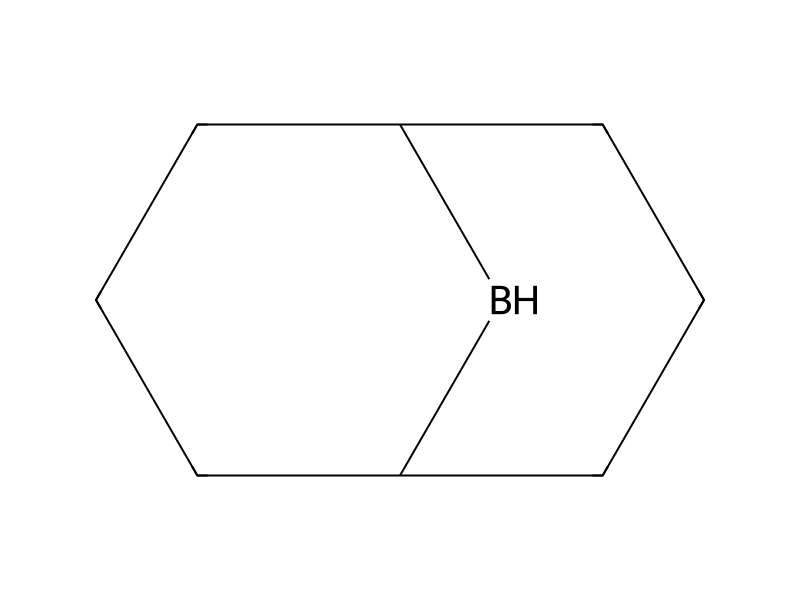
HCID 784Hydrogen PeroxideHCID 14798Sodium HydroxideHCID 24346Disodium disulfiteHCID 789669-Borabicyclo(3.3.1)nonaneHCID 594101981-(2-Methyl-4-nitrophenyl)-3-vinylpyridin-2(1H)-one

Product 1

HCID 569267333-(2-Hydroxyethyl)-1-(2-methyl-4-nitrophenyl)pyridin-2(1H)-one

Reagents, catalysts & solvents 2

HCID 962WaterSolventHCID 8028TetrahydrofuranSolvent

Procedure

38 g (148 mmol) of the compound from example 42A are admixed while cooling with ice over 45 min with a solution of 40 g (326 mmol) of 9-borabicyclo[3.3.1]nonane in 650 ml of tetrahydrofuran. The mixture is stirred at this temperature for a further hour, before it is admixed with a solution of 30 g (747 mmol) of sodium hydroxide in 740 ml of water within 15 min. 151 ml of a 30% hydrogen peroxide solution are added at such a rate that the temperature does not exceed 30° C. After the addition has ended, the cooling is removed and stirring is continued for a further 30 min. The mixture is extracted repeatedly with ethyl acetate. The combined organic phases are washed with a solution of 780 g (1.63 mol) of sodium disulfite, the organic phase is removed and the aqueous phase is extracted again with ethyl acetate. The combined organic phases are washed with saturated sodium chloride solution, dried over magnesium sulfate and concentrated to dryness under reduced pressure. The residue is applied to silica gel and chromatographed with a gradient of cyclohexane and ethyl acetate. The product-containing fractions are combined and concentrated to dryness under reduced pressure. This affords 38 mg (93% of theory) of the desired product.

Workup

  1. customdoes not exceed 30° C
  2. additionAfter the addition
  3. customthe cooling is removed
  4. stirringstirring
  5. extractionThe mixture is extracted repeatedly with ethyl acetate
  6. customthe organic phase is removed
  7. extractionthe aqueous phase is extracted again with ethyl acetate
  8. washThe combined organic phases are washed with saturated sodium chloride solution
  9. dry with materialdried over magnesium sulfate
  10. concentrationconcentrated to dryness under reduced pressure
  11. customchromatographed with a gradient of cyclohexane and ethyl acetate
  12. concentrationconcentrated to dryness under reduced pressure

Sources & evidence

ORD record
ord-d5bd761a42734bbd9c45d75f4a4a466d
Source dataset
uspto-grants-2012_06
DOI
10.6084/m9.figshare.5104873.v1
Patent number
US08198267B2

Reaction notes

On this pageParticipantsProcedureWorkupSources & evidenceReaction notes