Reaction equation

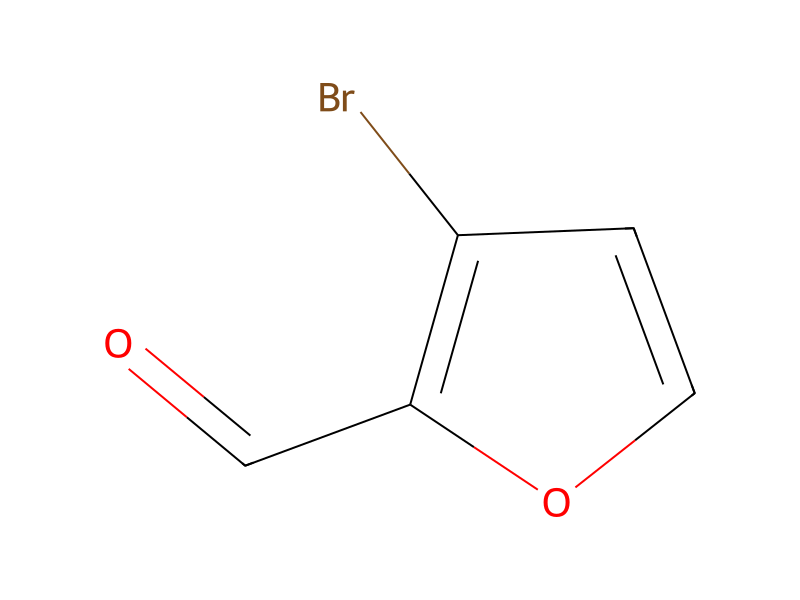
[Br:1][C:2]1[CH:6]=[CH:5][O:4][C:3]=1[CH:7]=O.[NH:9]1[CH2:13][CH2:12][CH2:11][CH2:10]1.C(Cl)Cl.C(O[BH-](OC(=O)C)OC(=O)C)(=O)C.[Na+]>CCOC(C)=O>[Br:1][C:2]1[CH:6]=[CH:5][O:4][C:3]=1[CH2:7][N:9]1[CH2:13][CH2:12][CH2:11][CH2:10]1Participants
6





Procedure
To a solution of 3-bromofuran-2-carbaldehyde (1.5 g, 8.57 mmol) and pyrrolidine (1.42 mL, 17.14 mmol) and CH2Cl2 (30 mL) was added sodium triacetoxyborohydride (3.63 g, 17.14 mmol). The mixture was stirred at room temperature for 5 hours. The resulting mixture was diluted with EtOAc (300 mL) and the organic layer was washed with saturated NaHCO3 and brine then dried (Na2SO4), filtered and concentrated. The residue was purified by column chromatography (silica, 0-10% MeOH in CH2Cl2) to afford the sub-title compound (1.26 g, 65%).
Workup
- washthe organic layer was washed with saturated NaHCO3 and brine
- dry with materialthen dried (Na2SO4)
- filtrationfiltered
- concentrationconcentrated
- customThe residue was purified by column chromatography (silica, 0-10% MeOH in CH2Cl2)
Sources & evidence
- ORD record
- ord-9a38e33b6d0f452ea1095034341dbbae
- Source dataset
- uspto-grants-2012_12
- Patent number
- US08324264B1
Linked notes
Loading…