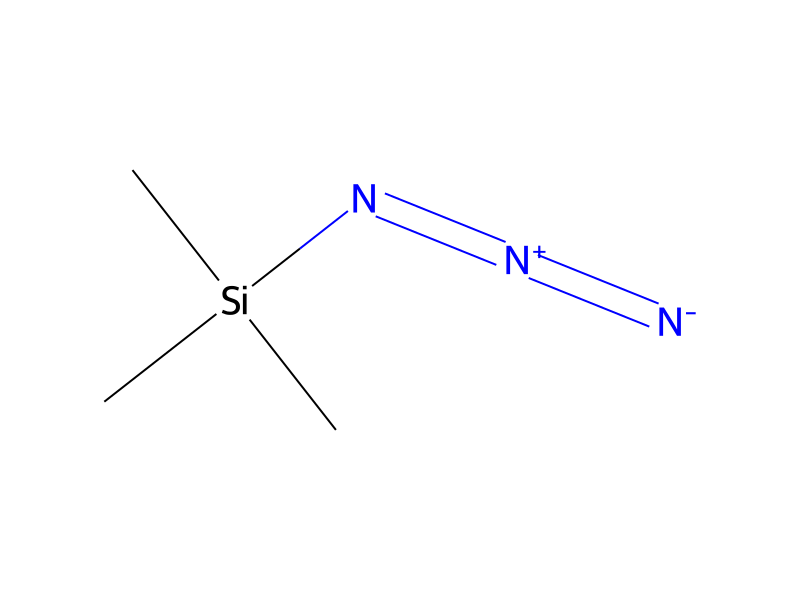
N′-(6-chloropyridazin-3-yl)-2-(7-methoxyquinolin-4-yloxy)acetohydrazide (2.53 g, 7.0 mmol) was suspended in tetrahydrofuran (50 mL) then added triphenylphosphine (2.8 g, 11 mmol) and trimethylsilyl azide (1.4 ml, 11 mmol). To this suspension, was added diethylazodicarboxylate (2.0 ml, 13 mmol) in rapid drops with a syringe. The mixture became clear and hot to the touch. The reaction mixture was heated at 50° C. for 30 minutes. The reaction mixture was concentrated in vacuo. The remaining oil was triturated with diethyl ether. A gel-like solid formed which was collected on a glass frit, washing with diethyl ether. The solid was then triturated with ethyl acetate, and finally acetonitrile. An amorphous solid formed which was collected on a glass frit, washing with acetonitrile. The solid was further dried under high vacuum. In addition, the ethyl acetate filtrate was concentrated in vacuo. The remaining oil was then triturated with acetonitrile. An amorphous solid formed and was collected on a glass frit, washing with acetonitrile. The solid was further dried under high vacuum affording 4-((6-chloro-[1,2,4]triazolo[4,3-b]pyridazin-3-yl)methoxy)-7-methoxyquinoline as a tan solid. MS (ESI, pos. ion) m/z: 342.1 (M+1). Step 4.