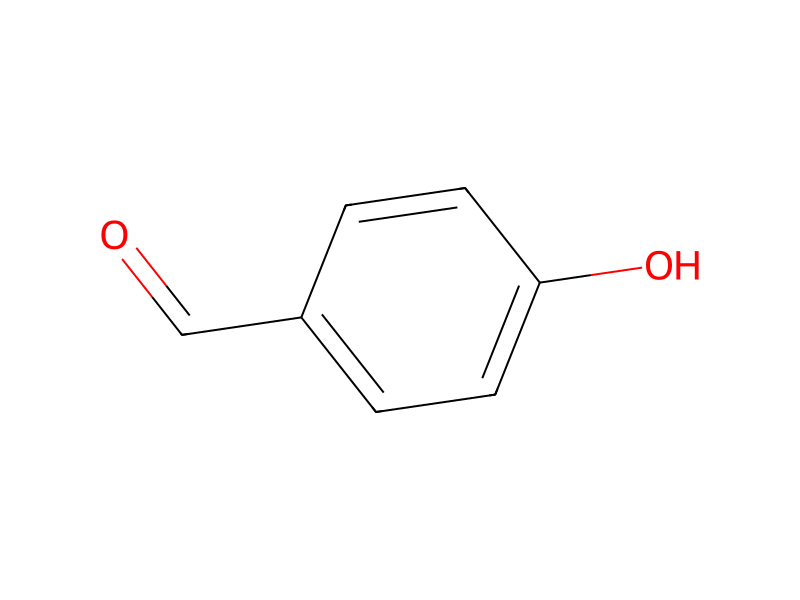
[OH:1][C:2]1[CH:9]=[CH:8][C:5]([CH:6]=[O:7])=[CH:4][CH:3]=1.Cl[CH2:11][CH2:12][CH2:13][CH2:14][CH2:15][CH2:16][CH2:17][CH2:18][OH:19].C(=O)([O-])[O-].[K+].[K+].[I-].[K+]>CN(C)C=O>[OH:19][CH2:18][CH2:17][CH2:16][CH2:15][CH2:14][CH2:13][CH2:12][CH2:11][O:1][C:2]1[CH:9]=[CH:8][C:5]([CH:6]=[O:7])=[CH:4][CH:3]=120.0 g (164 mmol) of 4-hydroxybenzaldehyde and 30.0 g (182 mmol) of 8-chlorooctan-1-ol are dissolved in 200 mL of N,N-dimethylformamide. 29.0 g (210 mmol) of potassium carbonate and 2.7 g (16 mmol) of potassium iodide are added and the suspension is heated to 100° C. After 48 h, the excess of potassium carbonate is filtered off and the resulting filtrate is poured to icy water. The aqueous layer is extracted twice with ethyl acetate. Combined organic layers are washed with brine and evaporated to dryness. The crude is purified twice on column chromatography (SiO2, Heptane/ethyl acetate: 7/3) and dried overnight at 40° C. 25.6 g of 4-[(8-hydroxyoctyl)oxy]benzaldehyde are obtained as a yellow solid (62% yield). This material proves chromatographically homogenous and displays spectral characteristics consistent with its assigned structure.