HomeMCPWorkbenchSkills
HomeWorkbenchNotificationsMe
llms.txt · MCP GuidePrivacy Policy · Terms of Service · Supportv1.8.0
  1. Home
  2. /Reaction

Hydrogen Peroxide → (S)-alpha-Methyl-3,5-bis(trifluoromethyl)benzeneacetic Acid

HRID 2213005
Notes
Print preview

Reaction equation

HRID 2213005 reaction equation
OO.[OH2:3].[OH-:4].[Li+].O=[C:7](N1[C@@H](CC2C=CC=CC=2)COC1=O)[C@H:8]([C:10]1[CH:15]=[C:14]([C:16]([F:19])([F:18])[F:17])[CH:13]=[C:12]([C:20]([F:23])([F:22])[F:21])[CH:11]=1)[CH3:9].S(=O)(O)[O-].[Na+].C1(NC2CCCCC2)CCCCC1>O1CCCC1.O>[CH3:9][C@@H:8]([C:10]1[CH:11]=[C:12]([C:20]([F:21])([F:22])[F:23])[CH:13]=[C:14]([C:16]([F:17])([F:19])[F:18])[CH:15]=1)[C:7]([OH:4])=[O:3]
ParticipantsConditionsProcedureWorkupSources & evidenceReaction notes

Participants

7

Reactant 5

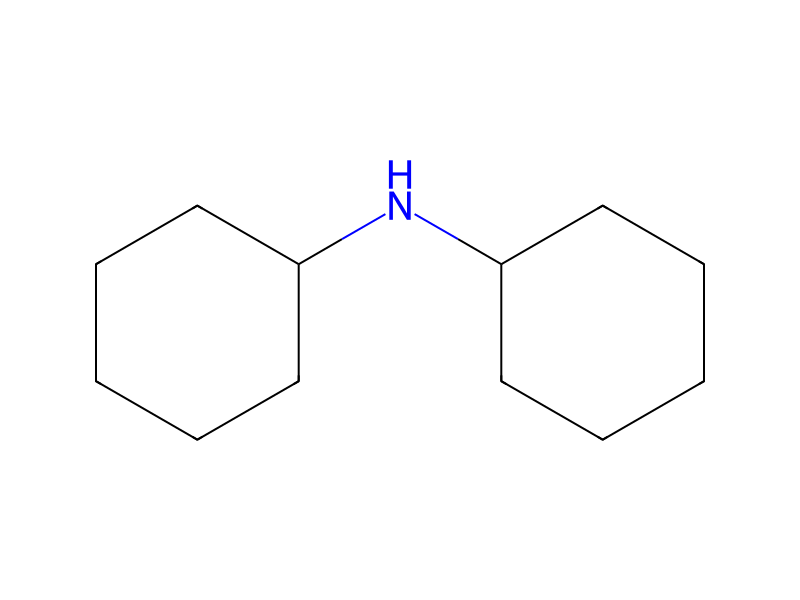
HCID 784Hydrogen PeroxideHCID 7582DicyclohexylamineHCID 168937Lithium hydroxide, monohydrateHCID 23665763Sodium BisulfiteHCID 86590574(4S)-3-{(2S)-1-oxo-2-[3,5-bis(trifluoromethyl)phenyl]propyl}4-(phenylmethyl)-2-oxazolidinone

Product 1

HCID 86590573
(S)-alpha-Methyl-3,5-bis(trifluoromethyl)benzeneacetic Acid
Yield 53%

Reagents, catalysts & solvents 1

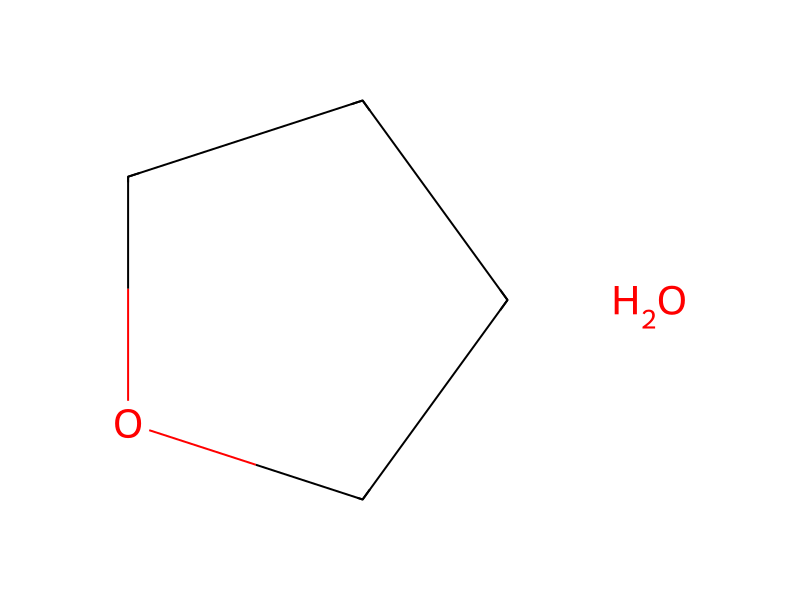
HCID 21881883Oxolane--water (1/1)Solvent

Conditions

Temperature
0 °C

Procedure

Aqueous hydrogen peroxide (30%, 14 mL) then lithium hydroxide monohydrate (944 mg, 22.4 mmol) were added to a stirred, degassed, cooled (0° C.) solution of (4S)-3-{(2S)-1-oxo-2-[3,5-bis(trifluoromethyl)phenyl]propyl}-4-(phenylmethyl)-2-oxazolidinone (Description 38, 5.0 g, 11.2 mmol) in tetrahydrofuran/water (4:1, 50 mL) and the mixture was stirred at 0° C. for 2.5 hours. Aqueous sodium bisulfite (10%) was added slowly, maintaining the internal temperature below 5° C., until the mixture was acidic. The mixture was extracted with ethyl acetate, the combined organic fractions were dried (MgSO4) and the solvent was evaporated under reduced pressure. The residue was triturated with isohexane and filtered, washing with isohexane. The solvent was evaporated under reduced pressure and the residue was dissolved in ethyl acetate (10 mL/g) and heated to reflux. Dicyclohexylamine (2.45 mL, 12.3 mmol) was added and the mixture was cooled. The solid was collected, suspended in ethyl acetate and washed with aqueous citric acid (10%). The organic layer was washed with water, dried (MgSO4) and the solvent was evaporated under reduced pressure to give the title compound as a colorless solid (1.7 g, 53%). 1H NMR (400 MHz, CDCl3) δ 7.81 (1H, s), 7.78 (2H, s), 3.90 (1H, q, J 7.2 Hz), and 1.60 (3H, d, J 7.2 Hz). e.e. (determined by 500 MHz, 1H NMR of a mixture of 140 mmol of acid and 70 mmol of (1R,2R)-1,2-diphenyl-1,2-ethanediamine, at 284K in CDCl3)>99%.

Workup

  1. customdegassed
  2. temperaturemaintaining the internal temperature below 5° C.
  3. extractionThe mixture was extracted with ethyl acetate
  4. dry with materialthe combined organic fractions were dried (MgSO4)
  5. customthe solvent was evaporated under reduced pressure
  6. customThe residue was triturated with isohexane
  7. filtrationfiltered
  8. washwashing with isohexane
  9. customThe solvent was evaporated under reduced pressure
  10. dissolutionthe residue was dissolved in ethyl acetate (10 mL/g)
  11. temperatureheated to reflux
  12. temperaturethe mixture was cooled
  13. customThe solid was collected
  14. washwashed with aqueous citric acid (10%)
  15. washThe organic layer was washed with water
  16. dry with materialdried (MgSO4)
  17. customthe solvent was evaporated under reduced pressure

Sources & evidence

ORD record
ord-ddb098c4f6b74863a9d933dc7b97d988
Source dataset
uspto-grants-2006_09
DOI
10.6084/m9.figshare.5104873.v1
Patent number
US07105507B2

Reaction notes

Loading…

On this pageParticipantsConditionsProcedureWorkupSources & evidenceReaction notes