HomeMCPWorkbenchSkills
HomeWorkbenchNotificationsMe
llms.txt · MCP GuidePrivacy Policy · Terms of Service · Supportv1.8.0
  1. Home
  2. /Reaction

Ammonium Hydroxide → 2-Di-n-propylamino-8-(fur-3-yl)-1,2,3,4-tetrahydronaphthalene

HRID 22134
Notes
Print preview

Reaction equation

HRID 22134 reaction equation
[CH2:1]([N:4]([CH2:16][CH2:17][CH3:18])[CH:5]1[CH2:14][CH2:13][C:12]2[C:7](=[C:8](Br)[CH:9]=[CH:10][CH:11]=2)[CH2:6]1)[CH2:2][CH3:3].[Mg].Br[C:21]1[CH:25]=[CH:24][O:23][CH:22]=1.[OH-].[NH4+]>C1COCC1.BrC(Br)C.C1(C)C=CC=CC=1.C1C=CC([P]([Ni]([P](C2C=CC=CC=2)(C2C=CC=CC=2)C2C=CC=CC=2)([P](C2C=CC=CC=2)(C2C=CC=CC=2)C2C=CC=CC=2)[P](C2C=CC=CC=2)(C2C=CC=CC=2)C2C=CC=CC=2)(C2C=CC=CC=2)C2C=CC=CC=2)=CC=1.Cl[Ni](Cl)([P](C1C=CC=CC=1)(C1C=CC=CC=1)C1C=CC=CC=1)[P](C1C=CC=CC=1)(C1C=CC=CC=1)C1C=CC=CC=1.O>[CH2:1]([N:4]([CH2:16][CH2:17][CH3:18])[CH:5]1[CH2:14][CH2:13][C:12]2[C:7](=[C:8]([C:21]3[CH:25]=[CH:24][O:23][CH:22]=3)[CH:9]=[CH:10][CH:11]=2)[CH2:6]1)[CH2:2][CH3:3]
ParticipantsConditionsProcedureWorkupSources & evidenceReaction notes

Participants

11

Reactant 4

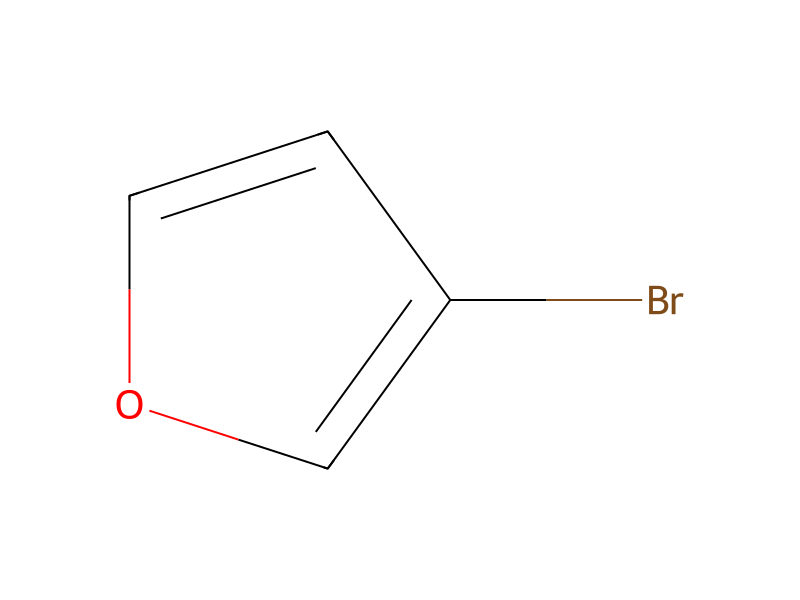
HCID 14923Ammonium HydroxideHCID 891643-Bromofuran2×HCID 5462224MagnesiumHCID 145295648-Bromo-2-dipropylamino-1,2,3,4-tetrahydronaphthalene

Product 1

HCID 152224292-Di-n-propylamino-8-(fur-3-yl)-1,2,3,4-tetrahydronaphthaleneYield 84.1%

Reagents, catalysts & solvents 6

HCID 11201
1,1-Dibromoethane
Catalyst
HCID 178418751HCID 178418751, compoundCatalyst
HCID 178420538HCID 178420538, compoundCatalyst2×
HCID 962WaterSolvent
HCID 1140TolueneSolvent
HCID 8028TetrahydrofuranSolvent

Conditions

Temperature
0 °C

Procedure

2-Di-n-propylamino-8-bromo-1,2,3,4-tetrahydronaphthalene (1.0 g; 3.2 mmol) was dissolved in 20 ml of THF, and 94 mg (3.9 mmol) of magnesium shavings were added. The mixture was refluxed, and a couple of drops of dibromoethane were added to initiate Grignard formation. The mixture was refluxed for one hour after which it was added to a solution of 0.58 ml (6.4 mmol) of 3-bromofuran and 36 mg (0.03 mmol) of Ni(PPh3)4 in 20 ml of toluene that had been cooled to 0° C. after stirring at room temperature for one hour. The mixture was stirred at room temperature for three hours after which an additional 0.58 ml of 3-bromofuran and 35 mg of Ni(PPh3)4 were added. When the reaction failed to proceed further, 210 mg (0.3 mmol) Ni(PPh3)2Cl2 was added, and the mixture was stirred overnight at room temperature. The mixture then was poured into water and the pH adjusted to 10 with ammonium hydroxide. The mixture was extracted with methylene chloride, dried over sodium sulfate, and evaporated to give 0.8 g of a residue.

Workup

  1. temperatureThe mixture was refluxed
  2. temperatureThe mixture was refluxed for one hour after which it
  3. additionwere added
  4. stirringthe mixture was stirred overnight at room temperature
  5. extractionThe mixture was extracted with methylene chloride
  6. dry with materialdried over sodium sulfate
  7. customevaporated

Sources & evidence

ORD record
ord-d34262a676634d269babbf51150d3970
Source dataset
uspto-grants-1995_06
DOI
10.6084/m9.figshare.5104873.v1
Patent number
US05426226

Reaction notes

Loading…

On this pageParticipantsConditionsProcedureWorkupSources & evidenceReaction notes