HomeMCPWorkbenchSkills
HomeWorkbenchNotificationsMe
llms.txt · MCP GuidePrivacy Policy · Terms of Service · Supportv1.8.3
  1. Home
  2. /Reaction

1,8-Diazabicyclo(5.4.0)undec-7-ene → 2-Benzyl-6-[(3R,4R)-3,4-dihydroxypyrrolidin-1-yl]pyridine

HRID 2216340
Print

Reaction equation

HRID 2216340 reaction equation
FC(F)(F)S(O[C:7]1[N:12]=[C:11]([CH2:13][C:14]2[CH:19]=[CH:18][CH:17]=[CH:16][CH:15]=2)[CH:10]=[CH:9][CH:8]=1)(=O)=O.C(O)(=O)C.[OH:26][C@H:27]1[C@H:31]([OH:32])[CH2:30][NH:29][CH2:28]1.C(O)(=O)[C@H]([C@@H](C(O)=O)O)O.C1CCN2C(=NCCC2)CC1>CN1CCCC1=O>[CH2:13]([C:11]1[CH:10]=[CH:9][CH:8]=[C:7]([N:29]2[CH2:30][C@@H:31]([OH:32])[C@H:27]([OH:26])[CH2:28]2)[N:12]=1)[C:14]1[CH:19]=[CH:18][CH:17]=[CH:16][CH:15]=1
ParticipantsProcedureWorkupSources & evidenceReaction notes

Participants

6

Reactant 4

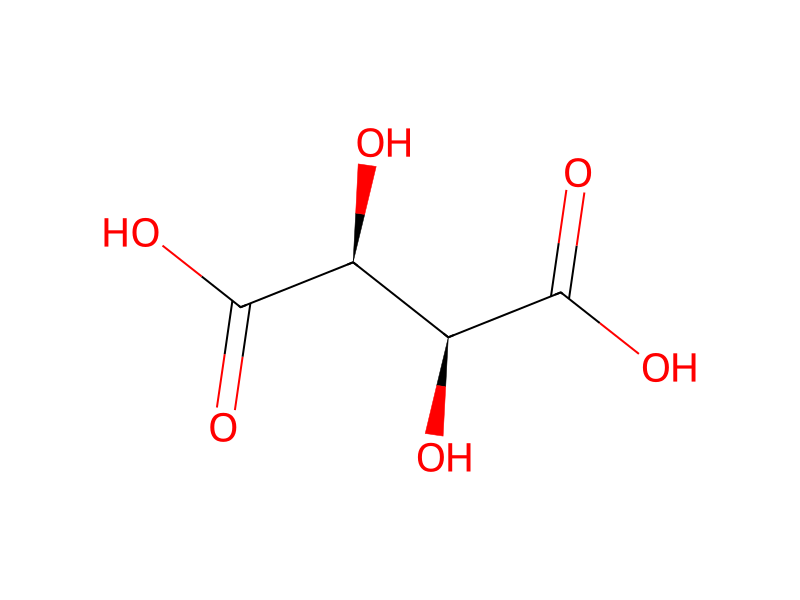
HCID 811841,8-Diazabicyclo(5.4.0)undec-7-eneHCID 439655D-Tartaric acidHCID 219422892-Benzyl-6-pyridyl trifluoromethanesulfonateHCID 69363142(3R,4R)-3,4-dihydroxypyrrolidine acetate

Product 1

HCID 693610072-Benzyl-6-[(3R,4R)-3,4-dihydroxypyrrolidin-1-yl]pyridineYield 55.6%

Reagents, catalysts & solvents

1
HCID 13387N-methyl-2-pyrrolidoneSolvent

Procedure

To a mixture of 11.3 g of 2-benzyl-6-pyridyl trifluoromethanesulfonate, 11.3 g of (3R,4R)-3,4-dihydroxypyrrolidine acetate (synthesized from D-tartaric acid as a starting material, Angew. Chem. Int. Ed. Engl., 23(6), 435, 1984) and 10 ml of N-methylpyrrolidone was added dropwise 11 ml of 1,8-diazabicyclo[5.4.0]-7-undecene under nitrogen atmosphere in an oil bath at 100° C., followed by heating under stirring for 6 hours. After standing to cool, the reaction mixture was extracted with ethyl acetate-water. The organic layer was washed with water and brine, dried over anhydrous magnesium sulfate and evaporated. The residue was purified by silica gel column chromatography (ethyl acetate), to give 5.35 g of the title compound.

Workup

  1. temperatureby heating
  2. temperatureto cool
  3. extractionthe reaction mixture was extracted with ethyl acetate-water
  4. washThe organic layer was washed with water and brine
  5. dry with materialdried over anhydrous magnesium sulfate
  6. customevaporated
  7. customThe residue was purified by silica gel column chromatography (ethyl acetate)

Sources & evidence

ORD record
ord-10f82bad50794a4bae4cebeca9eeec32
Source dataset
uspto-grants-2006_09
DOI
10.6084/m9.figshare.5104873.v1
Patent number
US07112593B2

Reaction notes

On this pageParticipantsProcedureWorkupSources & evidenceReaction notes