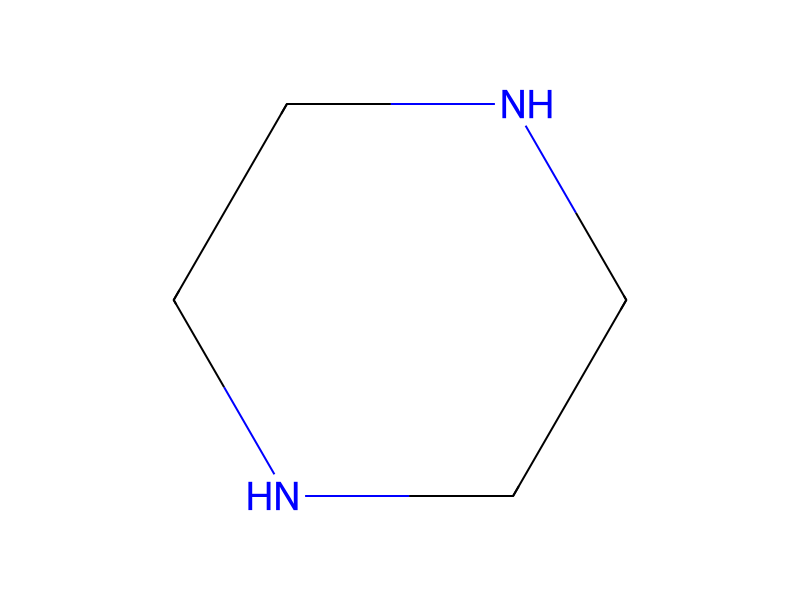
[Cl:1][C:2]1[CH:11]=[CH:10][C:9]2[C:4](=[CH:5][CH:6]=[C:7]([Cl:22])[C:8]=2[NH:12][C:13](=[O:21])[CH2:14][CH:15]2[CH2:20][CH2:19][CH2:18][CH2:17][CH2:16]2)[N:3]=1.C(=O)([O-])[O-].[K+].[K+].[NH:29]1[CH2:34][CH2:33][NH:32][CH2:31][CH2:30]1.O>CN1CCCC1=O>[ClH:1].[ClH:1].[Cl:22][C:7]1[C:8]([NH:12][C:13](=[O:21])[CH2:14][CH:15]2[CH2:20][CH2:19][CH2:18][CH2:17][CH2:16]2)=[C:9]2[C:4](=[CH:5][CH:6]=1)[N:3]=[C:2]([N:29]1[CH2:34][CH2:33][NH:32][CH2:31][CH2:30]1)[CH:11]=[CH:10]2To a stirred solution of N-(2,6-dichloro-5-quinolinyl)-cyclohexaneacetamide (Example 1 (a)) (170 mg) and potassium carbonate (350 mg) in N-methylpyrrolidinone (4 mL) was added piperazine (600 mg). The mixture was heated at 120° C. for 3 hours after which it was cooled and poured into water. The mixture was extracted with dichloromethane and the combined extracts evaporated to give a residue which was then partitioned between water and ethyl acetate. The organic layer was separated and the aqueous layer further extracted with ethyl acetate. The combined organic extracts were concentrated to give a residue which was purified by chromatography (SiO2, methanol:dichloromethane:ammonium hydroxide solution 19:80:1 as eluant) and the resultant product was converted to its hydrochloride salt by treatment with hydrochloric acid (4M in 1,4-dioxane). Recrystallisation (methanol/ethyl acetate) afforded the title compound as a solid (80 mg).