HomeMCPWorkbenchSkills
HomeWorkbenchNotificationsMe
llms.txt · MCP GuidePrivacy Policy · Terms of Service · Supportv1.8.3
  1. Home
  2. /Reaction

Ammonia → 3-Chloroquinolin-6-ol

HRID 2222298
Print

Reaction equation

HRID 2222298 reaction equation
Br[C:2]1[CH:3]=[N:4][C:5]2[C:10]([CH:11]=1)=[CH:9][C:8]([OH:12])=[CH:7][CH:6]=2.O.N.[ClH:15]>CN1CCCC1=O.CCCCCC.C(OCC)(=O)C.C(OCC)(=O)C>[Cl:15][C:2]1[CH:3]=[N:4][C:5]2[C:10]([CH:11]=1)=[CH:9][C:8]([OH:12])=[CH:7][CH:6]=2
ParticipantsConditionsProcedureWorkupSources & evidenceReaction notes

Participants

8

Reactant 4

HCID 222AmmoniaHCID 313Hydrochloric AcidHCID 962WaterHCID 148078713-Bromoquinolin-6-ol

Product 1

HCID 219231263-Chloroquinolin-6-ol

Reagents, catalysts & solvents 3

HCID 8857Ethyl AcetateSolvent
HCID 13387
N-methyl-2-pyrrolidone
Solvent
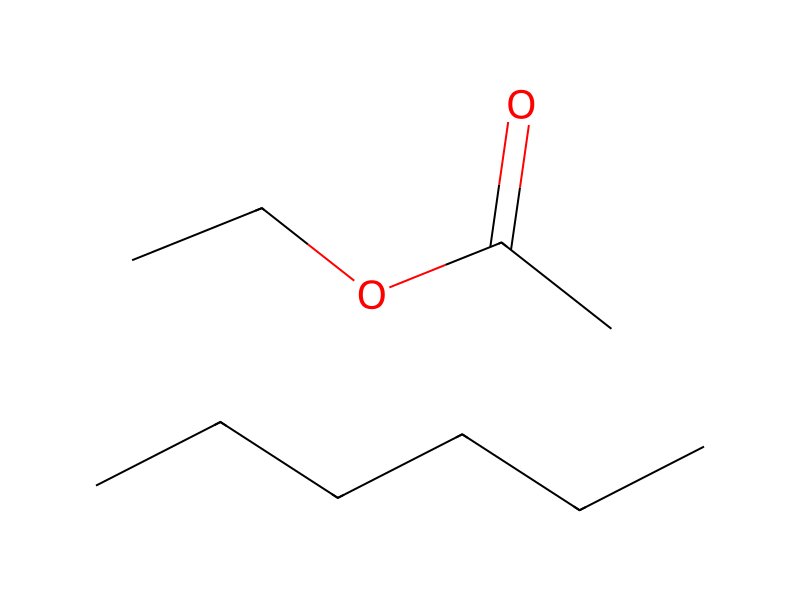
HCID 21226206Ethyl acetate hexaneSolvent

Conditions

Temperature
150 °C

Procedure

3-Bromo-6-hydroxyquinoline (2.75 g) and cuprous chloride (9 g) in dry N-methylpyrrolidin-2-one (25 ml) were stirred and heated at 150° C. under an atmosphere of nitrogen for 2 hours. The dark red suspension was cooled to ambient temperature, poured into water then treated with sufficient aqueous ammonia to dissolve the solid material. The blue solution was taken to pH 5-6 with hydrochloric acid (2M) then ethyl acetate was added. The mixture was filtered and the insoluble solids washed with ethyl acetate. The organic component of the filtrate was separated and the aqueous phase was further extracted with ethyl acetate. The ethyl acetate fractions were combined, washed with brine, dried over magnesium sulphate then evaporated under reduced pressure to give a solid. The solid was fractionated by chromatography (silica; hexane/ethyl acetate, 2:1 by volume) to give 3-chloro-6-hydroxyquinoline as a pale yellow solid, 0.95 g. (M+ 179, 1×Cl). 1H NMR (CDCl3) δ: 7.06(1H, d); 7.35(1H, dd); 7.91(1H, d); 7.96(1H, d); 8.59(1H, d); 9.55(1H, s).

Workup

  1. temperatureThe dark red suspension was cooled to ambient temperature
  2. dissolutionto dissolve the solid material
  3. filtrationThe mixture was filtered
  4. washthe insoluble solids washed with ethyl acetate
  5. customThe organic component of the filtrate was separated
  6. extractionthe aqueous phase was further extracted with ethyl acetate
  7. washwashed with brine
  8. dry with materialdried over magnesium sulphate
  9. customthen evaporated under reduced pressure
  10. customto give a solid

Sources & evidence

ORD record
ord-a4e1a0dded164bad9334f51d8ec62624
Source dataset
uspto-grants-2008_05
DOI
10.6084/m9.figshare.5104873.v1
Patent number
US07371764B2

Reaction notes

On this pageParticipantsConditionsProcedureWorkupSources & evidenceReaction notes