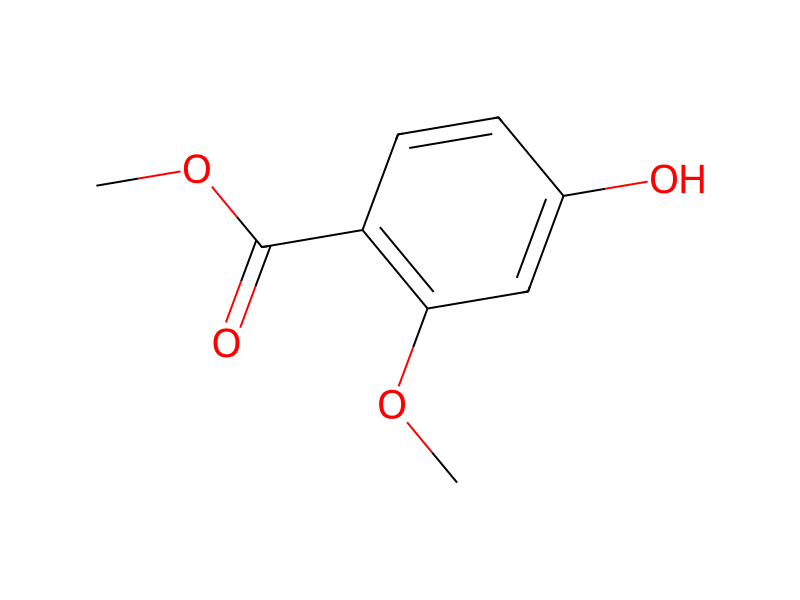
O[C:2]1[CH:11]=[CH:10][C:5]([C:6]([O:8][CH3:9])=[O:7])=[C:4]([O:12][CH3:13])[CH:3]=1.Cl[CH2:15][C:16](=[O:18])[CH3:17].C(=O)([O-])[O-:20].[K+].[K+].CN(C)C=O>C(OCC)(=O)C>[CH3:9][O:8][C:6](=[O:7])[C:5]1[CH:10]=[C:11]([O:20][CH2:15][C:16](=[O:18])[CH3:17])[CH:2]=[CH:3][C:4]=1[O:12][CH3:13]Stir a mixture of methyl 4-hydroxy-2-methoxybenzoate (Danishefsky et al., J. Med. Chem. 1979, 101, 7001-7008, 0.54 g, 3 mmol), chloroacetone (6 mmol, Aldrich Chemical Company), potassium carbonate (9 mmol) and dimethylformamide at 50° C. overnight. Cool the reaction to room temperature, dilute with ethyl acetate, wash with saturated NaHCO3 solution and saturated brine. Dry (MgSO4) the organic phase, filter and concentrate the filtrate in vacuo. Purify the residue by column chromatography (silica gel, step gradient elution with 10% ethyl acetate in hexane to 30% ethyl acetate in hexane) and concentrate the appropriate fractions to afford 0.73 g of 2-methoxy-5-(2-oxo-propoxy)-benzoic acid methyl ester.
Loading…