HomeMCPWorkbenchSkills
HomeWorkbenchNotificationsMe
llms.txt · MCP GuidePrivacy Policy · Terms of Service · Supportv1.8.3
  1. Home
  2. /Reaction

Hydrochloric Acid → 3-(4-Methyl-4-pentenyl)pyridine

HRID 2232716
Print

Reaction equation

HRID 2232716 reaction equation
[H-].[Na+].[H][H].[N:5]1[CH:10]=[CH:9][CH:8]=[C:7]([CH2:11][CH2:12][CH2:13][C:14](=O)[CH3:15])[CH:6]=1.Cl.[CH3:18]S(C)=O>[Br-].C[P+](C1C=CC=CC=1)(C1C=CC=CC=1)C1C=CC=CC=1.CCCCCC>[CH3:18][C:14](=[CH2:15])[CH2:13][CH2:12][CH2:11][C:7]1[CH:6]=[N:5][CH:10]=[CH:9][CH:8]=1
ParticipantsProcedureWorkupSources & evidenceReaction notes

Participants

8

Reactant 5

HCID 313Hydrochloric AcidHCID 679Dimethyl Sulfoxide2×HCID 24758Sodium hydrideHCID 137397405-(3-Pyridinyl)-2-pentanoneHCID 178418361HCID 178418361, compound

Product 1

HCID 145472853-(4-Methyl-4-pentenyl)pyridine

Reagents, catalysts & solvents

2
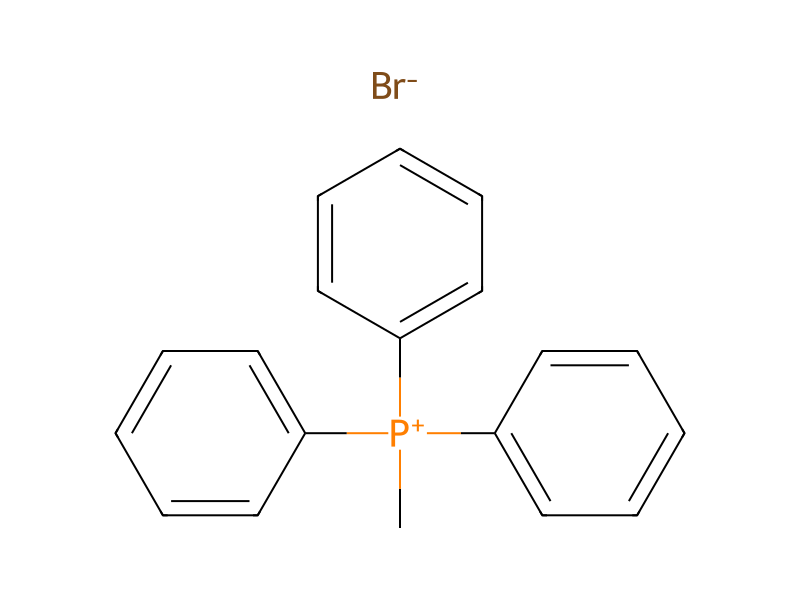
HCID 74505Methyltriphenyliphosphonium bromideCatalystHCID 8058HexaneSolvent

Procedure

A suspension of 7.0 g of sodium hydride (60% dispersion in oil) in 75 mL of dry dimethylsulfoxide was stirred at 75° C. under argon for 45 minutes, at which time the evolution of hydrogen had ceased. After the solution was cooled, 61 g of methyltriphenylphosphonium bromide was added and the mixture was stirred at room temperature for 30 minutes before the addition of 25 g of 5-(3-pyridinyl)-2-pentanone in 125 mL of dimethylsulfoxide. The reaction was then stirred at room temperature overnight. After the addition of 1L of 1N hydrochloric acid solution, the precipitated triphenylphosphine oxide was removed by filtration, and the filtrate was basified with 110 mL of 10N sodium hydroxide. The product was extracted with dichloromethane (4×300 ml) and the extracts were washed with brine, then were combined, dried (K2CO3) and evaporated to give 25 g of crude product. The material was purified by HPLC (ethyl acetate:hexane:1:1) to yield 17.5 g of 3-(4-methyl-4-pentenyl)pyridine as a colorless oil.


Workup

  1. temperatureAfter the solution was cooled
  2. customthe precipitated triphenylphosphine oxide was removed by filtration
  3. extractionThe product was extracted with dichloromethane (4×300 ml)
  4. washthe extracts were washed with brine
  5. dry with materialdried (K2CO3)
  6. customevaporated
  7. customto give 25 g of crude product
  8. customThe material was purified by HPLC (ethyl acetate:hexane:1:1)

Sources & evidence

ORD record
ord-ef83ed34b1b04c6196188ca7b2afa6c0
Source dataset
uspto-grants-1988_11
DOI
10.6084/m9.figshare.5104873.v1
Patent number
US04788206

Reaction notes

On this pageParticipantsProcedureWorkupSources & evidenceReaction notes