HomeMCPWorkbenchSkills
HomeWorkbenchNotificationsMe
llms.txt · MCP GuidePrivacy Policy · Terms of Service · Supportv1.8.3
  1. Home
  2. /Reaction

Dimethylamine → Ethyl 2-Chloro-4-dimethylcarbamoyl-thiazole-5-carboxylate

HRID 2243055
Print

Reaction equation

HRID 2243055 reaction equation
[Cl:1][C:2]1[S:3][C:4]([C:10]([O:12][CH2:13][CH3:14])=[O:11])=[C:5]([C:7](O)=[O:8])[N:6]=1.C(Cl)(=O)C(Cl)=O.[N:21]1[C:26](C)=CC=C[C:22]=1C.CNC>ClCCl.CN(C)C=O>[Cl:1][C:2]1[S:3][C:4]([C:10]([O:12][CH2:13][CH3:14])=[O:11])=[C:5]([C:7](=[O:8])[N:21]([CH3:26])[CH3:22])[N:6]=1
ParticipantsConditionsProcedureWorkupSources & evidenceReaction notes

Participants

7

Reactant 4

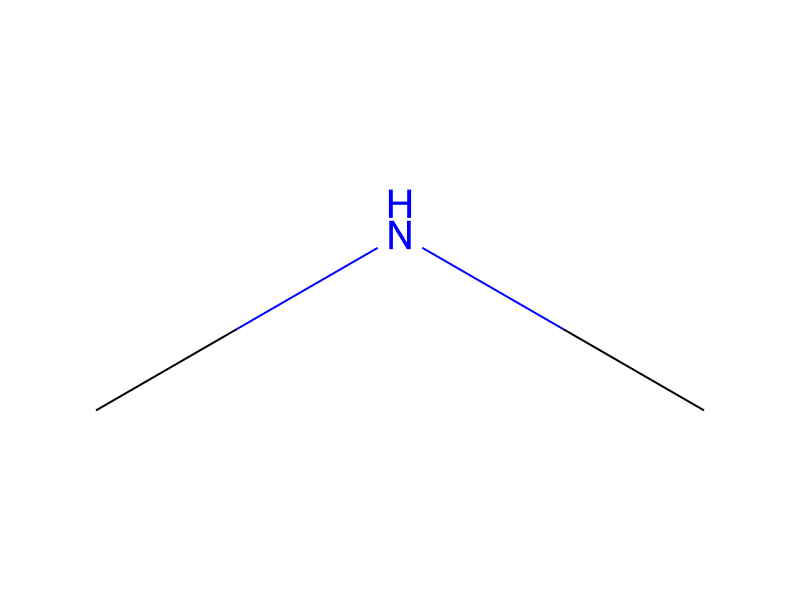
HCID 674DimethylamineHCID 79372,6-LutidineHCID 65578Oxalyl chlorideHCID 592083472-Chloro-5-(ethoxycarbonyl)-1,3-thiazole-4-carboxylic acid2×

Product 1

HCID 59208397Ethyl 2-Chloro-4-dimethylcarbamoyl-thiazole-5-carboxylateYield 76%

Reagents, catalysts & solvents 2

HCID 6228
Dimethylformamide
Catalyst
HCID 6344DichloromethaneSolvent

Conditions

Temperature
45 °C

Procedure

To a stirred solution of 2-chloro-5 (ethoxy carbonyl)-1,3-thiazole-4-carboxylic acid (Intermediate 7, 2 g, 8.01 mmol) in dry dichloromethane (20 mL) was added oxalyl chloride (1.37 mL, 16.02 mmol) and 2 drops of dry dimethylformamide. The reaction mixture was heated to 45° C. for 90 minutes. After the completion of the reaction, the reaction mixture was evaporated to dryness under reduced pressure. The residue was dissolved in dry dichloromethane (20 mL) and was cooled to 0° C., then 2,6-lutidine (0.97 mL, 8.4 mmol) was added followed by addition of N,N-dimethylamine (2 M solution in tetra hydro furan, 4.19 mL, 8.4 mmol). After completion of the reaction, the reaction mixture was concentrated to dryness and the residue was extracted with ethyl acetate (2×50 mL). The organic layer was washed with 1 N hydrochloric acid, water and brine (1×50 mL), and concentrated after drying over anhydrous sodium sulfate to afford 1.6 g (72.7%) of the title compound as a thick syrup.

Workup

  1. customAfter the completion of the reaction
  2. customthe reaction mixture was evaporated to dryness under reduced pressure
  3. dissolutionThe residue was dissolved in dry dichloromethane (20 mL)
  4. temperaturewas cooled to 0° C.
  5. customAfter completion of the reaction
  6. concentrationthe reaction mixture was concentrated to dryness
  7. extractionthe residue was extracted with ethyl acetate (2×50 mL)
  8. washThe organic layer was washed with 1 N hydrochloric acid, water and brine (1×50 mL)
  9. concentrationconcentrated
  10. dry with materialafter drying over anhydrous sodium sulfate

Sources & evidence

ORD record
ord-a045682d867f43f092cd74971b0872bd
Source dataset
uspto-grants-2010_03
DOI
10.6084/m9.figshare.5104873.v1
Patent number
US07674801B2

Reaction notes

On this pageParticipantsConditionsProcedureWorkupSources & evidenceReaction notes


