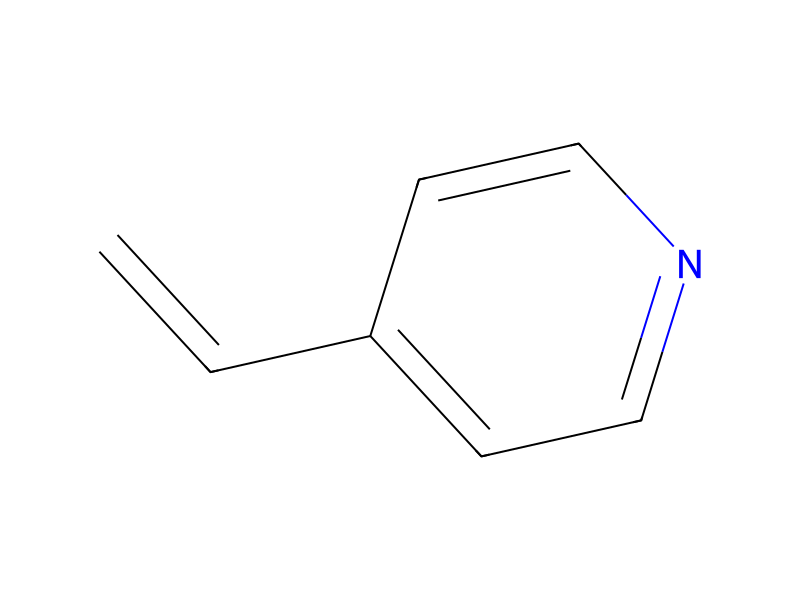
Intermediate (b) N-Boc-(R)-2-(3-bromobenzyl)morpholine (103 mg, 0.29 mmol), was dissolved in CH3CN (2 mL) with palladium acetate (3.2 mg, 14 umol), tris(ortho-tolyl)phosphine (8.8 mg, 29 umol), 4-vinylpyridine (61 mg, 0.58 mmol) and triethyl amine (58 mg, 0.58 mmol). The reaction was then subjected to microwave heating at 140° C. for 5 minutes. The reaction was cooled to room temperature, partitioned between ethyl acetate (20 mL) and water (20 mL) and separated. The organic layer was washed with brine (10 mL), dried (MgSO4), filtered and concentrated in vacuo. The residue was purified by column chromatography (silica; 20-30% ethyl acetate/isohexane) to yield the desired intermediate (a), N-Boc-(R)-2-(3-(2-(4-pyridinyl)vinyl)-benzyl)morpholine as a colorless gum (63 mg, 57%).