HomeMCPWorkbenchSkills
HomeWorkbenchNotificationsMe
llms.txt · MCP GuidePrivacy Policy · Terms of Service · Supportv1.8.3
  1. Home
  2. /Reaction

Sodium Bicarbonate → 8-((R)-2,3-Dihydroxy-propoxy)-6,6-dimethyl-3-methylsulfanyl-5,6-dihydro-benzo[b]carbazol-11-one

HRID 2275295
Print

Reaction equation

HRID 2275295 reaction equation
Br[C:2]1[CH:14]=[C:13]2[C:5]([C:6]3[C:7](=[O:30])[C:8]4[CH:20]=[CH:19][C:18]([O:21][CH2:22][C@H:23]5[CH2:27][O:26]C(C)(C)[O:24]5)=[CH:17][C:9]=4[C:10]([CH3:16])([CH3:15])[C:11]=3[NH:12]2)=[CH:4][CH:3]=1.[CH3:31][S-:32].[Na+].CC1(C)C2C(=C(P(C3C=CC=CC=3)C3C=CC=CC=3)C=CC=2)OC2C(P(C3C=CC=CC=3)C3C=CC=CC=3)=CC=CC1=2.C([O-])(O)=O.[Na+]>CC(N(C)C)=O.C(OCC)C.C1C=CC(/C=C/C(/C=C/C2C=CC=CC=2)=O)=CC=1.C1C=CC(/C=C/C(/C=C/C2C=CC=CC=2)=O)=CC=1.C1C=CC(/C=C/C(/C=C/C2C=CC=CC=2)=O)=CC=1.[Pd].[Pd]>[OH:24][C@H:23]([CH2:27][OH:26])[CH2:22][O:21][C:18]1[CH:19]=[CH:20][C:8]2[C:7](=[O:30])[C:6]3[C:5]4[C:13](=[CH:14][C:2]([S:32][CH3:31])=[CH:3][CH:4]=4)[NH:12][C:11]=3[C:10]([CH3:15])([CH3:16])[C:9]=2[CH:17]=1


ParticipantsConditionsProcedureWorkupSources & evidenceReaction notes

Participants

8

Reactant 4

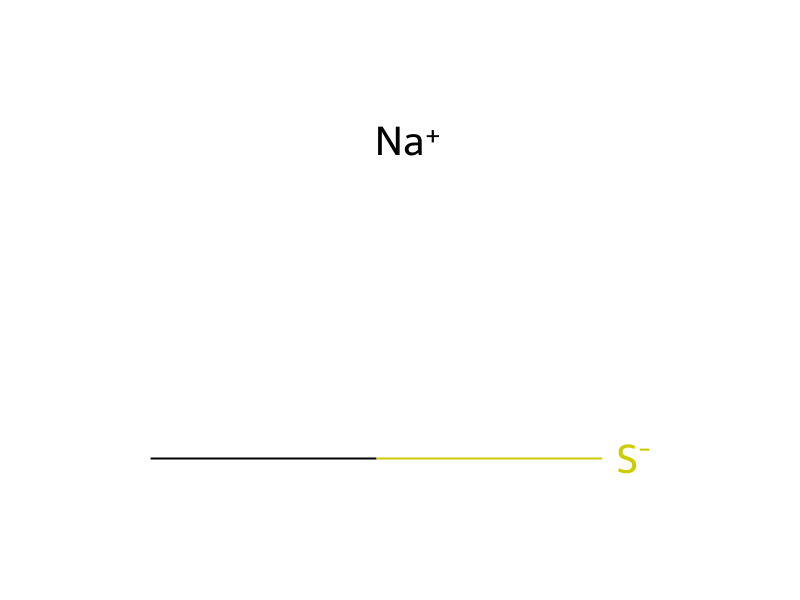
HCID 516892Sodium BicarbonateHCID 6360441,1'-(9,9-Dimethyl-9H-xanthene-4,5-diyl)bis(1,1-diphenylphosphine)HCID 4378561Sodium methanethiolateHCID 668346753-bromo-8-((S)-2,2-dimethyl-[1,3]dioxolan-4-yl methoxy)-6,6-dimethyl-5,6-dihydro-benzo[b]carbazol-11-one

Product 1

HCID 66835171
8-((R)-2,3-Dihydroxy-propoxy)-6,6-dimethyl-3-methylsulfanyl-5,6-dihydro-benzo[b]carbazol-11-one
Yield 39.4%

Reagents, catalysts & solvents 3

HCID 9811564Bis(dibenzylideneacetone)palladiumCatalystHCID 3283Diethyl EtherSolventHCID 31374DimethylacetamideSolvent

Conditions

Temperature
60 °C

Procedure

3-Bromo-8-((S)-2,2-dimethyl-[1,3]dioxolan-4-yl methoxy)-6,6-dimethyl-5,6-dihydro-benzo[b]carbazol-11-one (47.3 mg, 0.101 mmol), sodium methanethiolate (34.6 mg, 0.493 mmol), Pd2(dba)3 (13.1 mg, 0.0413 mmol), and Xantphos (17.9 mg, 0.0309 mmol) were dissolved in DMA (0.5 ml) and subjected to microwave irradiation at 200° C. for 30 min under nitrogen atmosphere. The resultant was partitioned between aqueous solution of potassium dihydrophosphoric acid and ethyl acetate. The organic layer was washed with saturated brine, and then concentrated under reduced pressure. The resulting residues were purified by thin layer chromatography (ethyl acetate/DCM). The resulting solid was dissolved in THF (0.23 ml) and MeOH (0.06 ml), and then added with 0.5 M sulfuric acid (0.12 ml). The resulting mixture was stirred at 60° C. for 2 hrs. The reaction solution was diluted with diethyl ether and neutralized with sodium hydrocarbonate (15.5 mg, 0.185 mmol). Thereafter, the solution was partitioned between brine and ethyl acetate. The organic layer was concentrated under reduced pressure. The resulting residues were added with diethyl ether. The precipitated solid was filtered to obtain the title compound as a white solid (15.8 mg, 39%).

Workup

  1. customirradiation at 200° C. for 30 min under nitrogen atmosphere
  2. customThe resultant was partitioned between aqueous solution of potassium dihydrophosphoric acid and ethyl acetate
  3. washThe organic layer was washed with saturated brine
  4. concentrationconcentrated under reduced pressure
  5. customThe resulting residues were purified by thin layer chromatography (ethyl acetate/DCM)
  6. dissolutionThe resulting solid was dissolved in THF (0.23 ml)
  7. additionMeOH (0.06 ml), and then added with 0.5 M sulfuric acid (0.12 ml)
  8. customThereafter, the solution was partitioned between brine and ethyl acetate
  9. concentrationThe organic layer was concentrated under reduced pressure
  10. additionThe resulting residues were added with diethyl ether
  11. filtrationThe precipitated solid was filtered

Sources & evidence

ORD record
ord-5a590960982e417caf187d13c0b81303
Source dataset
uspto-grants-2015_09
DOI
10.6084/m9.figshare.5104873.v1
Patent number
US09126931B2

Reaction notes

On this pageParticipantsConditionsProcedureWorkupSources & evidenceReaction notes